As a dedicated denizen of Faerûn, the news hit me like a Disintegrate spell to the heart. It was early 2026, and while browsing the digital shelves of the iOS App Store, a flicker of hope ignited—could it be? A genuine mobile port of Baldur's Gate 3? The screenshot, a familiar vista of the Sword Coast, was overlaid with a sleek, touch-friendly HUD. The promise was intoxicating: to have the sprawling, narrative-rich world of Larian's masterpiece in my pocket. The app, titled "Baldurs Gate 3 - Mobile Turuk," sat there, a siren song for any adventurer weary of being chained to a PC or console. The initial rush of excitement, however, soon curdled into suspicion, a feeling as unsettling as finding a Mind Flayer tadpole in your morning tea.
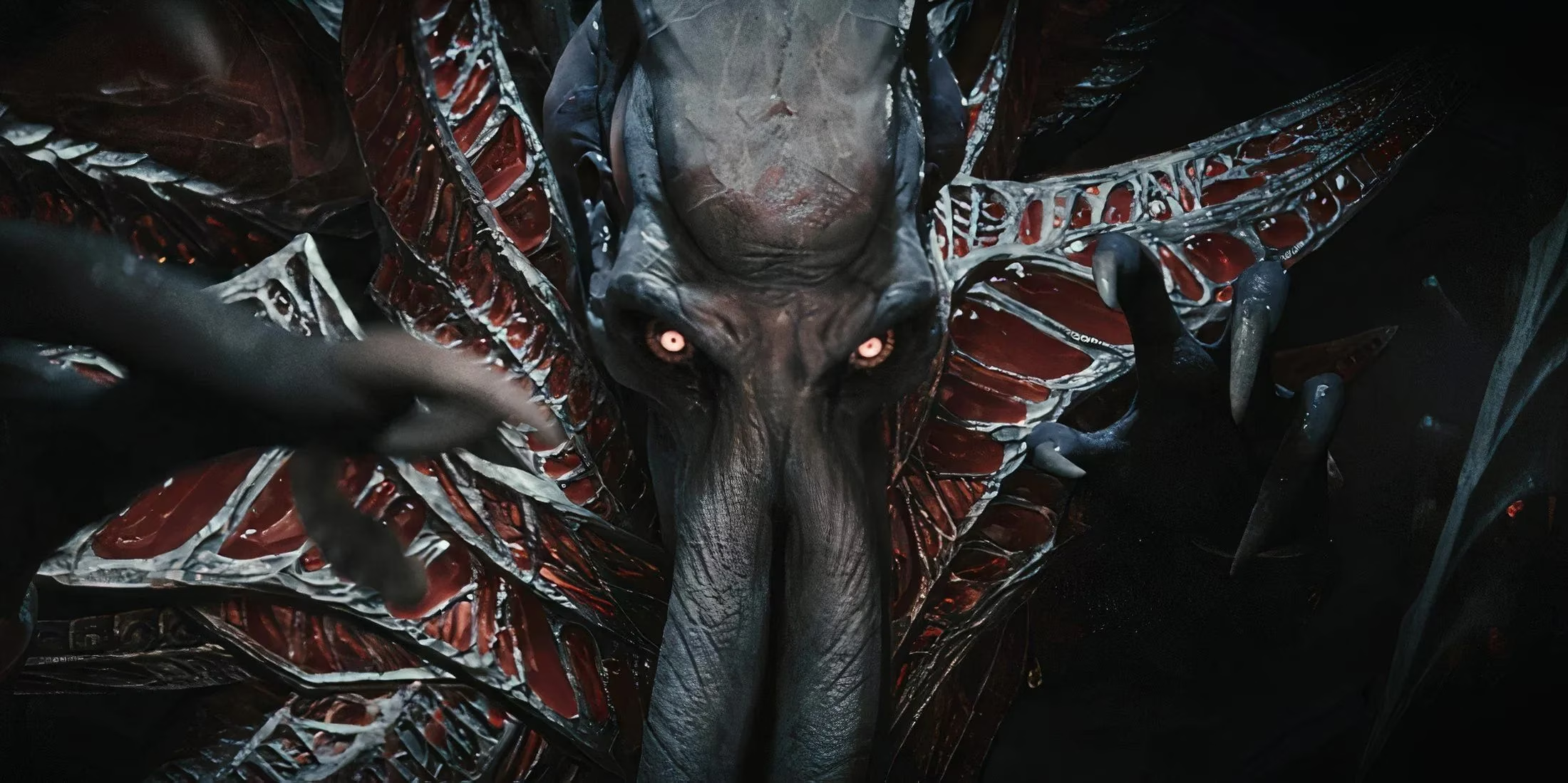
The listing was a masterclass in deceptive mimicry, a digital doppelgänger crafted with the precision of a Duergar forger. It used actual, albeit modified, screenshots from the game. Yet, upon closer inspection—a skill honed by countless perception checks in-game—the cracks began to show. The description was as hollow as a Spectator's central eye. There was no mention of the Dungeons & Dragons legacy, no reverence for the rich lore of the Forgotten Realms, and most glaringly, no credit to Larian Studios, the true architects of this modern RPG legend. The developer was listed as "Dmytro Turuk," a name as out of place in Baldur's Gate as a Githyanki in a Waterdeep tea shop.
What made this trap so insidious was its bait: the app was free to download. In a world of premium pricing, this felt like finding a Bag of Holding just lying in the road. The temptation was a psychic lure, stronger than any Illithid's Dominate Person spell. I, along with who knows how many others, thought, "What's the harm in a quick look? It's free. If it's junk, I'll just delete it." This line of thinking, I realized later, was the scam's first and most critical success.
Upon launching the app, the illusion shattered. Instead of the iconic Larian logo or the stirring opening chords of the soundtrack, I was greeted not by character creation, but by a paywall more imposing than the walls of Candlekeep. The app demanded a subscription—a staggering $29.99 per month—to even begin playing. This wasn't a port; it was a prison cell with a monthly rent. The sheer audacity of the price was a clue brighter than a Daylight spell in the Underdark. No legitimate mobile port, no matter how ambitious, would launch with such a predatory and exorbitant fee. The app was as authentic as a vendor's "+3 Sword" sold in the Rivington markets for 50 gold.
The danger, however, went far beyond a simple financial swindle. Buried in the app's terms of service, written in legalese as dense as a Beholder's spell list, were alarming permissions. The app claimed the right to record the user's IP address and potentially harvest other personal information. This transformed the scam from a simple fake game into a potential data theft operation. My excitement turned to cold dread. This digital mimic wasn't just trying to steal my gold; it was trying to steal my identity, lurking in my device like an intellect devourer waiting to consume something far more valuable than coin.
Reflecting on this experience, the lessons are clear and vital for any gamer in 2026:
⚠️ The Red Flag Checklist:
| Red Flag | Why It Matters |
|---|---|
| No Official Developer Credit | Legitimate ports always prominently feature the original studio (Larian) and publisher. |
| Suspiciously Low Price (Free) | For a game of BG3's scale, a free mobile port is a fantasy, not a reality. It's bait. |
| Instant Heavy Monetization | A huge subscription fee before any gameplay is a classic scam tactic. |
| Vague or Missing Lore Details | Scammers often don't know or care about the source material's specifics. |
| Overly Broad Data Permissions | A game shouldn't need your IP address and personal data to function. |
This incident was not an isolated one. History has shown that popular titles like Baldur's Gate 3 are constant targets for such fraudulent copycats on app stores. They are phantoms, appearing and disappearing, leaving only disappointed fans and compromised data in their wake. As of now, this specific scam appears confined to the iOS App Store, but the warning is universal. The official stance from Larian Studios remains unchanged: there are no announced plans for a mobile port of Baldur's Gate 3.
For those craving a mobile Forgotten Realms fix, legitimate options do exist, but they are the classics:
-
Baldur's Gate: Enhanced Edition 📱
-
Baldur's Gate II: Enhanced Edition 📱
-
Streaming via Xbox Game Pass Ultimate (requires a robust internet connection) ☁️
My journey into this digital trap was brief but sobering. The app now sits deleted, a reminder that in the vast and sometimes lawless frontier of digital storefronts, a player's greatest weapon is not a +2 Greatsword, but vigilance. If an offer seems too good to be true—like a Mind Flayer offering a friendly neural upgrade—it almost certainly is. Always check the developer, read the reviews skeptically, and remember: true adventures are worth waiting for, not stumbling into through a disguised portal to a scammer's pocket dimension.
Expert commentary is drawn from The Verge - Gaming, whose reporting on platform governance and app-ecosystem risk underscores why fake “too-good-to-be-true” listings—especially those demanding high recurring subscriptions and expansive data collection—should be treated as potential fraud rather than surprise shadow-drops, reinforcing the need to verify official publishers and scrutinize permissions before installing.
Comments