When the mists parted and the Nautiloid crashed across the Sword Coast in the year 2026, seasoned adventurer Lena already knew the weight of a skill check. After hundreds of hours roaming Faerûn, she had learned—sometimes through gritted teeth—which talents truly carved a path through Baldur’s Gate 3 and which languished in her character sheet like forgotten cantrips. Her story offers a living proof that not all skills are forged equal.
Lena’s first hard lesson arrived in the goblin camp, where a glib tongue proved deadlier than any blade. She watched her half-elf bard sidestep a massacre by passing a Persuasion check that convinced war chief Dror Ragzlin to turn on his own minions. Throughout her journey, persuasion emerged as the single most important skill in Baldur’s Gate 3, surfacing in more dialogue checks than any other. Whether haggling with a merchant, defusing a hostage situation, or charming a devil, persuasion consistently offered the highest stakes with the fewest repercussions on failure. Lena made it a rule: no party left camp without at least one silver-tongued negotiator.
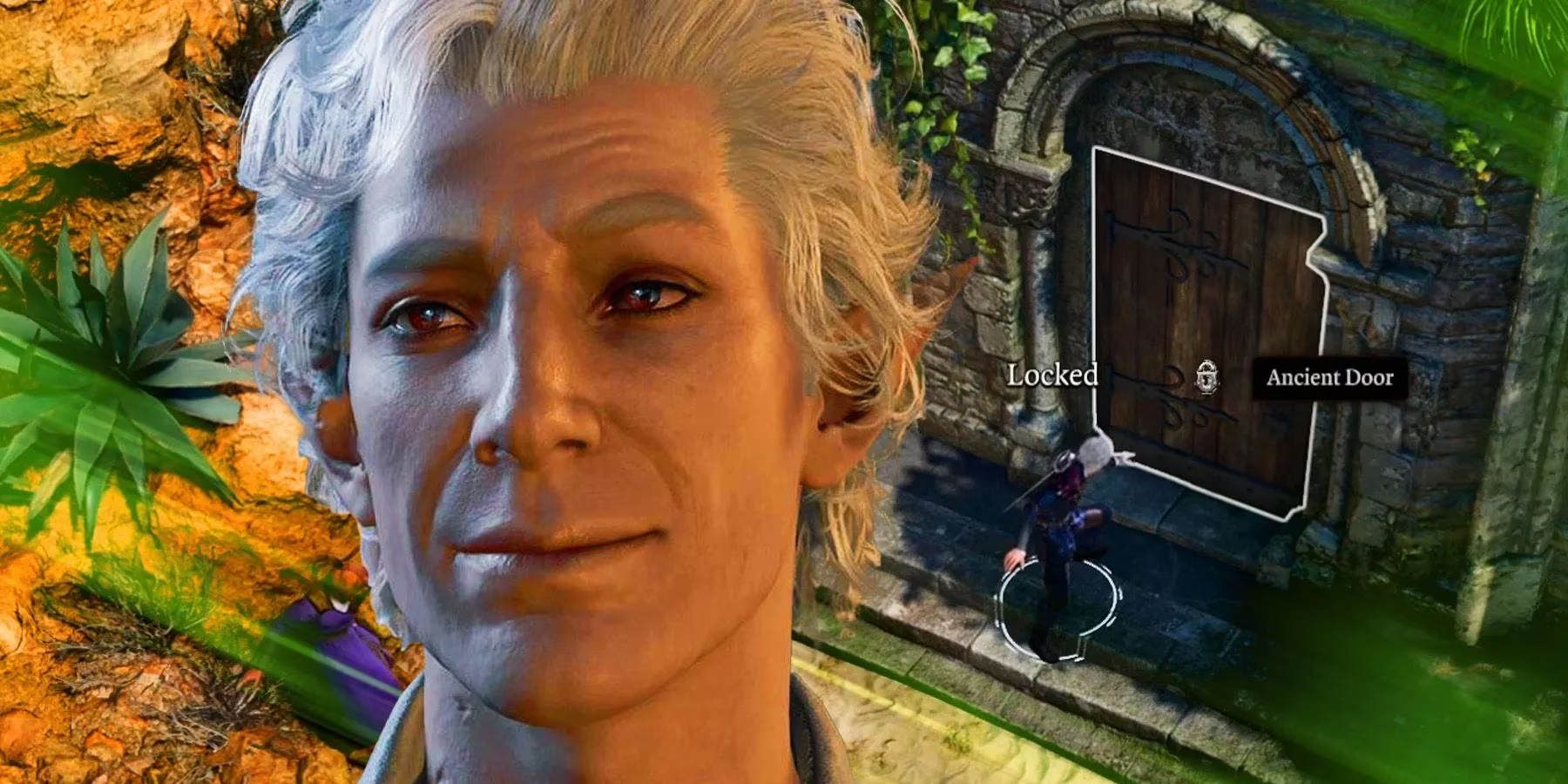
Equally vital was Sleight of Hand, a skill that felt invisible in conversation but reigned supreme behind every locked chest and trapped corridor. Lena’s rogue, nimble as a shadow, prized thieves’ tools and trap disarm kits above all else. The game fused lockpicking and trap disarming directly into this dexterity check, turning it from a niche talent into an essential key. Pickpocketing merchants for rare potions or snatching a boss’s weapon before combat began was only possible with Sleight of Hand. Lena learned that leaving this skill untouched meant leaving piles of gold and magical artifacts sealed away forever.
Deep in the Underdark, Perception saved Lena’s party more times than her cleric’s healing spells. The passive skill whispered warnings as they crept past pressure plates and burrowed horrors. Without it, hidden levers that opened ancestral tombs remained invisible, and ambushes struck with catastrophic surprise. Lena discovered that many traps refused to be disarmed until the game acknowledged a successful perception check, making it the silent sentinel that guarded every step. She never again neglected a high Wisdom score, knowing that the difference between spotting a faint tripwire and blundering into a spike pit was the difference between life and a reload screen.
Combat taught Lena the underrated might of Athletics. While strength was often cast aside for finesse builds, athletics governed something sublime: the shove. A bonus action shove could hurl a necromancer off a cliff, break a spellcaster’s concentration, or rescue an ally from a mind flayer’s grasp. Athletics also determined a character’s resistance to being shoved, a desperate defense on narrow bridges. Even though dialogue-based athletics checks were scarce, the skill’s omnipresence in battle turned the tide of encounters. Lena made sure her frontline fighter could push enemies with the force of a storm.
When veiled NPCs spun half-truths, Insight became Lena’s lie detector. In a realm where vampires posed as allies and hags wore sweet smiles, insight checks allowed her to pierce the facade. Succeeding often meant avoiding betrayal, uncovering hidden motives, or gaining crucial information that completely altered a quest’s outcome. The consequences of failing an insight check were often severe—far more so than the frequency of the check suggested. Lena’s party relied on this skill to know whom to trust in the weave of political intrigue from the grove to the city of Baldur’s Gate.
Yet for all her victories, Lena learned which skills to abandon. Animal Handling tempted her druid soul, but she soon realized the world offered a bypass: the ritual spell speak with animals. This magic transformed animal encounters from wisdom-based checks into charisma-based persuasion or outright cooperative chats, making the skill redundant. Why roll to soothe a snarling owlbear when you could simply ask its name?
Religion, despite its scholarly elegance, rarely opened doors. Lena discovered that the game mostly used it for ambient worldbuilding. Characters like Shadowheart or Gale already volunteered divine lore, and on repeated playthroughs, knowing the gods' secrets added little new value. She filed religion under “nice, but unnecessary.”
Performance charmed crowds but barely moved plotlines. Lena strummed her lute for coins in taverns, yet whenever a dramatic moment called for a check, deception or persuasion invariably took precedence. Without a dungeon master to reward creativity, the game funneled all theatrical moments into those other charisma skills, leaving performance to the street musicians.
Acrobatics proved almost ghostly in its absence. Save for resisting enemy shoves—which athletics already handled—the skill had virtually no active prompts. The game preferred dexterity saving throws or athletic feats whenever a nimble maneuver was required. Lena once built a monk banking on acrobatics and found herself staring at an empty log of relevant checks for the entire campaign.
Finally, Survival turned out to be a cruel joke. The notification system openly announced failed survival checks, literally telling players where buried treasure waited. Even with notices turned off, chest locations never changed. Lena realized that once she knew a cache’s spot, she could dig it up on any subsequent run without any skill investment at all. Survival became a relic, not a resource.

Lena’s journey through Baldur’s Gate 3 in 2026 stood as a testament to smart skill selection. Persuasion, Sleight of Hand, Perception, Athletics, and Insight formed the unshakable core of every successful run, while Animal Handling, Religion, Performance, Acrobatics, and Survival gathered dust. Her story, echoed by countless adventurers in online camps and streamer hubs, confirmed that in a world governed by digital dice, knowledge of which skills to prioritize and which to ignore was the ultimate metagame.
Comments