Is it possible for a single video game to completely redefine the legacy of an entire fantasy race? In the annals of gaming history, few titles have wielded such transformative power as Baldur's Gate 3, and its impact on the once-obscure Githyanki is nothing short of revolutionary. Before 2023, the githyanki languished in the dusty corners of Dungeons & Dragons lore, a footnote known only to the most dedicated tabletop veterans. Fast forward to 2026, and their name echoes through gaming halls and online forums with a frequency that would make their Lich Queen Vlaakith blush with pride—if such a being were capable of anything but cold, calculated ambition. This is the tale of how Larian Studios didn't just include a race; they launched them into the stratosphere of pop culture.
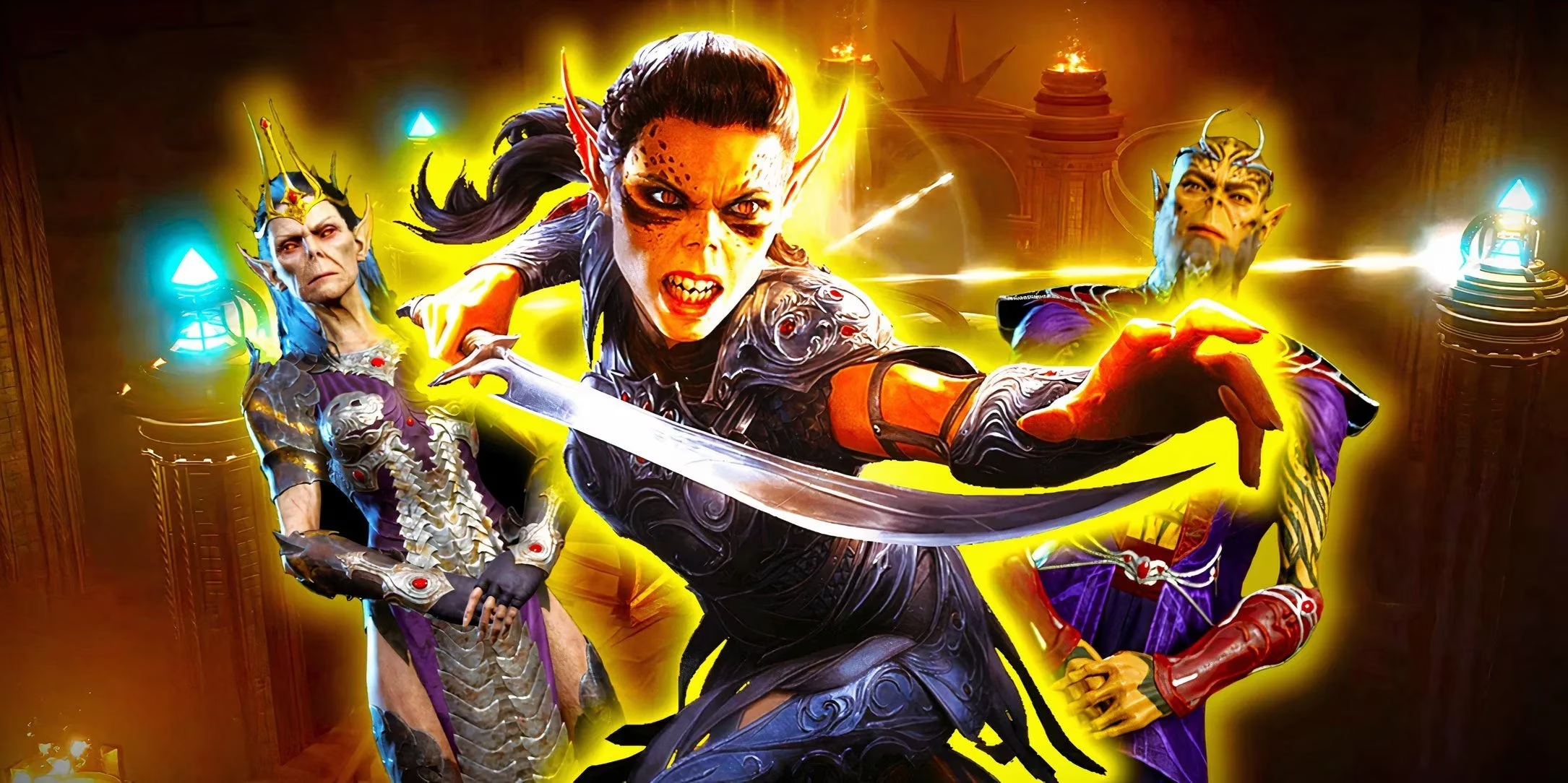
From Obscurity to Stardom: The Githyanki Meteoric Ascent
Let's be brutally honest: how many casual adventurers could have told you a single fact about the githyanki before Baldur's Gate 3? These extraplanar warriors, first officially chronicled in the 1981 Fiend Folio, were perennial outsiders. They weren't in the core Player's Handbook, they didn't fit neatly into typical Faerûn campaigns, and their complicated history of rebellion against mind flayer enslavement was lore for the deeply initiated. They were, in essence, the definition of a niche pick. But Larian Studios saw potential where others saw complexity. With a storyline centered on a mind flayer parasite, what could be more perfect than including the race with an eternal, genocidal grudge against the Illithids? It wasn't just a logical choice; it was a narrative masterstroke.
The data speaks louder than any githyanki war cry. According to search trend analyses, interest in terms like "Gith" and "Githyanki" skyrocketed to nearly four times their pre-2023 levels following the game's release. Initially the least-chosen player race, the githyanki experienced a dramatic surge in popularity, eventually overtaking all the 'shorter' races in player selection. Why the sudden shift? Players discovered that choosing a githyanki wasn't just a cosmetic decision—it was a key to a richer, more empowered experience.
Why Playing Githyanki Isn't Just an Option—It's a Power Trip
Baldur's Gate 3 doesn't just allow you to play as a githyanki; it rewards you for it in ways that border on divine favoritism. From the moment you crash on the nautiloid, the world reacts differently to you.
-
Dialogue Dominance: Act 1 is a playground for githyanki-specific interactions. That first, tense meeting with the fiercely loyal Lae'zel? It transforms from a hostile standoff into a moment of potential kinship if you share her race.
-
Gear That Actually Knows You: The Githyanki Creche isn't just a location; it's a treasure trove of racial-exclusive equipment. Swords, armor, and items that offer mundane bonuses to others become legendary in the hands of a githyanki, providing buffs that can trivialize early-game challenges.
-
Central to the Cosmic Plot: Can you even imagine the story without them? The githyanki are woven into the very fabric of the narrative. Their ancient war with the mind flayers provides the historical backdrop. Your journey is inexorably tied to the Astral Prism, Prince Orpheus, and the tyrannical rule of Vlaakith. Whether you ally with, betray, or liberate them, the githyanki are a force you cannot ignore. They are the skeleton key to the game's deepest lore.
The Glaring Omission: Where in the Multiverse Are the Githzerai?
But here lies the great, psionic-powered elephant in the room. For all its glorious focus on the githyanki, Baldur's Gate 3 entirely omits the other half of gith society: the Githzerai. This isn't a minor oversight; it's like telling the story of Rome and leaving out the Senate, or discussing elves without mentioning the split between high and wood. The term "gith" encompasses two distinct cultures:
| Aspect | Githyanki | Githzerai |
|---|---|---|
| Alignment | Lawful Evil | Lawful Neutral |
| Home | Astral Plane, riding Red Dragons | Limbo, fortresses of pure will |
| Philosophy | Eternal vengeance against Illithids | Move beyond the past, focus on inner discipline |
| Combat Style | Martial prowess, silver swords | Psionic mastery, monastic tradition |
| View of the Other | Traitors and cowards | Warmongering savages |
Their schism is fundamental. After breaking free from illithid control, the gith fractured. The githyanki, under Vlaakith, chose a path of conquest and eternal war. The githzerai, led by the wise Zerthimon, sought to build a new society free from the chains of hatred, mastering their minds in the chaotic plane of Limbo. They are sworn enemies, teaching their young to despise one another. Including this feud in BG3's already dense plot might have been narrative overload, but their absence is palpably felt. Imagine the role-playing potential of a githzerai protagonist pretending to be a githyanki to infiltrate a creche! The dialogue options alone would be legendary.
Larian did leave a few cryptic breadcrumbs. In the Act 2 Mind Flayer Colony, a trapped githzerai mind can be communicated with, and it has uniquely poignant words for a githyanki visitor. Furthermore, the revolutionary ending with Orpheus and Lae'zel hints at a future reconciliation, a mending of the millennia-old rift. This omission, rather than a flaw, feels like a deliberate narrative invitation—a door left ajar for future stories, perhaps in expansions or sequels.
The Lasting Legacy: More Than Just a Video Game Race
As we look back from 2026, the impact of Baldur's Gate 3 on the Githyanki is undeniable and profound. It has:
-
Democratized Deep Lore: It took a complex, intimidating race and made them accessible, exciting, and emotionally resonant for millions.
-
Reinvigorated Tabletop Play: Dungeon Masters now have players actively requesting githyanki characters, armed with knowledge and enthusiasm from the game.
-
Created Cultural Icons: Lae'zel and Vlaakith have become as recognizable as any classic fantasy figure.
-
Set the Stage for the Future: By shining such a brilliant light on the githyanki, it has inevitably cast a long shadow asking, "What about the githzerai?"
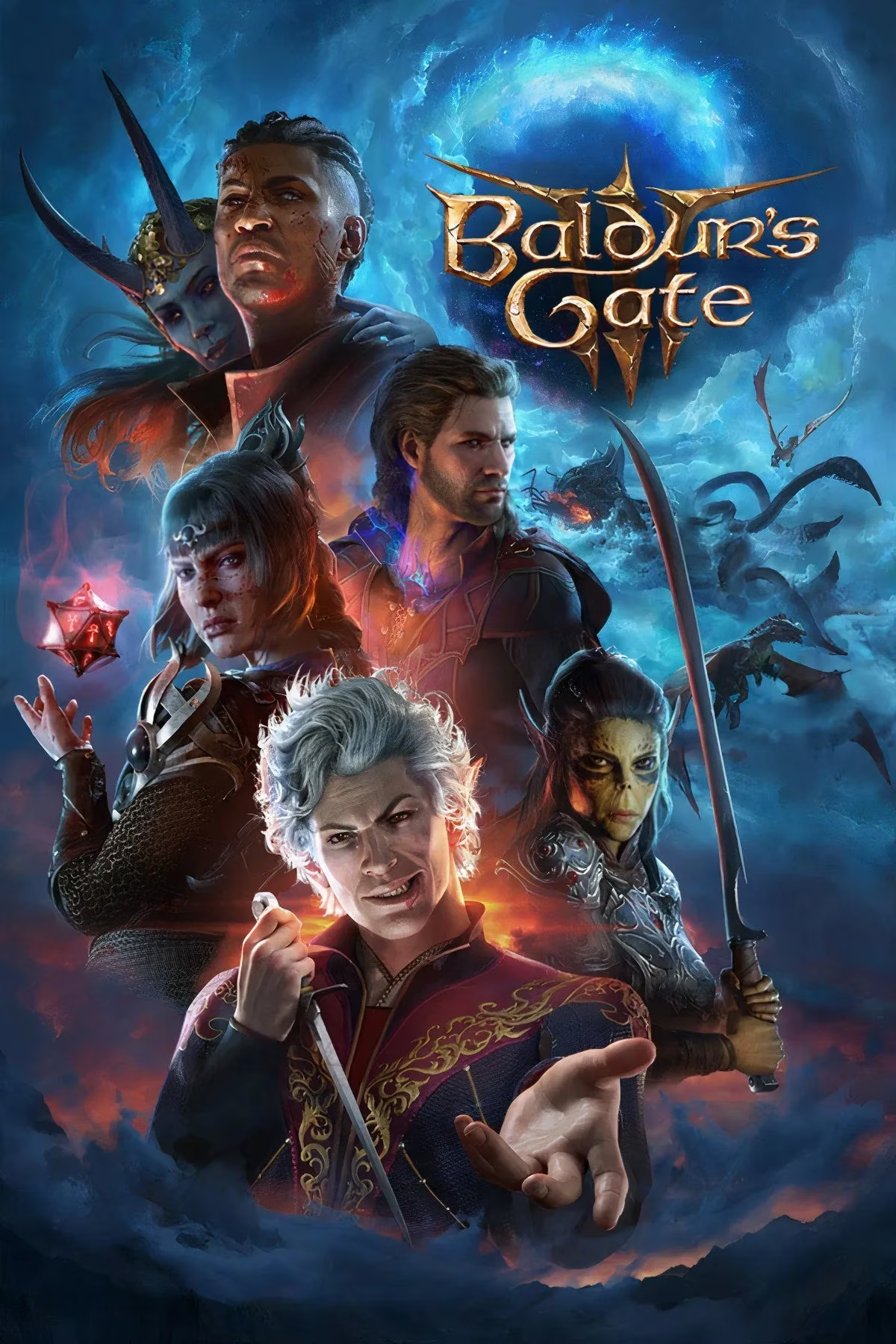
In conclusion, Baldur's Gate 3 didn't just feature the githyanki; it performed a cultural resurrection. It transformed them from obscure lore entries into living, breathing, and fiercely compelling pillars of a modern gaming masterpiece. They went from being a rare choice on a character sheet to the beating, vengeful heart of one of the greatest RPG stories ever told. And in doing so, the game accomplished something truly magical: it made the arcane accessible, and in the process, created a legion of new fans who now gaze into the Astral Plane and see not emptiness, but a realm teeming with history, conflict, and unparalleled potential. The githyanki have finally had their day in the sun—or rather, in the timeless glow of the Astral Sea. Who's to say the githzerai won't be next? 🤔
Comments