By 2026, the shadow of Baldur's Gate 3 still stretches across the CRPG landscape. Larian Studios has moved on, leaving behind a masterpiece that redefined what a Dungeons & Dragons video game could be. Wizards of the Coast, however, has not stopped dreaming. The company clearly wants to keep the Baldur's Gate name alive, and a fourth installment feels less like a question of if and more like a question of when. Yet the path to Baldur's Gate 4 is tangled with another question: which ruleset should power it?
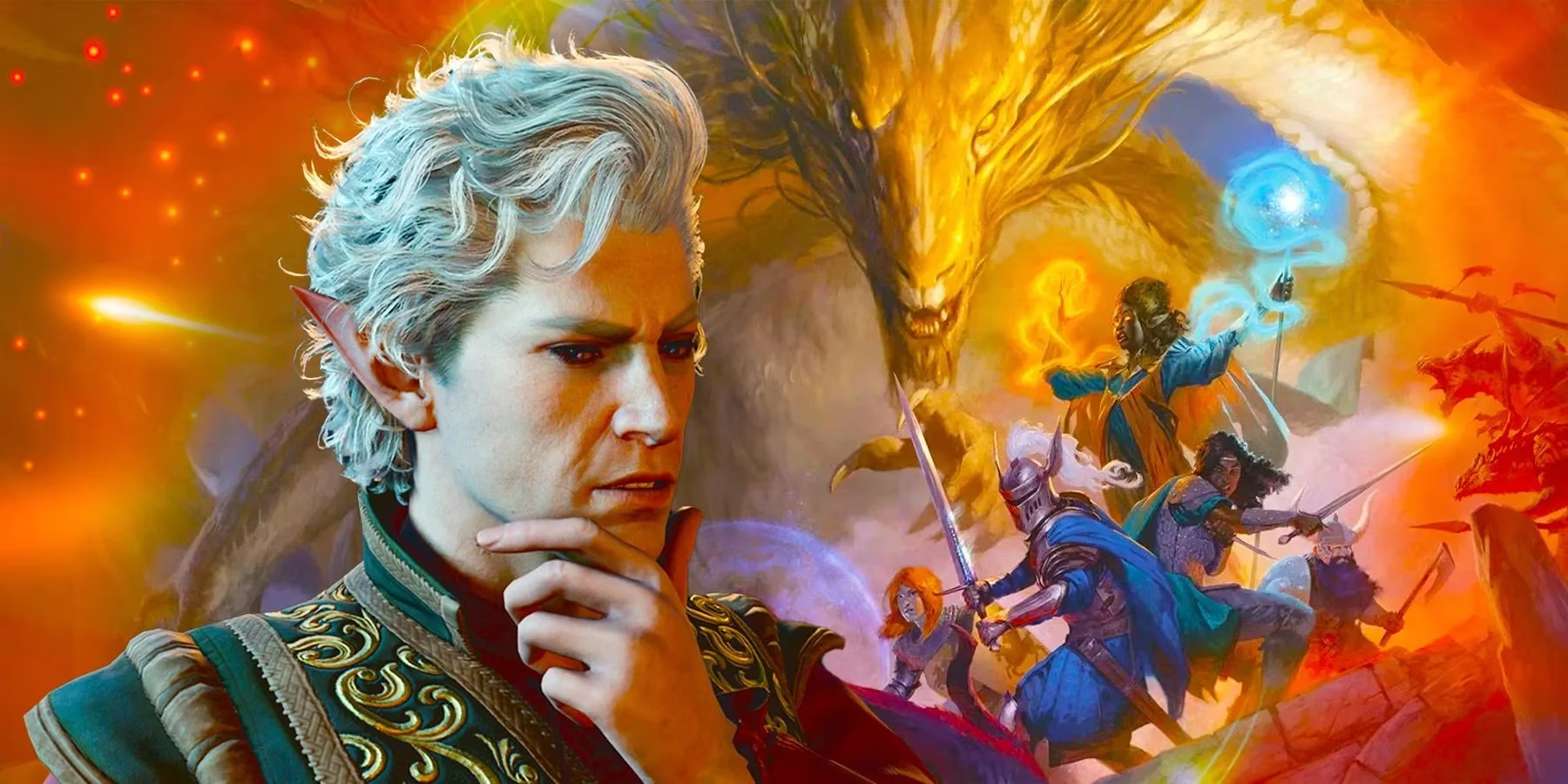
A new studio would likely take the reins. Obsidian Entertainment and Owlcat Games are two names that keep surfacing in conversations among fans, and both have the CRPG pedigree Wizards would need. But even the most talented team cannot avoid the system question. Should Baldur's Gate 4 use D&D 2024, the controversial and still-unfolding update to Fifth Edition? Or should it stay with the familiar 5e rules that made Baldur's Gate 3 a phenomenon?
A Franchise That Always Followed the Current Edition
Baldur's Gate has historically used the current edition of D&D at the point of its development. The first two games used Second Edition. Baldur's Gate 3 used Fifth Edition. If production on a fourth game begins during D&D 2024's tenure, then using D&D 2024 would be consistent with that tradition. It would also align with Wizards of the Coast's broader goal: making D&D 2024 the edition most players use from now on.
There is a practical argument, too. Some mechanics in Baldur's Gate 3 were not in 5e but have found their way into D&D 2024. Weapon-specific attacks are one example. Larian and Wizards approached those ideas differently, but the overlap shows that D&D 2024's design can work in a video game format. If the next Baldur's Gate arrives relatively soon after its predecessor, the backward compatibility and '5e but more' mentality of D&D 2024 could make it the perfect version for a new adventure.
The Bastion System Could Replace Camp
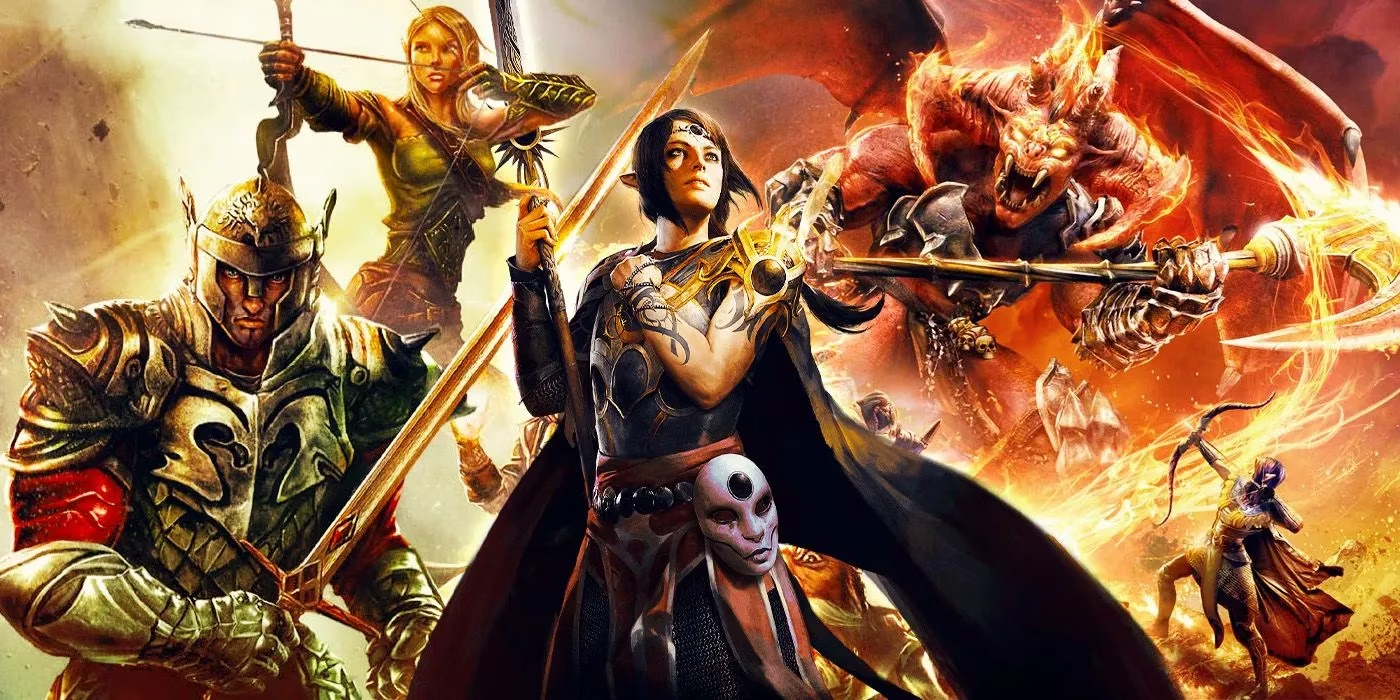
One of the most intriguing possibilities comes from D&D 2024's Bastion system. If a studio like Obsidian Entertainment takes over, its experience with hubs in Pillars of Eternity could pay off. D&D 2024 now includes rules for a player home base, and that could become something new and different from Baldur's Gate 3's camp system. Wizards cannot simply repeat the same formula again. A Bastion could offer base management, NPC followers, crafting, and long-term progression in a way that feels fresh while still being rooted in the tabletop rules.
Would that be enough to justify D&D 2024? Not on its own. The system also brings risks.
The Trouble With the Name and the Calendar
D&D 2024 is not the best name for the new version, especially considering it was once known as One D&D. Baldur's Gate 3 took six years to develop. Even without a global pandemic or war-related delays, another Baldur's Gate game could take at least four years. By the time it releases, the calendar might be closer to 2030. A system called D&D 2024 could confuse players who wonder why a 2030 game is using a 2024 ruleset.
There is also the question of scope. D&D 2024 is meant to be 5e but more. Larian had issues with including some parts of Fifth Edition. The max level was capped at 12 to avoid 7th level spells. If D&D 2024's mentality is more extreme and more fun, it could create development headaches for Baldur's Gate 4. Backward compatibility means 5e already works for a CRPG. Why fix what is not broken?
D&D 2024's general popularity remains to be seen. As of 2026, the new Player's Handbook has had time to settle, but the edition's legacy is still being written. If 5e is still the more popular version by the time Baldur's Gate 4's production begins, then using D&D 2024 might not make sense. Baldur's Gate 2 came out a few months after D&D 3e's Player's Handbook, so the games have not always used the current version on release. They tend to use it during development, but that is not an iron law.
D&D 2024 Is Still Too New to Judge
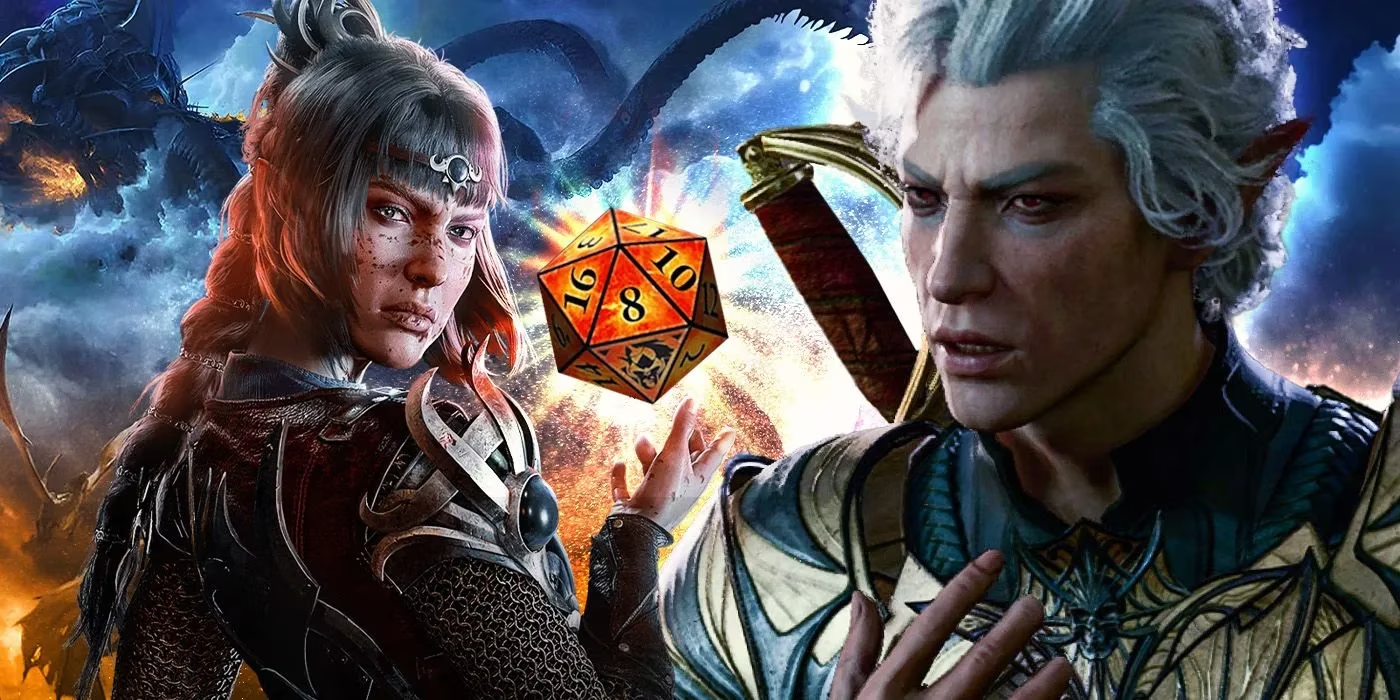
Two major factors will determine which rules Baldur's Gate 4 ultimately uses. The first is the studio chosen. That team will be the main creative driver behind the project. The second is the general reception of D&D 2024. In theory, it is not a vast departure from 5e, so it should be a safe bet. But because there are fewer changes than there were from 4e to 5e, it might be easier to stick with the tried-and-tested 5e if Wizards wants the safe route.
D&D 2024 does fold many rules from Tasha's Cauldron of Everything into its base rule set. That is a point in its favor. Yet it could still be as loved as 5e or as hated as 4e. No one knows yet. The edition is too new for a proper judgment, and Baldur's Gate 4 will not arrive soon enough to settle the debate before production starts.
| Question | Why It Matters |
|---|---|
| Will D&D 2024 age well? | A 2024 name in a 2030 release could confuse players. |
| Which studio takes over? | The creative team will shape the ruleset choice. |
| Is 5e still king? | If yes, Wizards may prefer the safer path. |
| Can Bastions replace camps? | New mechanics could justify D&D 2024. |
The Answer Is Still Being Written
Ultimately, everything depends on the direction Wizards of the Coast wants to take with Baldur's Gate 4 and who takes the reins from Larian. It could be Obsidian Entertainment. It could be Owlcat Games. It could even be a return to the more classic real-time-with-pause style CRPG that the first two Baldur's Gate games used. If D&D 2024 becomes a massive success and the go-to version of the game moving forward, then using it for Baldur's Gate 4 is a no-brainer. If not, Wizards will be left in an awkward spot regarding the future of the series.
In 2026, fans are still waiting. A developer might sit in a conference room, stare at a whiteboard covered in class features and spell slots, and ask the only question that matters: what kind of Baldur's Gate does the world need next? The answer will not come from Larian. It will come from whichever studio dares to pick up the dice. And when that studio does, the rules it chooses will tell players whether Baldur's Gate 4 is a brave step forward or a cautious return to the familiar. Either way, the roll has not yet been made.
Comments