When Baldur's Gate 3 arrived in 2023, it was one of those rare lightning-in-a-bottle releases that turned a niche formula into a global phenomenon. Fans who had never rolled a d20 in their lives suddenly spent hundreds of hours romancing companions, failing ability checks, and debating the moral weight of tadpole powers. By any metric, Larian Studios knocked it out of the park. The game shattered sales records, swept Game of the Year awards, and raised the bar for narrative-driven RPGs so high that a sequel now feels like a high-wire act without a net.
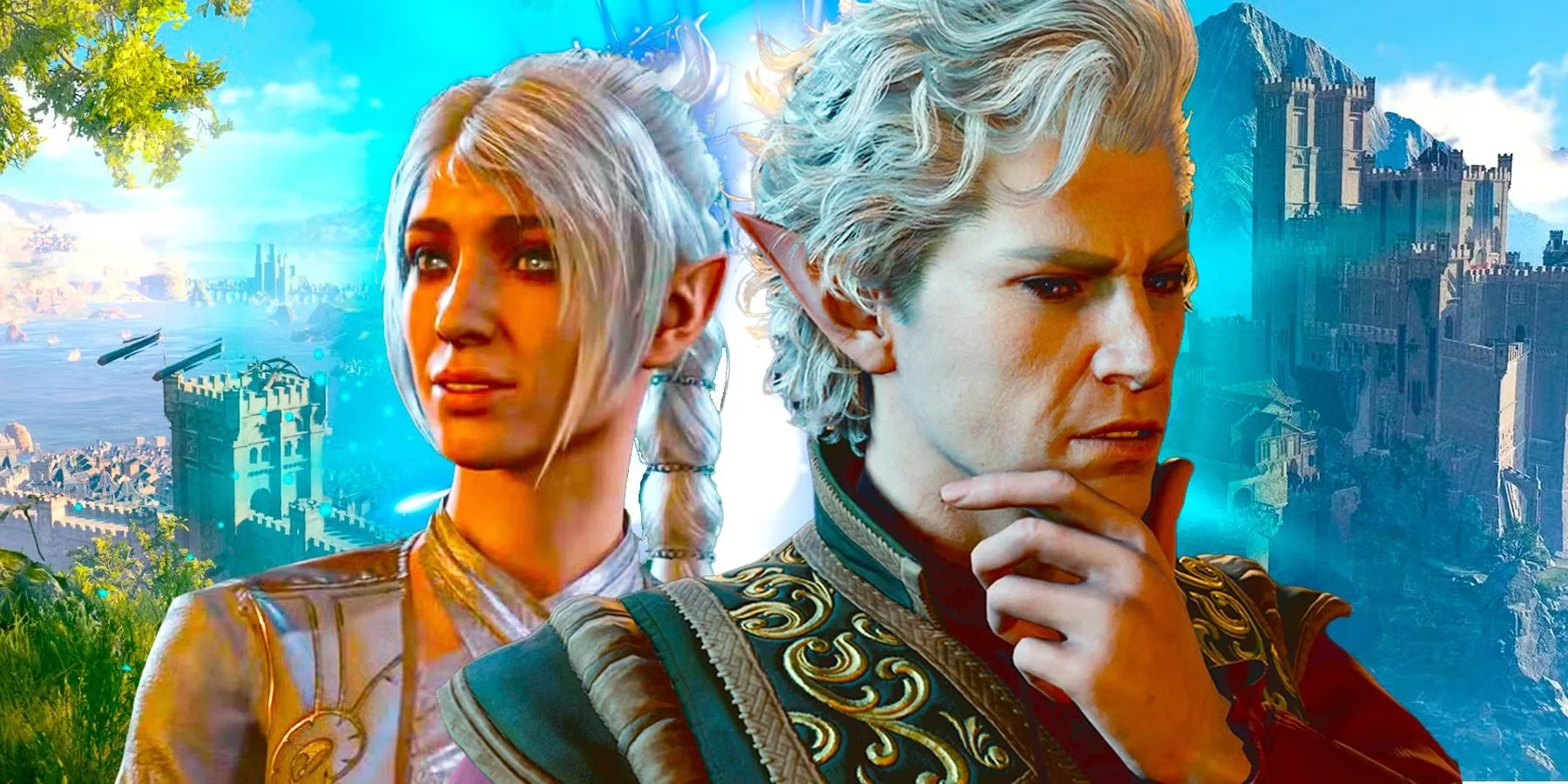
The twist, of course, is that Larian is no longer steering the ship. The studio has made it abundantly clear that it is not making another Dungeons & Dragons title, and it handed the Baldur's Gate rights back to Hasbro. That leaves the franchise at a crossroads. Whoever picks up the torch inherits not just a beloved setting, but an unbelievably tough act to follow.
🧙 The Weight of a Genre-Defining Hit
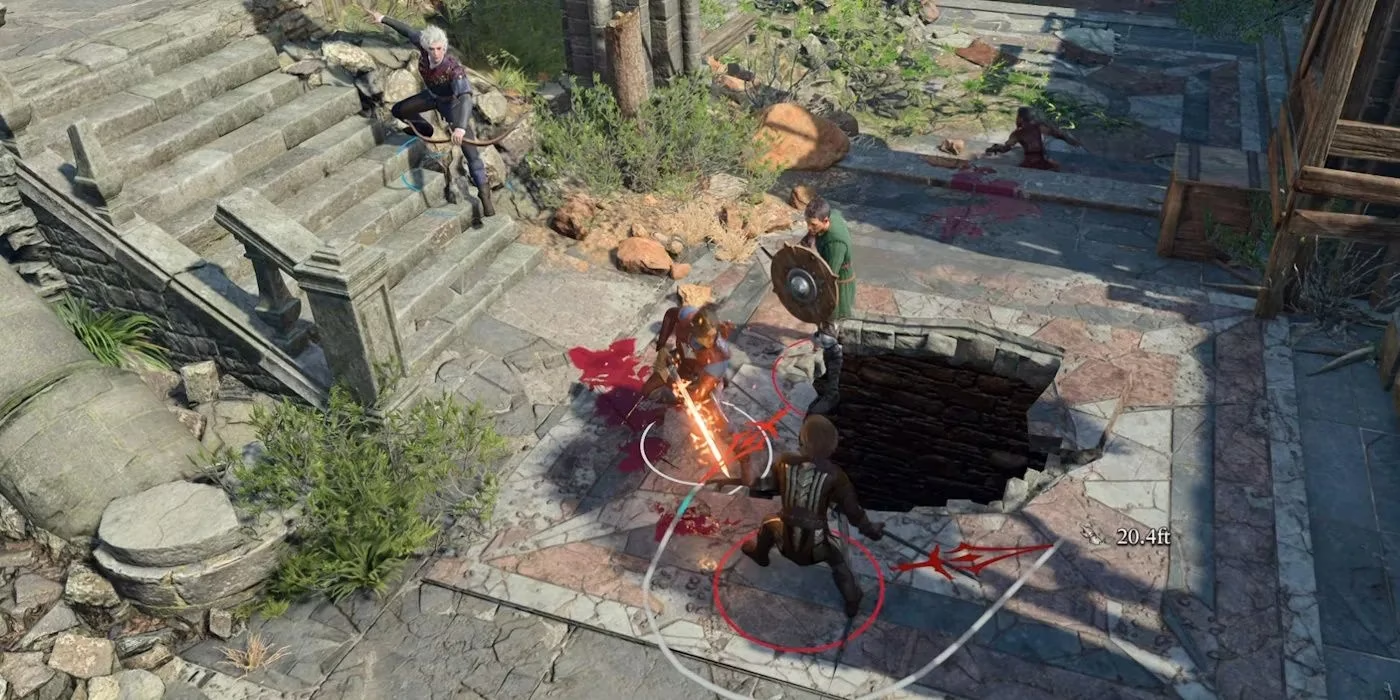
The biggest danger facing a hypothetical Baldur's Gate 4 is that it will try to be too much like Baldur's Gate 3. That might sound counterintuitive. After all, if it ain't broke, don't fix it, right? But in the sequel game, playing it safe is often the riskiest move of all.
A sequel that simply recycles the same engine, structure, and tone can feel like a glorified expansion. It might sell decently on name recognition, but it will not capture the same excitement that made the original a cultural moment. For Baldur's Gate 4, the mission should not be to replicate the third game; it should be to do something the third game could not or would not do.
⚠️ The Tears of the Kingdom Cautionary Tale
The perfect cautionary tale comes from another Game of the Year winner. The Legend of Zelda: Tears of the Kingdom had to follow Breath of the Wild, a title so influential that it reshaped open-world design across the industry. Expectations were through the roof. Nintendo added some genuinely impressive tools, including the Ultrahand building system, plus new sky islands and an entire underground region. And yet, for many players, the sequel did not feel like a reinvention. It felt like an excellent, polished rerun of a game they had already played.
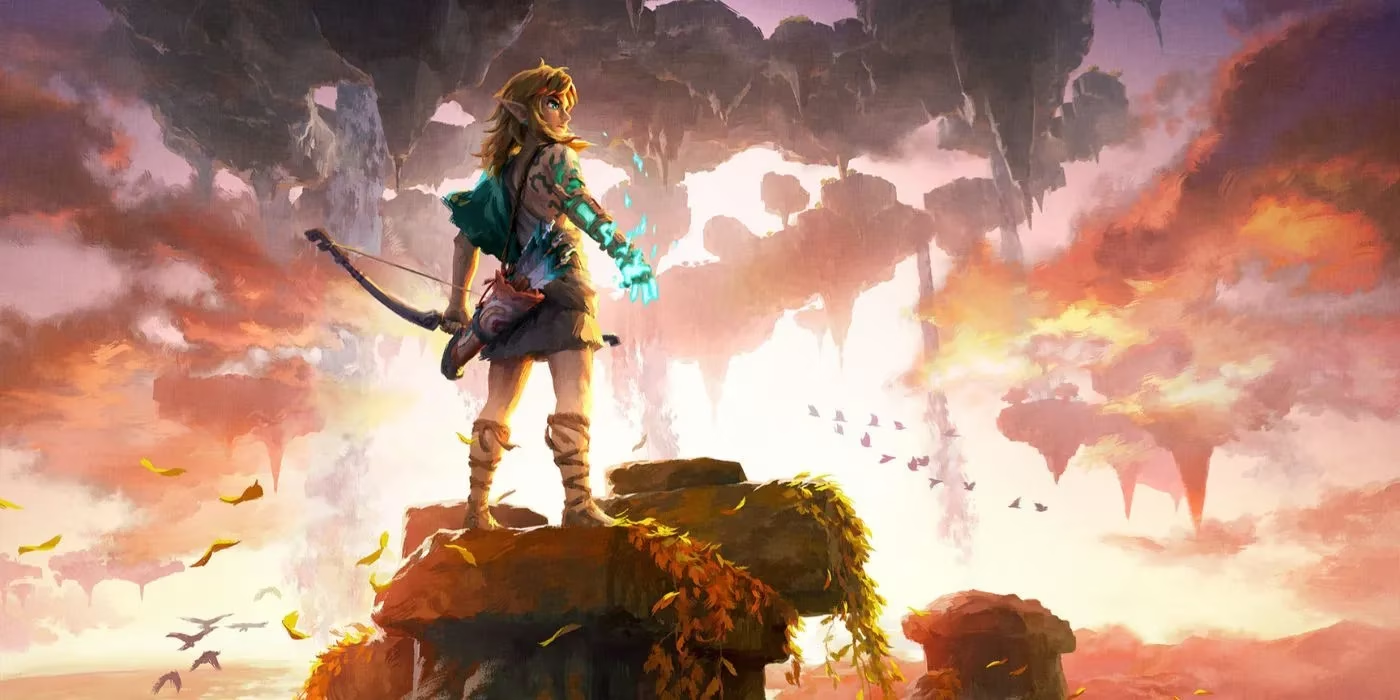
That is the trap Baldur's Gate 4 must avoid. A handful of new mechanics, a fresh villain, or a bigger map will not be enough. If BG4 trots out the same isometric turn-based formula with only incremental changes, it risks fading into relative obscurity despite the franchise's pedigree.
🗺️ Paths Baldur's Gate 4 Could Take
The encouraging news is that the tabletop source material offers endless room to experiment. Faerûn is massive, and the Baldur's Gate name does not have to mean exactly one genre. Several directions could make a sequel feel distinct:
-
🏹 First-person open-world RPG: Trade the isometric camera for a Skyrim-style view of the Sword Coast.
-
⚔️ Third-person action RPG: Lean into a Witcher 3-style presentation with cinematic dialogue and real-time combat.
-
🎯 Real-time with pause: Return to the classic Baldur's Gate combat rhythm, appealing to old-school fans.
-
🌐 Shared-world or MMO approach: Turn the setting into a persistent online adventure, though this is a much riskier pivot.
Not every one of these ideas is a guaranteed winner. The point is that a sequel should not feel like a remix. It should feel like a new work of art.
| Potential Direction | Main Change | Potential Payoff |
|---|---|---|
| First-person open world | Breaks the tactical camera | Immersive exploration at scale |
| Third-person action RPG | Cinematic real-time combat | Broader mainstream appeal |
| Real-time with pause | Honors classic CRPG roots | Nostalgia plus depth |
| MMO or shared world | Persistent online Faerûn | Long-term player engagement |
🎯 Reinvent or Fade Away
Hasbro seems aware of the stakes. Eugene Evans, the senior VP of digital strategy and licensing for Hasbro and Wizards of the Coast, told PC Gamer:
We're going to take our time and find the right partner, the right approach, and the right product that could represent the future of Baldur's Gate. We take that very, very seriously.
That patience is a good sign, but patience alone does not produce masterpieces. The eventual developer will need to bring both passion and a bold vision.
Ultimately, Baldur's Gate 4 has the potential to be just as incredible as its predecessor. It could become the best open-world fantasy RPG, the greatest third-person Dungeons & Dragons adventure, or something no one has imagined yet. But if it merely rests on the laurels of Baldur's Gate 3, it will learn the same hard lesson that Tears of the Kingdom ignored: following a legend requires more than a few new toys. It requires a genuinely new adventure.
Comments