When Larian Studios dropped their holiday surprise at the end of 2024, I never expected it to reshape my entire relationship with Faerûn’s darkest gods. The announcement of twelve new subclasses – one for each class in Baldur’s Gate 3 – sent the community into a frenzy, but none intrigued me more than the Death Domain Cleric. Now, two years later, after countless hours rolling a pale‑faced servant of the grave, I can say with certainty: this subclass doesn’t just add mechanics, it re‑contextualises the entire narrative. And isn’t that exactly what a great RPG expansion should do?
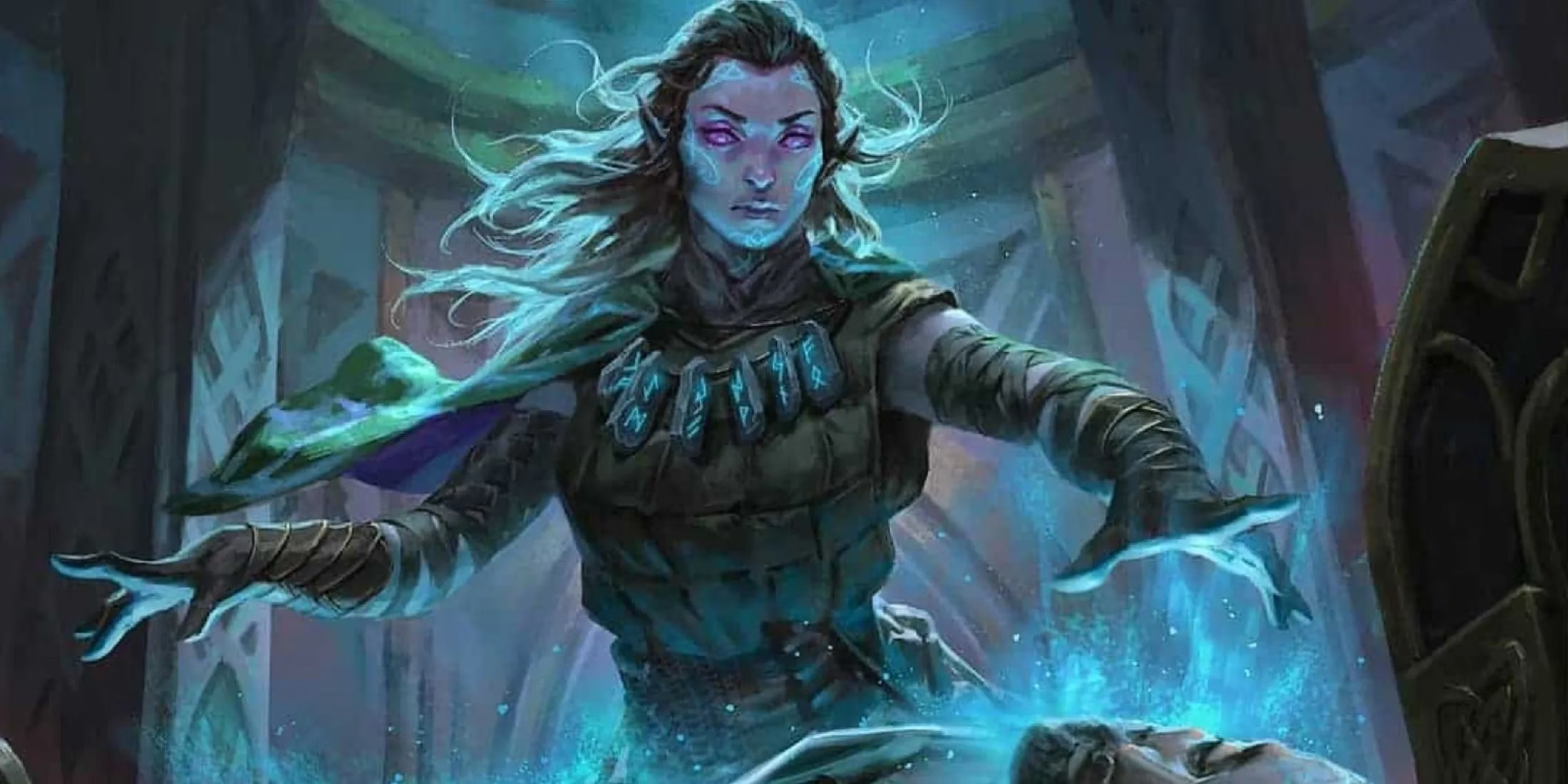
From a pure gameplay perspective, the Death Domain is a delightful corruption of the typical support‑oriented Cleric. Larian stayed faithful to Dungeons & Dragons fifth edition while adding their signature twist. My cleric could still toss a Healing Word when someone was down, but why bother when I could erase an enemy with an upcast Inflict Wounds? The real showstopper, though, is the selection of necromancy cantrips, including the much‑requested Toll the Dead. After 2025’s patch, I found myself gleefully ringing that death knell for 1d8 damage – or 1d12 if my target had already been bruised by a party member. The tactical synergy was immediate: let Karlach soften them up, then let the bells toll. And who could forget the homebrewed ability to detonate nearby corpses? Nothing says “divine retribution” quite like turning a fallen goblin into a makeshift bomb. It’s a feature you won’t find in any tabletop handbook, and it’s pure Larian genius.
But here’s the question that haunted me from the moment I selected my deity: who exactly am I worshipping? In the Forgotten Realms, Death Domain clerics typically serve Bhaal, Bane, or Myrkul – the Dead Three. Yet in Baldur’s Gate 3, none of these gods appear on the deity selection screen. The reason, of course, is buried in the game’s plot. The Dead Three and their Chosen are the architects of the Absolute conspiracy. My party would soon be cutting down Orin the Red, Lord Enver Gortash, and Ketheric Thorm – each a mortal vessel for those very gods. It’s a delicious paradox: a cleric whose typical patrons are the primary antagonists. How does that not create friction in every dialogue?
Larian clearly thought the same. Throughout my playthrough, I encountered subtle but significant class‑specific interactions. When I first entered the Temple of Bhaal, my character didn’t just feel repulsed – they felt a twisted sense of reverence that curdled into self‑loathing. Dialogue options allowed me to express internal conflict, or even acknowledge a morbid curiosity. One memorable line, spoken to a companion, was: “I was raised on tales of Bhaal’s glory. Now I see only a butcher’s floor.” If you’re playing as a Dark Urge, the narrative becomes even more layered. Imagine a child of Bhaal who rejects their father’s bloodlust by embracing the Death Domain – not for murder, but for the quiet dignity of the grave. I tested this exact origin, and the game acknowledged the contradiction multiple times, with Withers himself commenting on the “unusual choice” of my path. It’s these moments that make the subclass feel less like a mechanical option and more like a full‑fledged narrative path.
Speaking of Withers – that enigmatic, mummy‑like camp follower who resurrects your fallen allies – the Death Domain unlocks a conversation I never knew I needed. Fans have long suspected that Withers is an avatar of Jergal, the ancient god of death who was overthrown by the Dead Three. With a Death Domain cleric in the party, this subtext practically becomes text. Early in Act 1, I was given the chance to probe his true nature. “You speak of the Fugue Plane as if you have walked its halls for millennia,” my cleric remarked. His response, a dry deflection, only deepened my suspicion. Later, after the revelation of his identity, I could prod him further: “So you are the one they usurped. Does it sting to see what your domain has become?” The exchange was brief, but profoundly satisfying – a tiny reward for those who understand the lore. It’s the kind of interweaving that elevates Baldur’s Gate 3 from a video game to a living, breathing world.
Let’s stack up the three major story threads that the Death Domain enriches:
-
🌑 The Dead Three as untouchable patrons – The game denies you direct worship, forcing you to choose Kelemvor or another neutral deity, yet the narrative constantly reminds you of the missing gods. This absence creates a tension that feels intentional, like a missing limb that itches during the entire campaign.
-
⚔️ Confronting the Chosen – Orin, Gortash, and Ketheric aren’t just bosses; they are the physical embodiments of what your character could have been. My cleric’s dialogue with Ketheric Thorm was especially chilling. When I revealed my domain, he sneered, “You carry the scent of Myrkul like a pup following a wolf. Do you think you can challenge me?” Such lines are unique to Death Domain clerics and are not available to other Cleric subclasses.
-
💀 Withers’ secret identity – The ability to converse with Withers about death, the afterlife, and even his relationship with Jergal transforms an already mysterious NPC into a narrative centrepiece. In one camp interaction, he alluded to the Dead Three as “thieves of a throne they could not build,” and my cleric understood the reference instantly.
I’ve played through Baldur’s Gate 3 as a Light Cleric, a Tempest Cleric, and even a War Cleric – none of them tied me to the main plot as intimately as the Death Domain. The subclass doesn’t just let you heal and smite; it makes you a walking contradiction. You oppose gods you are supposed to exalt, you befriend an ancient being whose power they stole, and you wield necromancy to protect the living. It’s a tightrope act, and Larian provided just enough dialogue to make you feel the vertigo.
So, should you replay Baldur’s Gate 3 in 2026 as a Death Domain Cleric? If you’re the type of player who digs through every book in Cazador’s palace and who still thinks about that one line from the Narrator, absolutely. The subclass is not just a collection of damage spells; it’s an invitation to see the story through a darker, more conflicted lens. The only question I’m left with is: what other hidden gems did Larian sprinkle into those twelve subclasses? Perhaps it’s time for another character creation screen. After all, Volo’s guide to the new subclasses didn’t write itself.
As you reflect on the countless choices and story threads in Baldur’s Gate 3, it’s worth considering how much the gaming landscape has evolved to offer such rich, immersive experiences. For players who enjoy diving into these expansive worlds, finding the right game at the right time can be just as thrilling as the adventures themselves. Whether you're planning your next run or exploring other titles that match Larian's storytelling prowess, keeping an eye on game deals today can help you discover new gems without breaking the bank.
From epic RPGs to hidden indie treasures, there’s always something out there waiting to be explored. Platforms like DealNest make it easier to track down the best offers, ensuring you get the most value out of your gaming journey. After all, every great story starts with a simple decision – and sometimes, that decision begins with finding the perfect game at the perfect price.
Comments