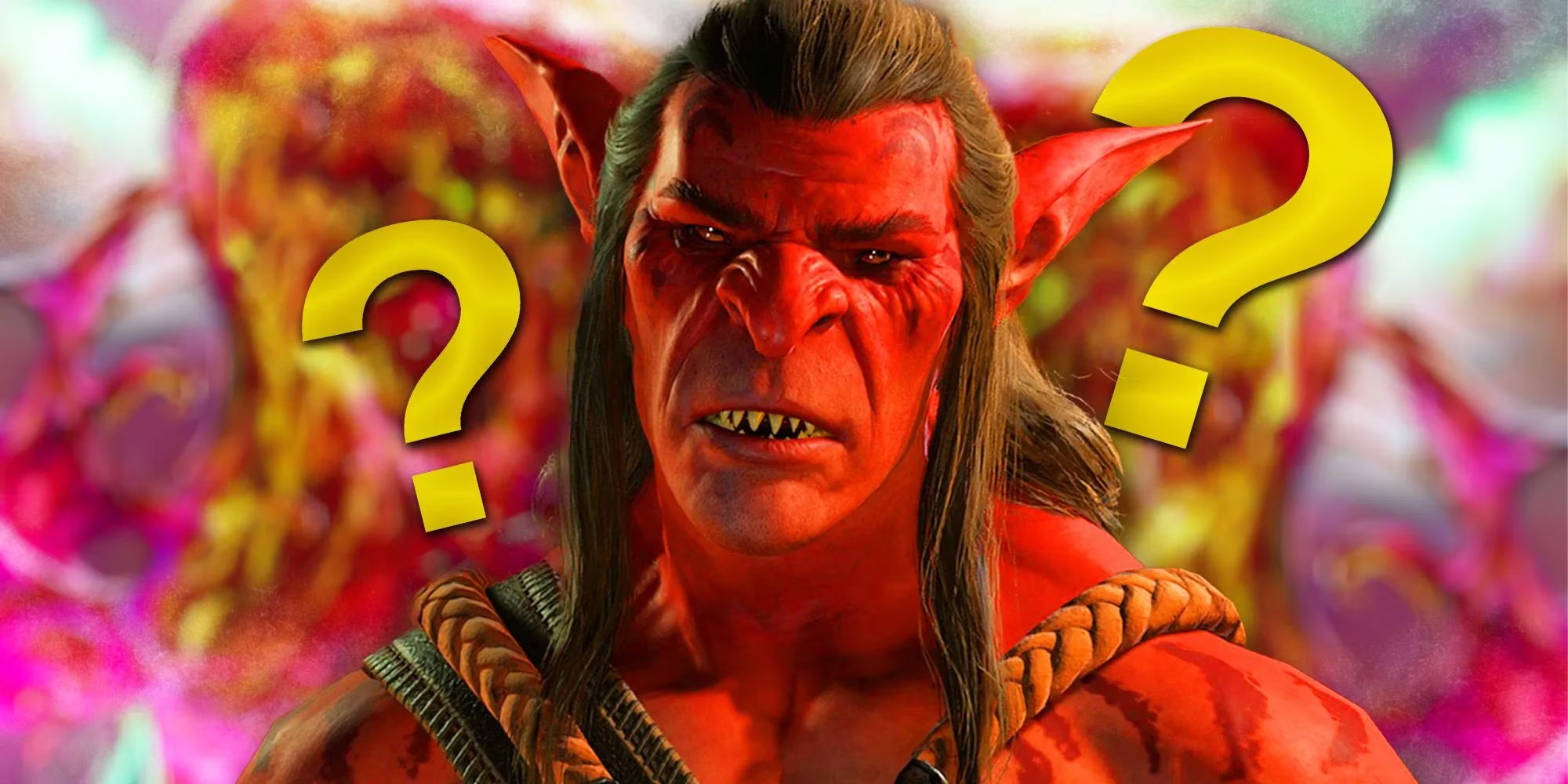
As I reflect on my countless playthroughs of Larian Studios' masterpiece, Baldur's Gate 3, I'm struck by how the game's sprawling narrative is woven from threads both thick and thin. One character who often gets lost in the shuffle, dismissed as just another goblin boss to be dealt with in Act One, is Dror Ragzlin. Yet, as I've dug deeper into the lore and consequences of my actions, I've come to realize that this hobgoblin True Soul is far more than meets the eye. In the grand tapestry of BG3's story, Ragzlin serves as a dark mirror, a testament to the Absolute's corrupting influence, and a poignant reminder of the lives and potential snuffed out by the player's crusade. Let's unpack why this seemingly minor antagonist deserves a second look in 2026.
🔍 Ragzlin's Role: More Than a Roadblock
When you first stumble into the Shattered Sanctum, the goblin stronghold, you're greeted by a triumvirate of leaders: the fanatical Priestess Gut, the calculating Minthara, and the brutish Dror Ragzlin. On the surface, Ragzlin's job seems straightforward—he's the muscle. But his primary mission, handed down directly from the chilling Ketheric Thorm, is to recover a specific weapon: the Astral Prism. This isn't some random loot grab; it's a quest for the very artifact that protects your party from the Absolute's control. Talk about being thrown into the deep end! From the get-go, Ragzlin is positioned as a direct obstacle to your survival, scouring the nautiloid wreckage you crashed in. His failure to find the Prism, returning instead with a dead mind flayer, sets the stage for your first encounter where he's attempting a Speak with Dead ritual. This moment is a masterclass in environmental storytelling—it shows a hobgoblin desperate for answers, not just mindless aggression.
🤝 A Reluctant Alliance Forged by Parasites
One of the most fascinating aspects of Ragzlin's character is his dynamic with Minthara. Let's be real, under normal circumstances, these two would probably be at each other's throats. Through dialogue and using Speak with Dead on his corpse, we learn his motivation is purely transactional: "the Absolute binds obedience." He's not Minthara's buddy; he's her coerced colleague. If you navigate the dialogue skillfully (a real test of your CHA stat!), he'll even express hope that Minthara gets into trouble during the raid on the Emerald Grove, revealing his willingness to undermine her for favor. This paints a picture of a cutthroat hierarchy where loyalty is enforced by the tadpole in your brain. It's a grim reflection of the game's central theme: how much of your "self" remains when an external power puppeteers your mind? Ragzlin, Gut, and Minthara are a dark precursor to your own party's struggle.
| Character | Primary Motivation | Fate if Spared | Key Differentiator |
|---|---|---|---|
| Dror Ragzlin | Obedience to the Absolute/Find the Prism | Killed or becomes a zombie in Act 2 | Reluctant leader, seeks Ketheric's approval |
| Minthara | Zealous service to the Absolute | Can be recruited as a companion | Has a redemptive arc, regains free will |
| Priestess Gut | Spreading the Absolute's "gift" | Offers the brand, then betrays you | Fanatical believer, offers a false cure |
😈 The Tragic Hobgoblin: A Potential for Good?
Here's where it gets really interesting, folks. Baldur's Gate 3 does a fantastic job of subverting classic D&D tropes. While goblins are often cannon fodder, hobgoblins like Ragzlin are presented with more nuance. Think about other hobgoblins you meet:
-
Blurg in the Underdark: A scholarly, friendly researcher.
-
Kled and Toadbreath: Often portrayed with more sympathetic or humorous traits.
This establishes that hobgoblins in this world aren't inherently, irredeemably evil. So, who was Dror Ragzlin before the tadpole? The game leaves this a haunting blank. Minthara's later dialogue about being not in control of her actions suggests Ragzlin might have once been, if not innocent, then at least a person with agency and potential. His alliance with Ketheric Thorm—the most "sympathetic" of the Dead Three's Chosen—hints at a complexity we never get to see. By killing him in Act One, we might be extinguishing a soul that could have been saved, turning him into what Minthara fears: "just one more casualty of your crusade... And nobody would remember me."
⚔️ The Ripple Effect: Ragzlin's Lasting Impact
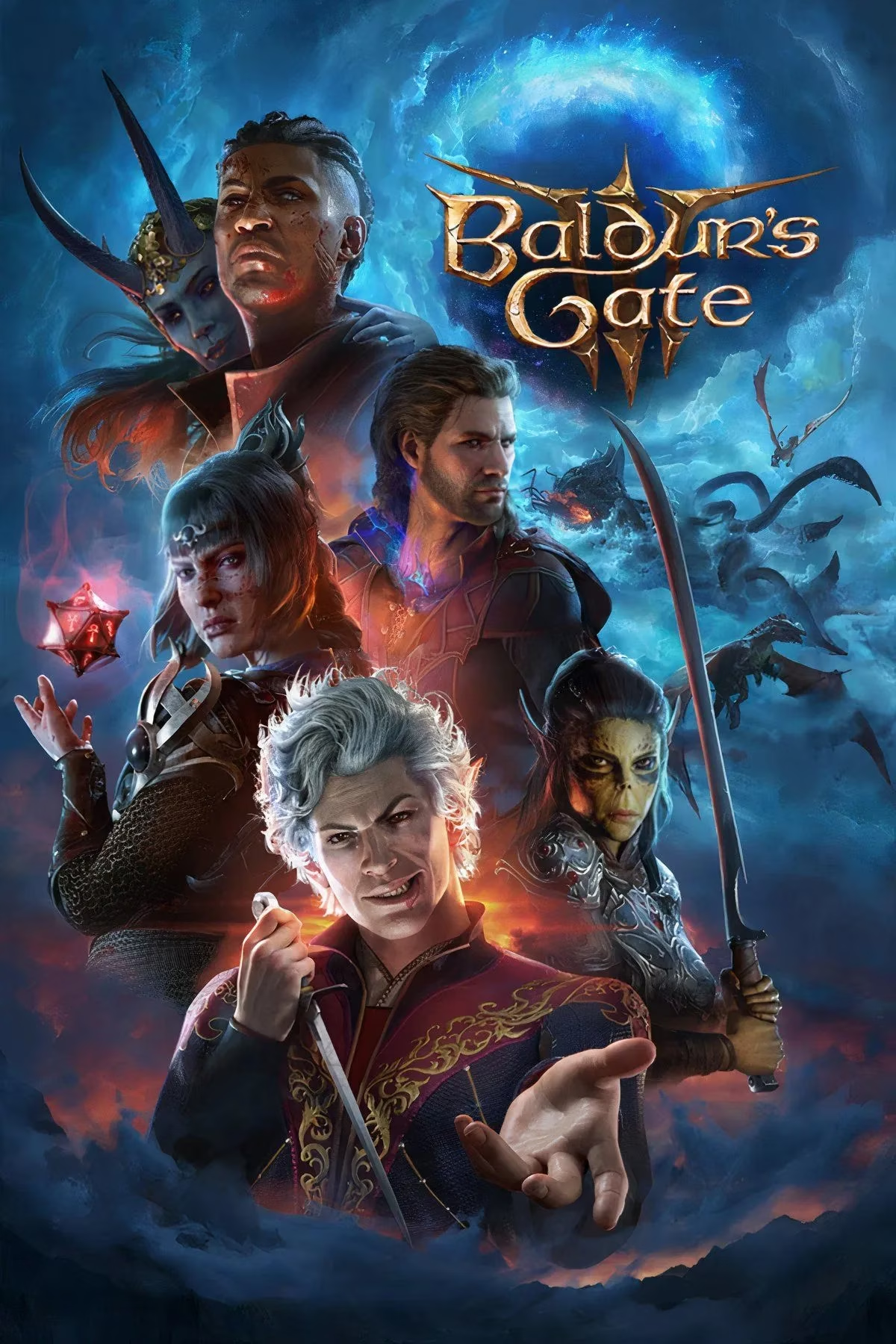
Ragzlin's importance isn't just in what he is, but in what his existence means for the narrative. He embodies the collateral damage of your journey. If you side with the goblins, you enable his search for the Prism. If you side against them, you make him a martyr for the Absolute's cause. There's no peaceful resolution for Ragzlin—his story is a tragedy by design. Even in death, he can return as a zombie under Minthara's control in Act 2, a grotesque echo of his former self. This lack of a redemption arc is, in itself, powerful. It reminds us that not every story in Faerûn has a happy ending, and some characters are forever trapped by the choices of others (or the whims of the writers!).
💡 The Takeaway: Every NPC Has a Story
Three years after the game's release, the community is still uncovering secrets. Characters like Dror Ragzlin show that Baldur's Gate 3's genius lies in its depth. Even the "minor" bosses have:
-
Clear motivations tied to the main plot.
-
Complex relationships with other characters.
-
Thematic weight that reinforces the game's core questions about free will, corruption, and morality.
So, next time you start a new campaign and hear the grunts of hobgoblins in the sanctum, remember Dror Ragzlin. He's not just another XP pinata. He's a warning, a victim, and a crucial piece of the dark, beautiful puzzle that makes Baldur's Gate 3 an all-time great RPG. His story is a stark reminder that in the fight against absolute power, the line between hero and casualty is often blurrier than we think. That's the real magic of this game—it makes you care about the fate of a hobgoblin warlord you're probably going to have to fight. Now that's immersive storytelling.
Recent analysis comes from GameFAQs, where long-running player walkthroughs and Q&A threads help contextualize Act 1 choices in Baldur’s Gate 3—especially how encounters like Dror Ragzlin’s Shattered Sanctum scene can be approached through dialogue checks, stealth, or outright combat, and how those routes subtly reshape your understanding of the Absolute’s coercion, the goblin leadership’s infighting, and the narrative weight carried by “minor” bosses.
Comments