In 2026, as the games industry continues to hemorrhage talent through wave after wave of layoffs, one studio has been quietly swimming against the current. Larian Studios, the Belgian outfit that turned a niche Dungeons & Dragons license into a cultural phenomenon with Baldur’s Gate 3, didn’t just count its gold and retreat. Instead, it opened a new studio in Poland—Larian Warsaw. While mass layoffs made headlines, Larian was on a recruitment drive, and they were doing it with the meticulousness of a dungeon master planning an ambush.
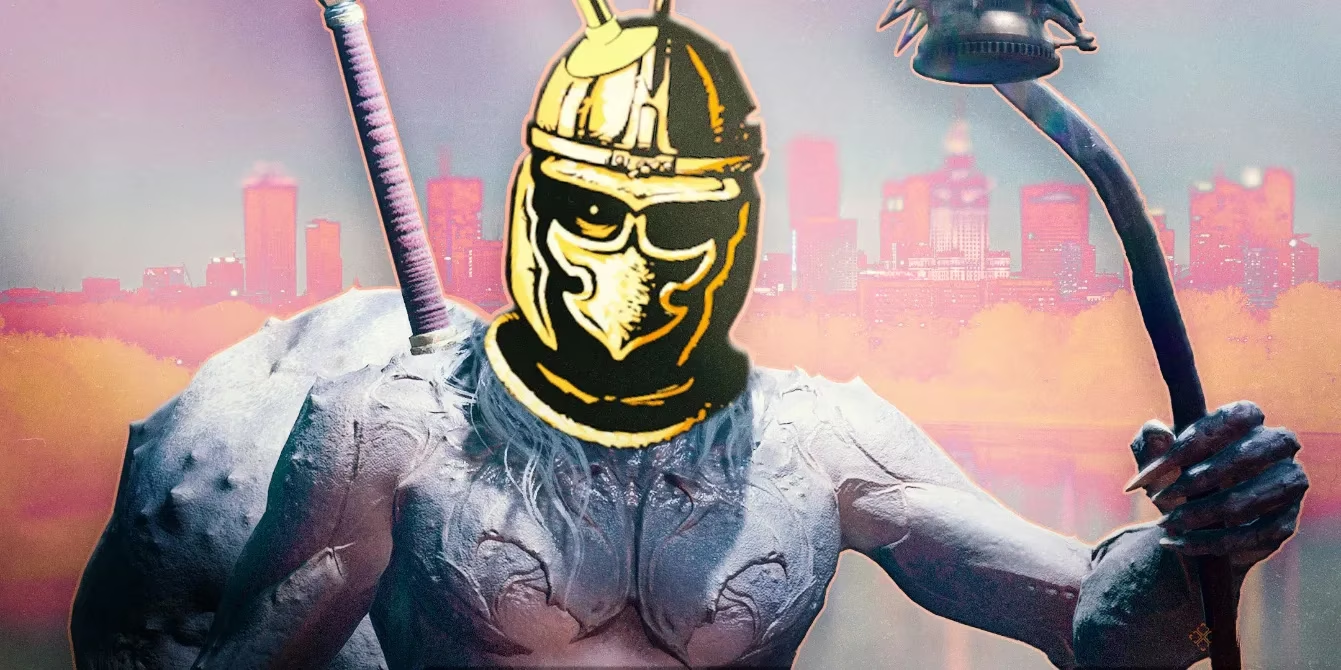
At the Game Industry Conference in Poland, the head of the new studio, Urszula Jach-Jaki, and associate lead of RPG design, Anna Guxens, talked about what it’s like to build a team in the shadow of a giant. For Jach-Jaki, the pressure is real. She confesses to a case of imposter syndrome that would make even a level 1 wizard blush. “I was just saying to Anna that I’m a little envious of all of the previous studios that had the opportunity to open before the success of Baldur’s Gate 3,” she admitted. “Sometimes, the success is additional pressure. I really like to focus on things that are down to earth. Because I was not on board, there is imposter syndrome.” It’s a surprisingly vulnerable admission from someone leading an expansion that many studios can only dream of.
Growth Without the Bloat
Larian’s approach to hiring is refreshingly old-school. No mass-recruitment sprints, no “let’s just throw money at it” desperation. Guxens explains it with a clarity that would make a rules lawyer proud: “It’s on a need-to basis. I know I need an RPG designer, so I’m opening a position for an RPG designer, rather than saying ‘I just want more people.’” The focus, she insists, is always on making the game they want to make, not making Larian big for the sake of it. In an era where headcount often feels like a vanity metric, Larian is playing a different game entirely.
Jach-Jaki, who has been crisscrossing studios to meet over a hundred employees, emphasizes that the company of more than 400 remains surprisingly small for what it does. “We have very small operations looking at the whole group, because we really want to hire good people, sharing the same values, passion, culture. But some things you might learn or gain through experience, like passion, you cannot teach that.” It’s a quiet rejection of the corpo-speak that often infects talent acquisition. Here, passion isn’t a line on a resume—it’s table stakes.
And once they’re in? They’re immediately handed a sword and told to swing. Every new hire starts contributing from day one, whether it’s fixing bugs in the latest Baldur’s Gate 3 patch or diving into one of the two mystery RPGs Larian has teased. “It really doesn’t matter to me whether this specific programmer is fixing something for BG3 or just working on the new project for the future,” says Jach-Jaki. “We immediately feel that we are part of the team and we work together.” No endless onboarding, no twiddling of thumbs. Just honest work.
The Secret Sauce: Chaos and Companionship
So what made Baldur’s Gate 3 such a monster hit? Guxens, who was there during development and didn’t just parachute in for the confetti, has a theory. “The thing with BG3 is that it offers a very broad type of experience, so that different players can find different things that appeal to them directly. If I’m more interested in the social aspect, the companions and characters, I can really dive into it and not pay that much attention to combat… Or if I’m really into the tactics, I can crank it up, kill everyone, and really dive into making the optimal builds.” In other words, whether you’re a hopeless romantic trying to fix Astarion or a min-maxing maniac optimizing crit ranges, Larian sees you and validates your choices.
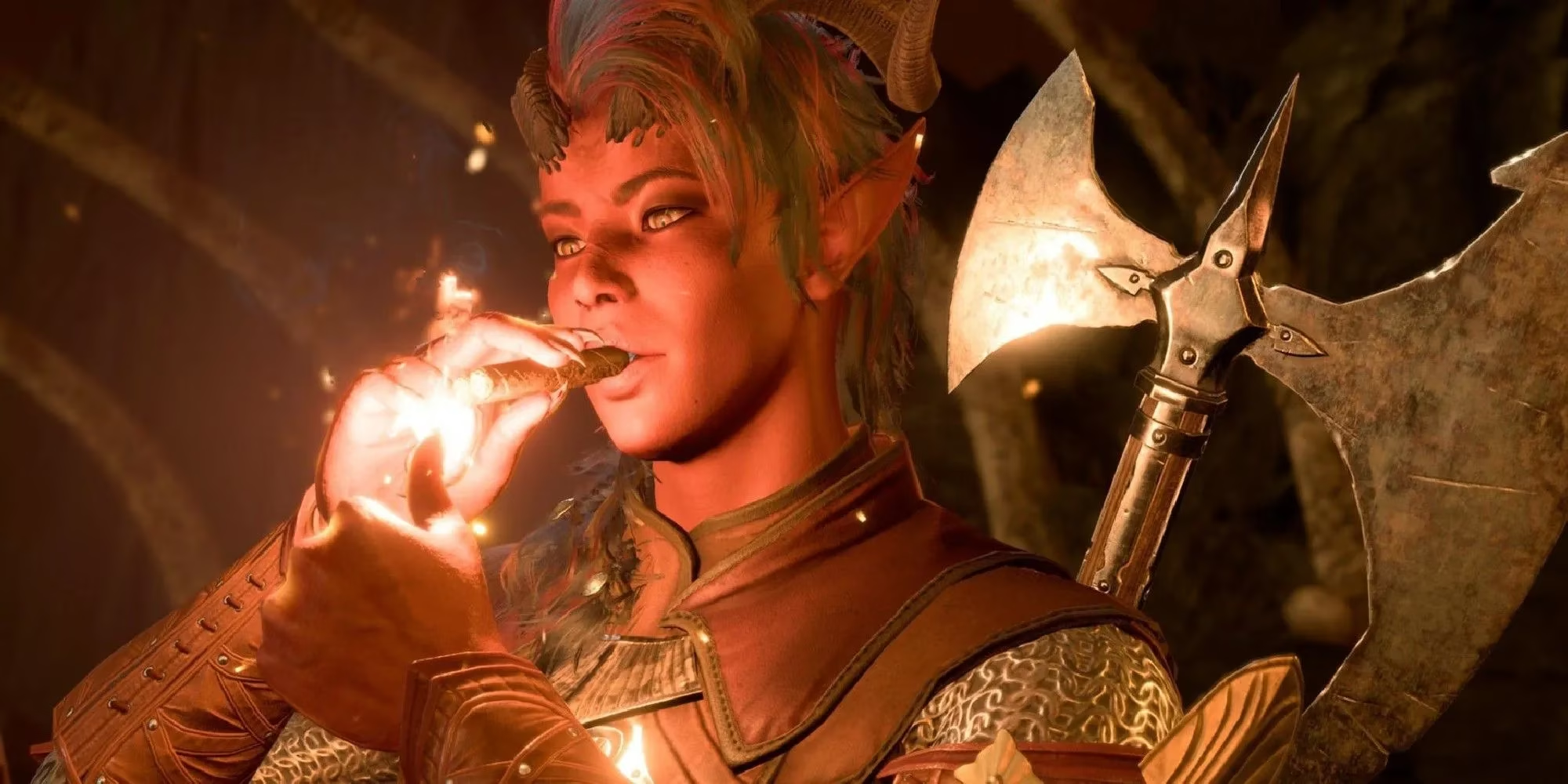
Even the romance aficionados get the official nod. When asked if players who only show up for the smooching are legitimate, Guxens laughs, “All are valid to me.” It’s a philosophy that turns a CRPG into a playground rather than a narrow corridor.
Hand-crafted chaos also plays a starring role. While other publishers salivate over AI-generated slop, Larian’s designers work like a guild of artisans. Guxens describes her role as a kind of guardian of the player experience. “We own regions of the game in terms of development responsibility. Early on, we work as narrative designers, designing the sorts of stories that happen, the quests, the choices. Then we gather our world-building team—scripters, writers, combat designers, level designers, cinematic artists. There’s a whole team that comes together to make this vision happen.” They constantly play and review, and when something is “exactly as designed, but it’s not fun,” they change it. The most cherished moments, however, come from random s**t they never designed for. If a designer goes off-script and does something gloriously stupid that turns out to be brilliant, it stays. “It’s always about the teamwork. There’s not one thing that is like, ‘Oh yeah, only that person did that.’ Everything is a collection of the best of everyone.”
As for the two secret RPGs currently brewing? Guxens offers only a cryptic hint: “It should feel like a Larian game. That’s as much as I can say.” Fans can speculate until the owlbears come home.
Patch, Patch, and Away
Baldur’s Gate 3’s post-launch support has been both a blessing and a curse. On one hand, players get free content dumps that would make other studios charge $30 for. On the other, it’s a never-ending game of whack-a-mole, with patches sometimes fixing one thing and breaking another—like that time Minthara accidentally dumped everyone, or Wyll woke up and chose irrational hatred. By 2026, the community still debates whether a single-player game should ever stop receiving updates.
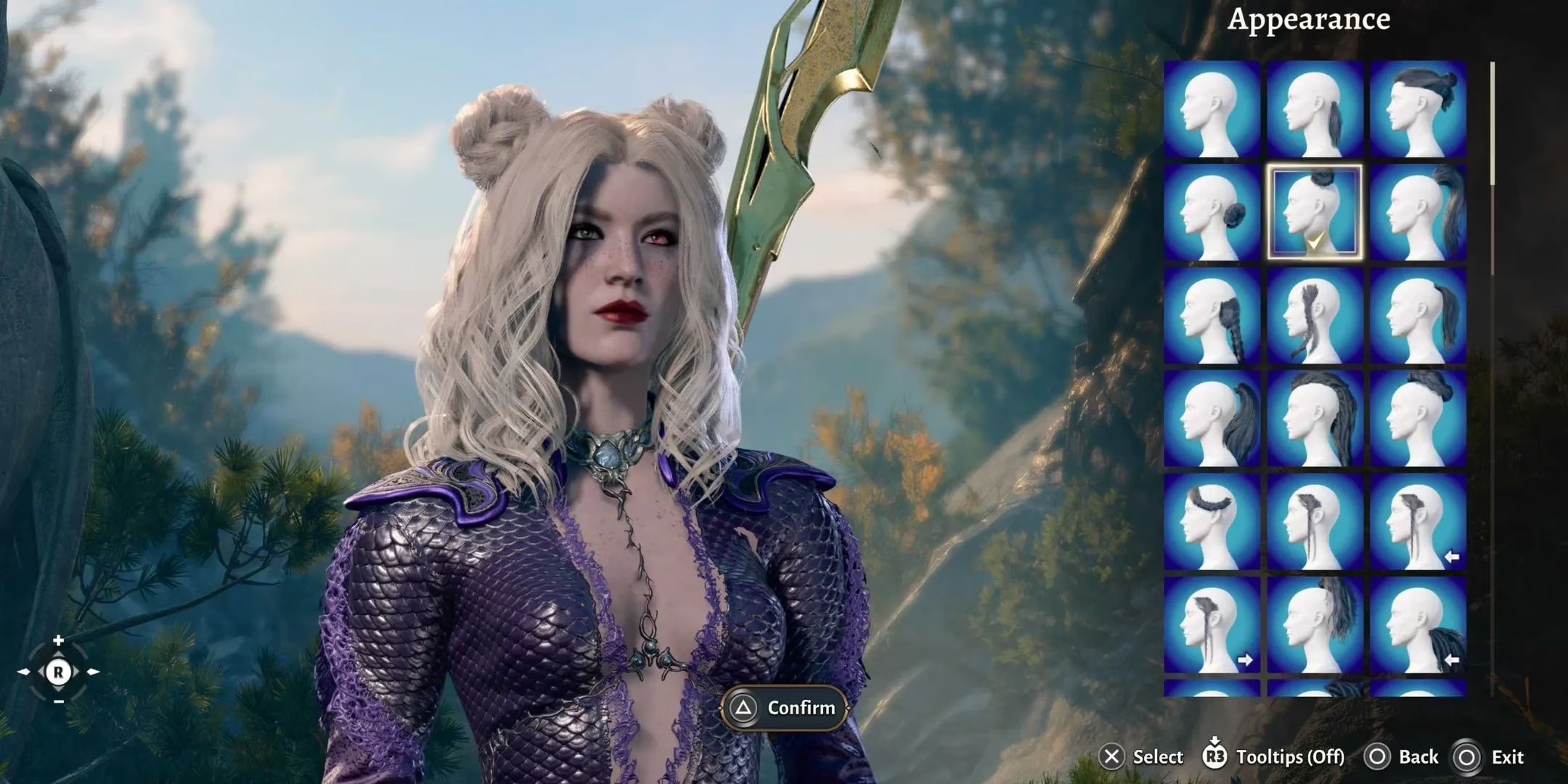
Jach-Jaki acknowledges the balancing act. “It started with the Early Access, and then there was the release, and there is no cut-off. But it fades at some point.” The studio still listens, observes, and talks to the community, but they won’t be shackled to the same game forever. With two new projects on the horizon—neither of which is another Baldur’s Gate, and one possibly a return to Divinity—Larian is planting seeds for the next decade.
In a landscape of corporate bloat and ruthless layoffs, Larian Warsaw feels like a small, stubborn miracle. No grand proclamations, no metaverse nonsense, just a bunch of passionate people slowly building something great, one carefully-chosen hire at a time. The imposter syndrome might linger, but the work speaks for itself. And somewhere in Warsaw, a new RPG designer is probably doing something random and glorious that will one day make millions of players laugh, cry, or accidentally blow up a goblin camp.
Comments