It has been three years since Baldur’s Gate 3 redefined the RPG landscape and swept Game of the Year accolades, and yet Larian Studios shows no sign of slowing down. Even as the team continues to roll out meaningful community updates for their magnum opus, the real buzz inside the studio revolves around something entirely new. As 2026 unfolds, CEO Swen Vincke remains openly giddy about the projects currently taking shape behind closed doors — and he wants fans to know the best is still ahead.
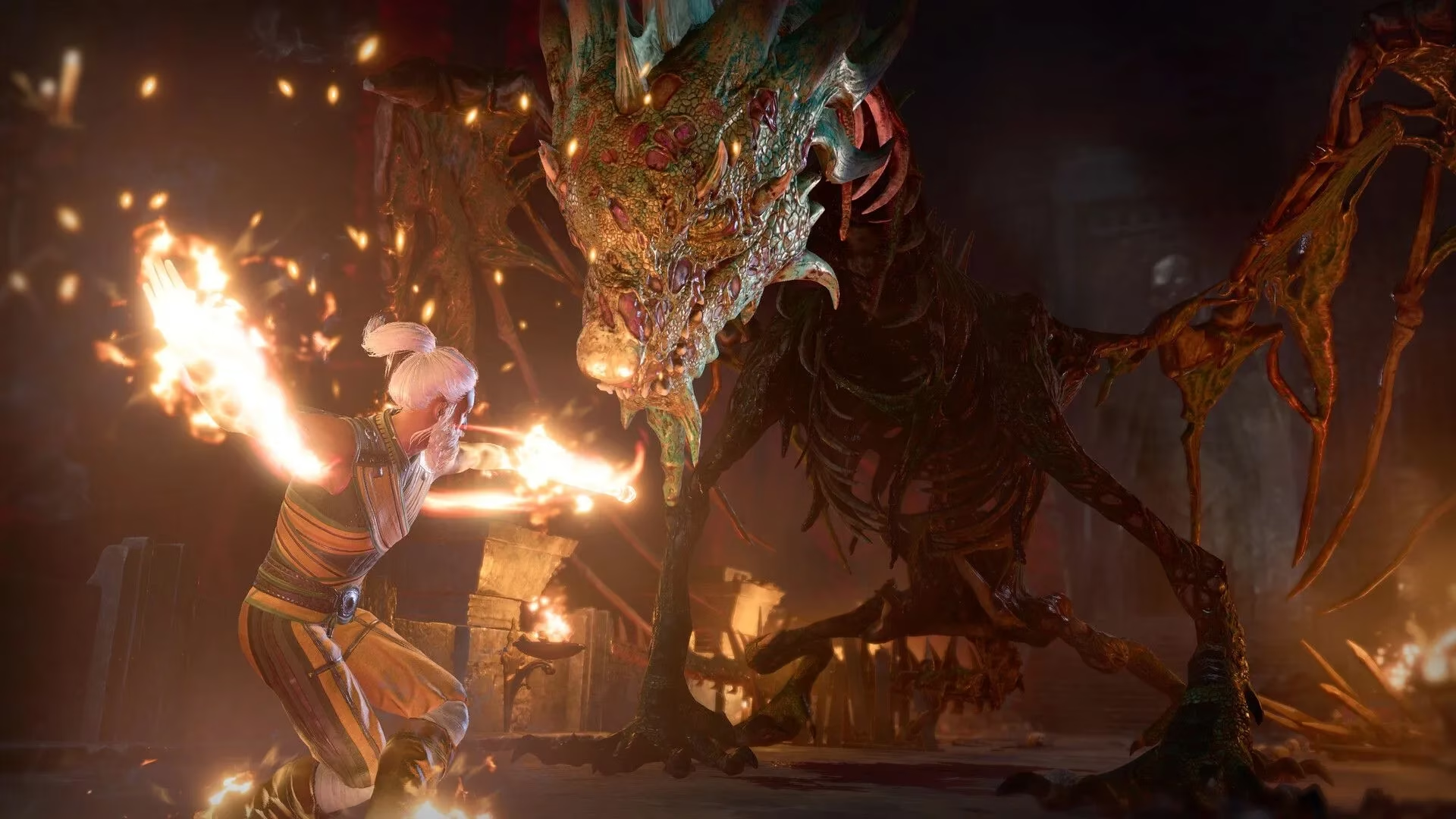
Back in late 2024, Vincke let slip that preliminary work had already begun on the studio’s next title. The revelation came just as Baldur’s Gate 3 earned a nomination for Best Community Support at The Game Awards, yet Vincke confessed he was far more preoccupied with what the team was brewing. “It’s very hard to keep on delivering on something that’s already out there while the entire studio is buzzing with all the new exciting stuff,” he admitted at the time. Fast-forward to 2026 and that buzz has only intensified. Though Larian has remained characteristically tight-lipped about specifics, the studio has confirmed that it is not working on one, but two brand-new games — and neither of them will carry the Dungeons & Dragons logo.
Why abandon the beloved IP that catapulted Larian to stratospheric fame? Vincke has addressed the question with characteristic candor. After pouring years into the Forgotten Realms, the team felt it was time to forge its own path again. “We’re incredibly thankful for our time with D&D,” he shared, “but our future lies in original worlds.” Crucially, he promised that both projects would be built on the same narrative-first, player-agency-driven foundation that made Baldur’s Gate 3 a masterpiece. Think of it as the studio’s DNA: reactive storytelling, cinematic dialogue, deep tactical combat, and that unmistakable Larian charm — all grown in fresh soil.
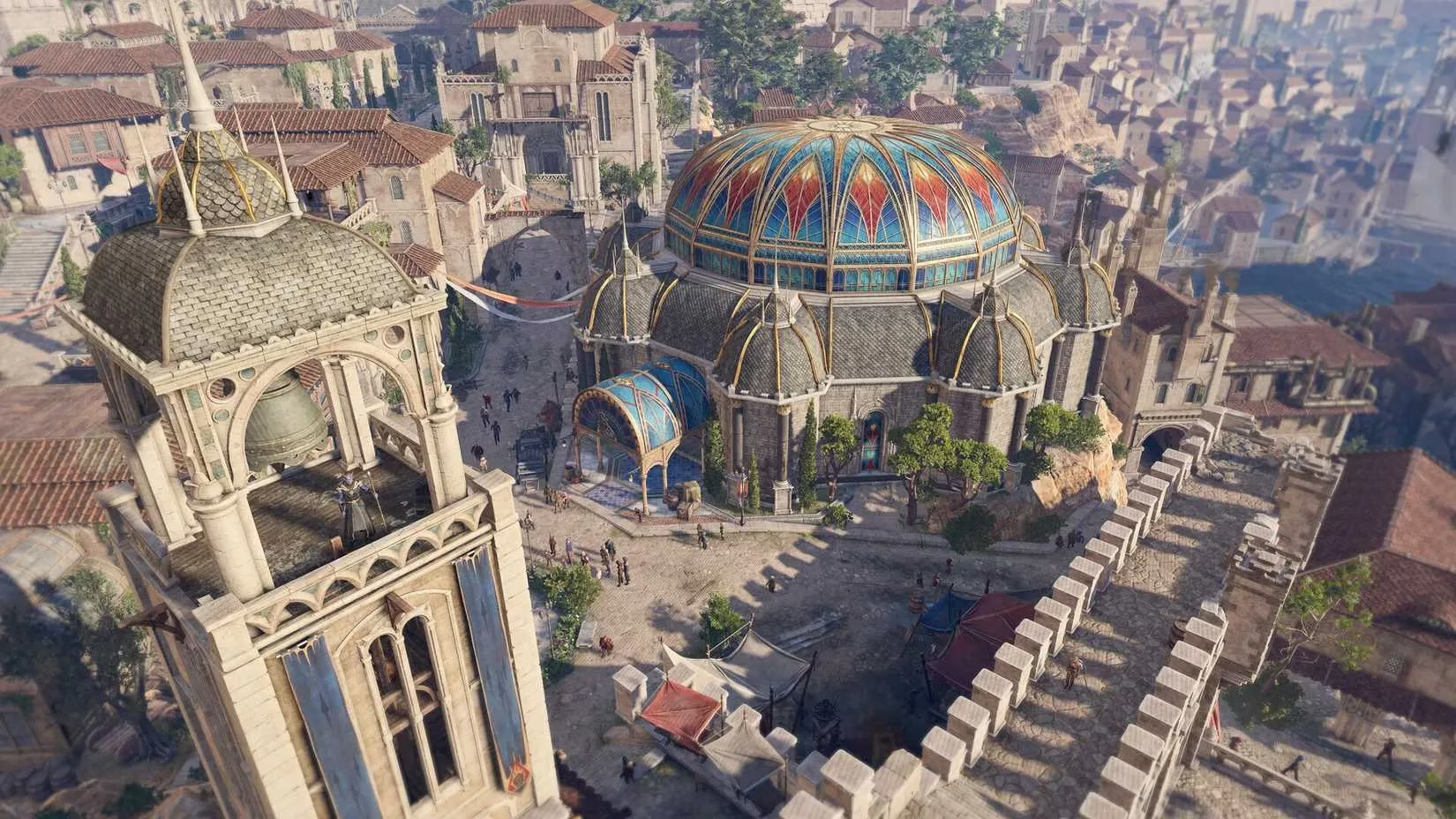
So what exactly is Larian cooking? That’s the multi-million-dollar question. The studio has yet to issue so much as a teaser trailer, but Vincke’s own words paint a tantalizing picture. “I don’t know if we’re going to pull it off,” he once mused, “but looking at our narrative, visual and gameplay plans, I think what we’re working on now will be our best work ever. I get excited like a kid watching the key imagery, want to show it to everyone now and grumble in frustration at having to wait until it’s actually all working.” For a leader who has already delivered one of the highest-rated PC games of all time, such enthusiasm is remarkable — and infectious.
Industry watchers note that Larian’s expansion to multiple teams has been a deliberate strategic move. The success of Baldur’s Gate 3 allowed the company to grow significantly, opening new offices and hiring top talent. This dual-project approach suggests a studio determined to avoid a decade-long gap between releases. Could one game be a smaller, more experimental title while the other targets the blockbuster scale we’ve come to expect? Or are both aiming to be sprawling epics? Until official word arrives, speculation remains the fans’ favorite pastime.
Community support for Baldur’s Gate 3 has not waned in 2026. The latest patches continue to add new subclasses, dialogue options, and quality-of-life improvements — a testament to Larian’s commitment even as the bulk of the team pivots to the unknown. This balancing act hasn’t gone unnoticed. The studio’s transparent communication and genuine affection for its player base have kept the fanbase energized, turning anticipation for the new IPs into a shared, positive experience rather than impatient frustration.
What challenges lie ahead? Moving beyond the immense shadow of Baldur’s Gate 3 is no small task. The game became a cultural phenomenon, in part because it fused an established IP with Larian’s unique design philosophy. Building an entirely original setting requires world-class worldbuilding and the ability to sell players on a universe they’ve never heard of. Yet, if Vincke’s excitement is any barometer, the studio may already have something genuinely fresh — something that makes them feel like kids again. After all, when the people making the game are this eager to show it off, something special is almost certainly brewing.
Looking at the calendar, 2026 feels like the calm before the storm. It’s likely that formal reveals remain at least a year away, with full releases probably not arriving until the tail end of the decade. But for Larian, patience has always been a virtue. Each of their games has been a labor of love that arrived when it was truly ready, not a moment before. The promise of not one but two new adventures, free from the constraints of a licensed universe and infused with everything the studio has learned, is a thrilling proposition for any RPG lover.
As the days tick by, the gaming world can only sit tight and imagine what Vincke glimpses in those internal demos. Will we see a sci-fi epic? A dark fantasy world of Larian’s own making? A return to the playful tone of the Divinity series, or something completely unprecedented? The answers may still be locked in a Belgian vault, but the message from the top is clear: the wait will be worth it. And if history is any guide, Larian Studios is about to redefine what we expect from a role-playing game — again.
Comments