As a long-time fan of the Mass Effect series, I've been eagerly anticipating news about the fifth installment. Looking back from the vantage point of 2026, the landscape for role-playing games has been irrevocably shaped by titles like Baldur's Gate 3. For Mass Effect 5 to reclaim its throne as a genre-defining epic, it cannot simply be a nostalgic callback; it must learn, adapt, and innovate. The original trilogy was groundbreaking for its cinematic storytelling and consequential choices, but modern standards, set by games like Baldur's Gate 3, demand far more depth and nuance. The question is no longer about having a great story, but about how that story is told and how much agency the player truly possesses. Can Mass Effect 5 evolve, or will it be trapped by the design philosophies of a bygone era?
The Dialogue Wheel Needs a Complete Overhaul
One of the most immediate lessons Mass Effect 5 must learn is to move beyond its iconic, yet now dated, dialogue wheel. In the original games, the system was brilliantly intuitive for its time. 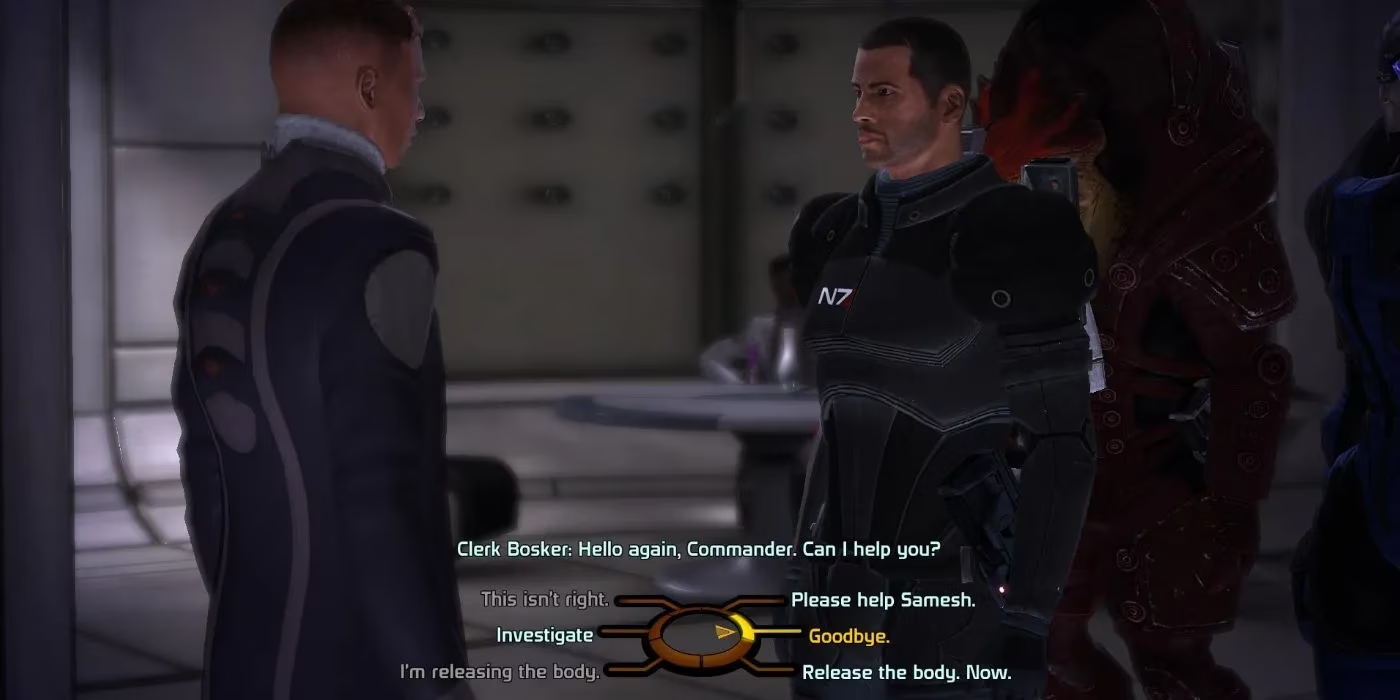
However, its design ultimately telegraphed player choices too clearly. We all remember the pattern: top-right for Paragon (good), bottom-right for Renegade (bad), and the left side for optional exposition. This created a mechanical, almost gamey, interaction with conversations. After a few hours, players could effectively "check out," simply nudging the stick in the direction that aligned with their desired morality score. Where is the role-playing in that?
Baldur's Gate 3 demonstrated a superior approach. By presenting dialogue as a simple list of text options, without clear moral signposting, it forces players to engage with the content of the conversation itself. Persuasion checks or class-specific options are present, but they aren't always the "correct" choice. For example, blindly passing every Persuasion check with the demon Yurgir can lead to convincing him to kill himself—a potentially disastrous outcome. This lack of hand-holding makes every dialogue choice feel consequential and thoughtful. Mass Effect 5 must abandon the color-coded, position-coded wheel. It needs a system where the weight of words matters more than their position on a UI element.
From Binary Morality to Complex Reputation
The Paragon/Renegade system was another hallmark of the series, but in 2026, it feels simplistic and restrictive. Many major decisions were boiled down to a blunt binary: save the Rachni Queen (Paragon) or commit genocide (Renegade). But what about a middle path? What about negotiating terms, establishing safeguards, or finding a third option that reflects the messy reality of galactic politics? The old system didn't allow for that level of nuance.
Furthermore, locking certain dialogue options behind high Paragon or Renegade scores actively discouraged role-playing. It incentivized players to pick a lane and stick to it rigidly, even if a specific situation called for a different approach, just to avoid being locked out of content later. This reduced Shepard's potential for a complex, evolving personality.
Contrast this with Baldur's Gate 3. Its morality isn't tracked by a simple meter. Instead, it's woven into the relationships you build with your companions and the factions you encounter. Turning Shadowheart away from the goddess Shar isn't about having accumulated enough "Good Guy" points; it's about the trust and conversations you've shared with her over the course of your journey. This system allows for incredible flexibility. You can be a princible hero in one moment and a cunning opportunist in the next, with the game's world reacting to the sum of your actions, not just your alignment on a slider. For Mass Effect 5 to feel truly modern, it must replace its binary morality with a dynamic reputation and relationship system that reflects the multifaceted nature of leadership and diplomacy.
The Weight of Words: No Take-Backsies
A critical flaw in the original trilogy that undermined narrative tension was the ability to repeat conversations. Remember talking to Wrex on the Normandy, picking a fight, and then immediately reloading the conversation to say the "right" thing? This safety net made relationships feel somewhat hollow. There was never any real risk of permanently damaging a bond because you could always rewind and fix your mistake.
Baldur's Gate 3 is far less forgiving. While you can ask companions for their thoughts generally, most story-critical conversations happen once. Say the wrong thing to Gale one too many times, and you might find yourself without a powerful wizard in your party. This design philosophy gives every exchange weight. It makes alliances feel earned and breakups feel devastatingly real. If Mass Effect 5 wants its crew interactions to have the emotional resonance that modern players expect, it must commit to the consequences of dialogue. Decisions in conversation should be as final and impactful as decisions made on the battlefield.
The Case for a Silent Commander
This might be the most controversial suggestion, but hear me out. The voice-acted Commander Shepard was a revelation in 2007. Jennifer Hale and Mark Meer delivered iconic performances that brought the character to life. However, this innovation came with a significant cost: limitation. Recording thousands of lines of dialogue for a fully voiced protagonist is astronomically expensive and time-consuming. This inevitably placed a hard cap on the number of dialogue options available to the player.
Baldur's Gate 3's silent protagonist (with narrated dialogue choices) allowed Larian Studios to implement a staggering breadth of player expression. Different races, classes, backgrounds, and even specific spells could unlock unique dialogue paths. This depth of role-playing possibility is simply not feasible with a fully voiced lead. Furthermore, voice acting for a character who can be anything from a paragon of virtue to a ruthless pragmatist is incredibly challenging. Occasionally, Shepard's delivered lines could feel slightly stilted, as the performance had to remain somewhat neutral to fit multiple player interpretations.
By adopting a silent protagonist model, Mass Effect 5 could unlock a new era of player agency. 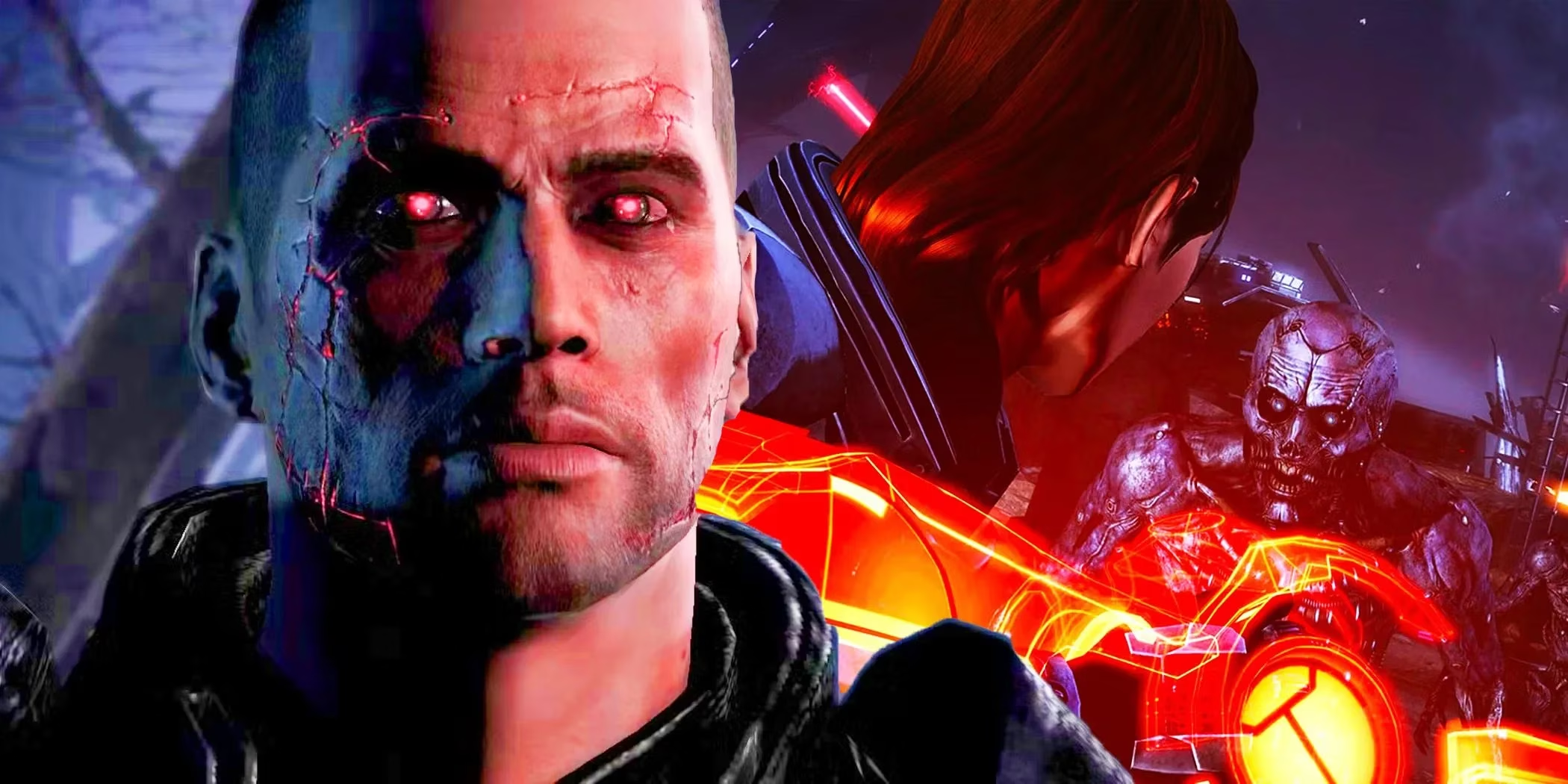
It would allow for:
-
Exponentially more dialogue options based on background, class (e.g., Soldier, Engineer, Biotic), and previous choices.
-
More nuanced character projection, where players can fully imagine the tone and inflection of their Commander.
-
Greater resource allocation, potentially allowing for even more detailed companion interactions and world reactivity.
While saying goodbye to a voiced Shepard would be bittersweet, it could be the key to delivering the most personalized, reactive, and deep Mass Effect experience ever created.
The Path Forward for Mass Effect 5
In summary, for Mass Effect 5 to succeed in today's RPG landscape, it must look forward, not just backward. The blueprint for success has been laid out. The table below summarizes the key evolution points:
| Legacy Mass Effect Feature | Modern Lesson from Baldur's Gate 3 | Benefit for Mass Effect 5 |
|---|---|---|
| Telegraphed Dialogue Wheel | Unsignposted List-Based Dialogue | Creates genuine engagement and consequence in conversations. |
| Binary Paragon/Renegade System | Dynamic Reputation & Relationship System | Enables complex, nuanced role-playing and character development. |
| Repeatable Conversations | Most Conversations Are One-Time Events | Adds weight, tension, and realism to player choices and relationships. |
| Fully Voiced Protagonist | Silent Protagonist with Text Choices | Allows for vastly greater dialogue variety and player expression. |
The goal isn't to become Baldur's Gate 3 in space. The soul of Mass Effect—its grand sci-fi opera, its unforgettable companions, its sense of scale—must remain intact. But the tools used to tell that story and let us live within it must evolve. By embracing these lessons, Mass Effect 5 can do more than just catch up; it can once again set the standard for what a narrative-driven RPG can be. The galaxy is waiting for a new kind of Commander. Are the developers ready to deliver one?
Comments