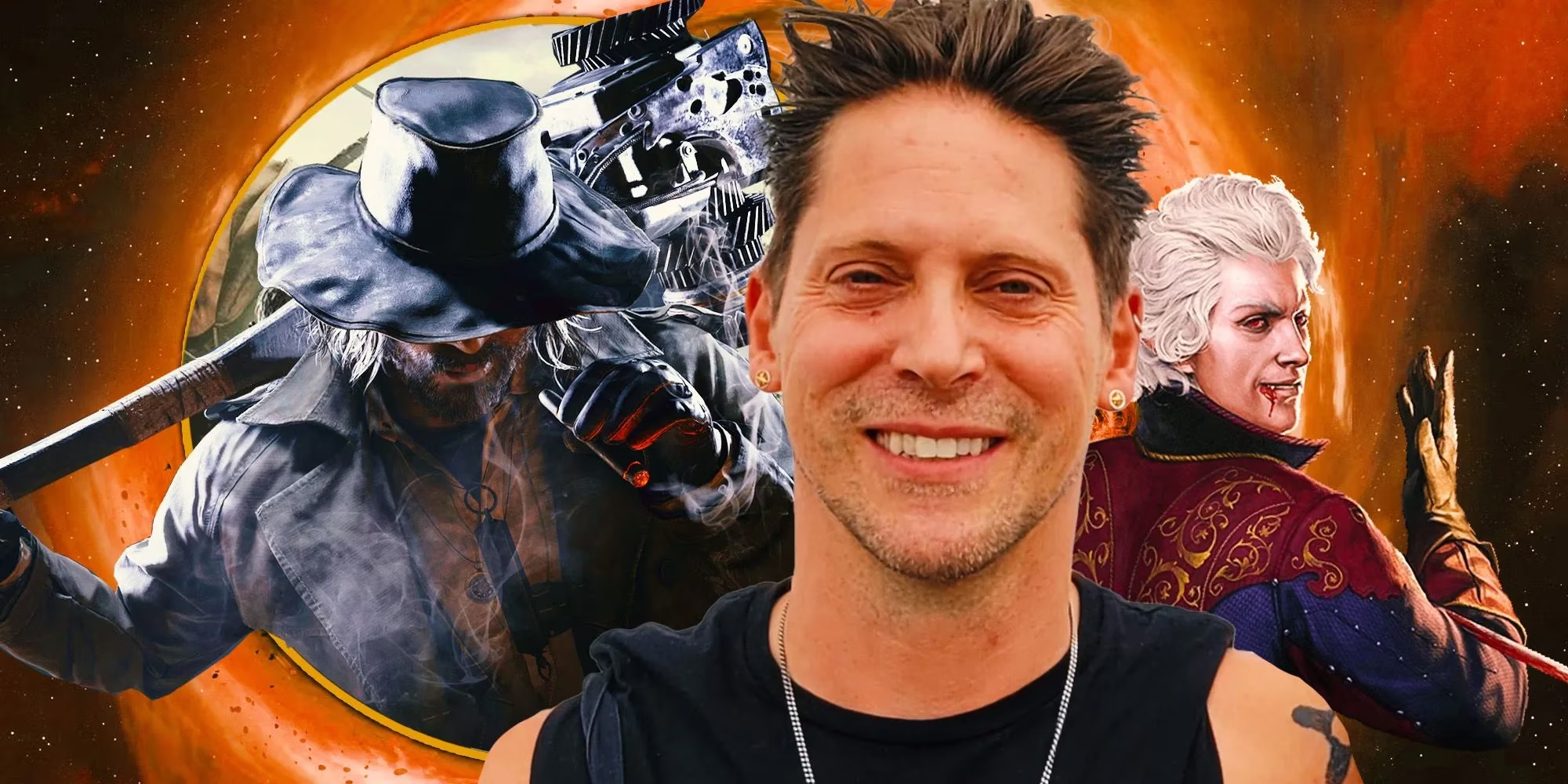
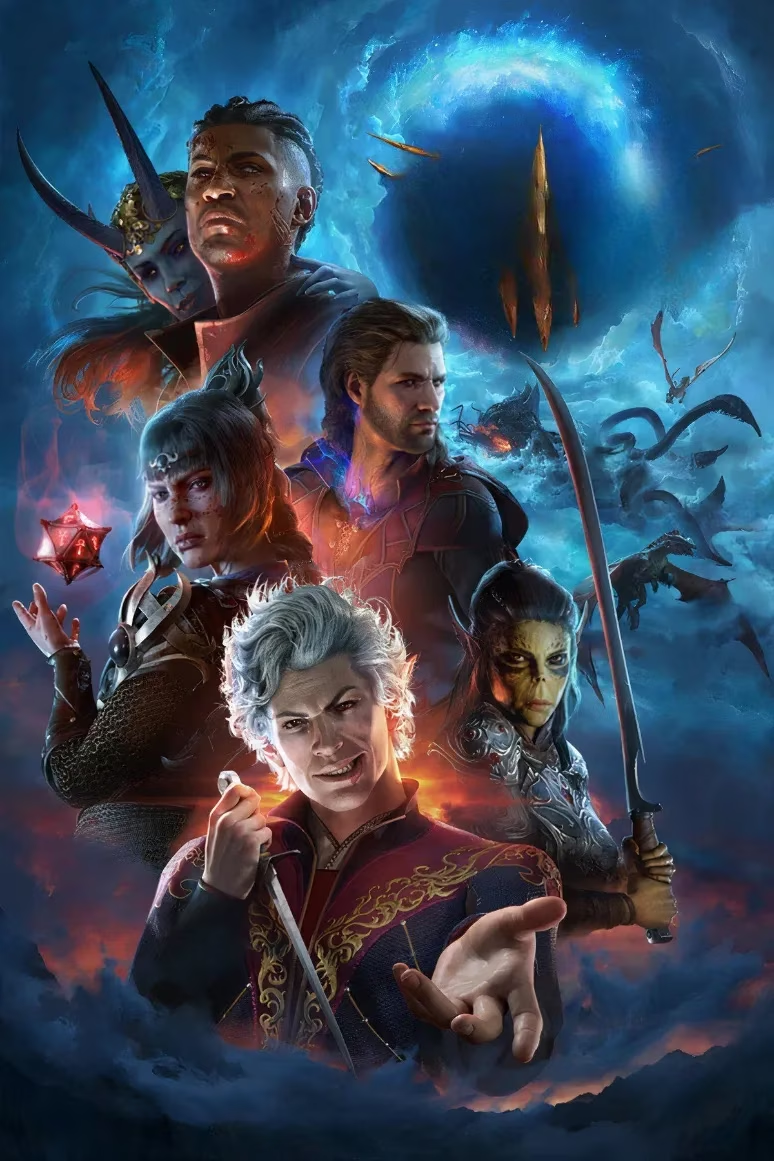
Imagine a world where a single performance could redefine an entire genre, where the soul of a fictional vampire elf becomes a beacon for storytelling, industry ethics, and human connection. This isn't fantasy—this is the reality shaped by Neil Newbon, the performance capture artist whose portrayal of Astarion in Baldur's Gate 3 catapulted him from respected actor to a pivotal voice in the gaming world. By 2026, his influence has only magnified, turning his insights from a 2024 Brazil Game Show interview into a manifesto for the future of interactive art. Is it possible for one actor to embody a character so completely that they become inseparable in the public's mind? The journey of Neil Newbon suggests a resounding yes.
🎭 The Alchemy of Becoming Astarion: A 'Happy Accident'
Newbon's entry into the world of Faerûn was almost serendipitous. He didn't initially audition for the now-iconic vampire spawn; he auditioned for generic elf roles. Yet, his interpretation aligned perfectly with Larian Studios' nascent vision. The character's evolution was organic, mirroring the player's journey: a guarded, closed-off performance for the early, vulnerable Astarion that gradually opened up as the story progressed. Newbon credits this as a "happy accident" of the chronological shooting schedule. Isn't it fascinating how the meta-narrative of the actor's discovery mirrors the character's own arc of self-discovery? He describes finding Astarion's voice—a higher, more inflected register than his own natural London-meets-American cadence—and settling into the character's "fluidity" after a few months of exploration. The subsequent years were simply "fun," a testament to the deep, settled understanding between actor and role.
🤖 The Human Spark vs. The AI Shadow: A Stark Warning
In an era increasingly fascinated by artificial intelligence, Newbon's stance is unequivocal and has only grown more relevant by 2026. He views AI in creative spaces as not just a threat, but a profound bore. "I want AI to mow my lawn, do the dishes, and do my taxes," he quips. "I don't want AI to replace creative artists." His argument is rooted in humanity: audiences connect with human-made art because it contains that irreplicable "spark" of lived experience and accidental genius. AI, he argues, operates on logic, not sentience. It can't replicate the "happy accidents" that define great performances. Furthermore, he highlights the dire human cost—the livelihoods of actors, developers, and artists being sacrificed for profit margins and technological novelty. Will audiences truly embrace stories told by algorithms, or will they crave the imperfect, beautiful humanity that artists like Newbon provide? His bet, and the continued success of studios like Larian that champion human performers, is firmly on the latter.
🎲 TTRPGs: From Niche Haven to Storytelling Powerhouse
Newbon, a self-professed geek from the uncool 90s, has watched tabletop role-playing games (TTRPGs) and narrative-driven video games ascend to cultural dominance. He posits a powerful reason: active storytelling. Unlike passive media, games like Baldur's Gate 3 make the player a co-author. This active participation forges deeper connections—players don't just witness Astarion's trauma and triumph; they directly influence it. Newbon is constantly approached by fans who share how these stories have helped them, connected them to communities, or provided solace. This shift, powered by the internet and generational change, has transformed games from pastimes into legitimate, powerful storytelling mediums. Can any passive film or book claim to have the same transformative, participatory impact? For a growing global audience, the answer is clear.
⚔️ Advocacy in the Arena: Fighting for People Over Profit
Beyond the performance booth, Newbon has used his amplified platform to become a vocal critic of the gaming industry's troubling trends. Alongside colleagues like Ben Starr, he condemns the widespread layoffs that have plagued the sector. His logic is fiercely humanistic: sacrificing skilled, experienced developers and contractors to protect profit margins is "ludicrous." It jeopardizes families, discards invaluable institutional knowledge, and, he argues, is ultimately bad for business. "Take the hit on the profits, guys, and look after your people," he urges executives. His advocacy extends to fierce support for LGBTQIA+ rights, a principle he calls "anti-a-hole." Through streams and his public platform, he cultivates safe spaces, arguing that respect for individuals' lives and loves is a basic tenet of decency. In a world often driven by data and dividends, Newbon champions the irreplaceable value of the human element—both behind the screen and in the society it reflects.
🛠️ Deconstructing Method Acting: The Toolkit of a Modern Performer
Newbon is keen to dismantle the popular, often toxic, misconception of "method acting." He dismisses stories of actors terrorizing crews by staying in character as "bulls***" and a "weak excuse to be nasty." True method acting, as derived from Stanislavski, is about rigorous, personal character study—like Daniel Day-Lewis learning a trade for a role. Newbon himself is a toolkit actor, trained in:
-
Meisner Technique
-
Laban Movement Analysis
-
Yat Malmgren's work
-
Animal and creature work
-
Commedia dell'arte
He believes no single tool works for every scene. The key is having a diverse skill set and the wisdom to know which to use, ensuring the work serves the story and the ensemble, not the actor's ego. Isn't it time we retired the glamorous myth of the difficult method actor in favor of celebrating the collaborative, skilled craftsman?
🏆 The Personal Pantheon: A Glimpse into Newbon's Gaming Heart
When pressed on his all-time favorite games, the actor's tastes reveal the roots of his roleplaying prowess:
-
The entire Fallout series (1 through 4).
-
The Elder Scrolls series, especially Skyrim.
-
Classic isometric tactical RPGs like Rebelstar.
This blend of deep narrative RPGs and strategic combat games perfectly maps onto his career. And his go-to D&D class? After a mock-secretive pause, he admits, "I gravitate towards Rogue." A fitting revelation for the man who gave one of gaming's most iconic rogues his voice, his soul, and his conscience. As the industry sails into an uncertain future, voices like Neil Newbon's—grounded in craft, fueled by passion, and unafraid to fight for what's right—remain its most essential resource. The legacy of Astarion is not just in the quotes saved on a million hard drives, but in the very human artist who fought to make every single one of them matter.
Comments