The Emerald Grove was a cauldron of tension. Druids chanted around a glowing idol, their voices rising in a ritual that would seal the grove and cast out the Tiefling refugees. Among the adventurers who stumbled into this political powder keg, one thing caught every rogue's eye: the Idol of Silvanus, resting on its pedestal, ripe for the taking. But stealing it during the ritual was suicide. The adventurer needed a plan—one that began not with a lockpick, but with a child named Mol.

Finding Mol and Starting the Quest
Mol was no ordinary child. As the leader of the Tiefling orphans, she had eyes everywhere. To gain her trust, the adventurer first had to rescue Mirkon, a young Tiefling lured by harpies on the beach. After saving the boy, he whispered a password—a key to the Tiefling Hideout. The adventurer relayed it to Donni, the guard, and slipped inside.

Mol expressed her gratitude, but she had bigger concerns: the ritual would doom her people. When the adventurer offered help, she mentioned the idol. "Steal the Sacred Idol" appeared in the quest log, but Mol's plan was subtle—it required first stopping the ritual through the grove's own storyline. Rushing the theft would only lead to a druid beatdown.
Investigating Kagha and Exposing the Shadow Druids
With Mol's quest active, the adventurer turned to the "Investigate Kagha" quest. In Kagha's sanctuary, behind a bookshelf, lay a chest. Astarion's nimble fingers retrieved a note, pointing to a secret meeting near the Sunlit Wetlands. There, the adventurer crossed a bridge and leapt across rocks to a large tree stump guarded by Ancient Mephits and Mud Mephits. Ranged attacks made short work of them.

Circling the stump triggered a Perception check, revealing a Wooden Crevice. Inside was a letter exposing Kagha's alliance with the Shadow Druids. Armed with this knowledge, the adventurer returned to Kagha's chambers. The confrontation was explosive—Shadow Druids emerged from the shadows, and a battle ensued. Victory brought a changed Kagha, who was persuaded to let the Tieflings stay. The adventurer shared the good news with Zevlor, completing "Save the Refugees." The Ritual of Thorns was no more.
Stealing the Idol of Silvanus
Now the idol stood less guarded, but still not unguarded. Simply crouching and grabbing it would fail—taking the idol broke stealth immediately. The adventurer had to be clever. Several methods worked, each with its own flair.
| Method | How It Works | Best For |
|---|---|---|
 Darkness |
Level 2 Evocation spell; obscures area for 10 turns | Wizards, Sorcerers, Warlocks |
 Fog Cloud |
Level 1 Conjuration spell; heavy obscurement | Rangers, Druids, Wizards |
 Scroll of Invisibility |
Cast on self or companion; grab quickly before invisibility drops | Any class with scroll access |
| Bardic Performance | Bard distracts guards with a Performance check; stealthy ally grabs idol | Parties with a Bard |
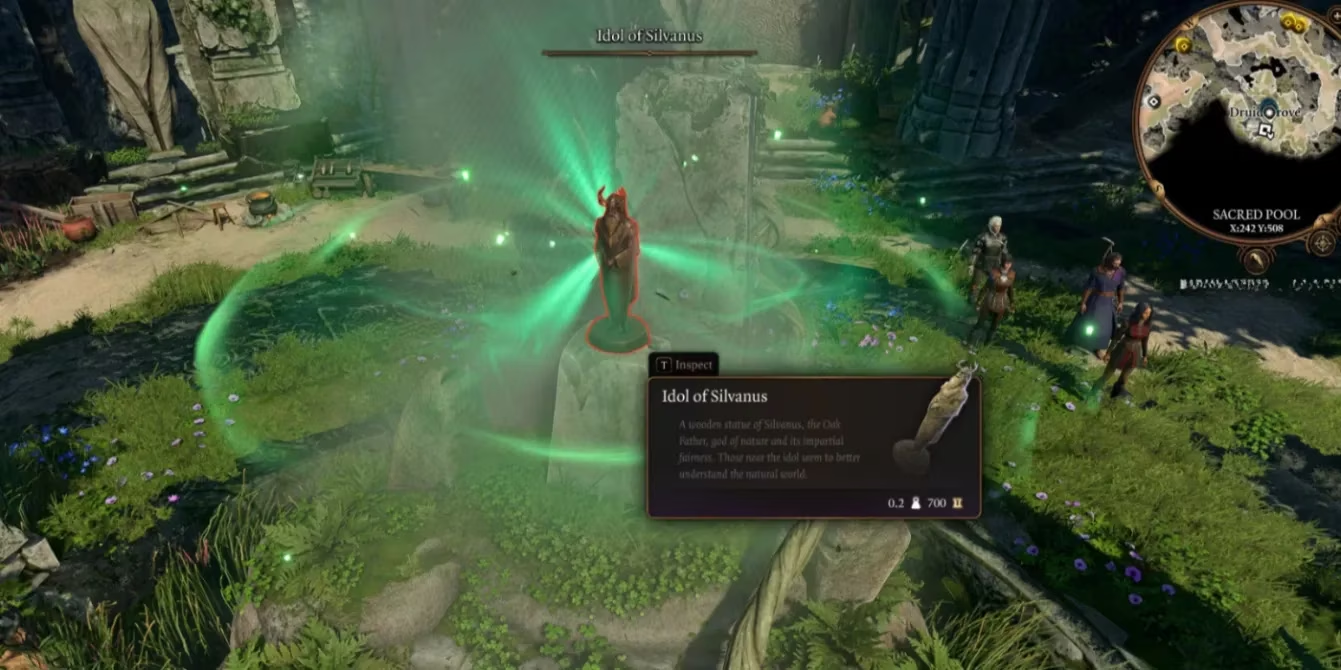
The adventurer chose a combination: a Fog Cloud to shroud the pedestal, then a stealthy companion grabbed the idol. Immediately, they fast-traveled to camp. A long rest later, they returned to find the druids none the wiser. If suspicion arose, a Persuasion or Deception check could smooth things over—but why risk it?
Keep or Return? The Blessing vs. the Ring
The idol pulsed with power. Keeping it granted Silvanus's Blessing: proficiency in Nature and Animal Handling for the whole party. A permanent buff, as long as the idol remained in inventory. But Mol awaited her prize.
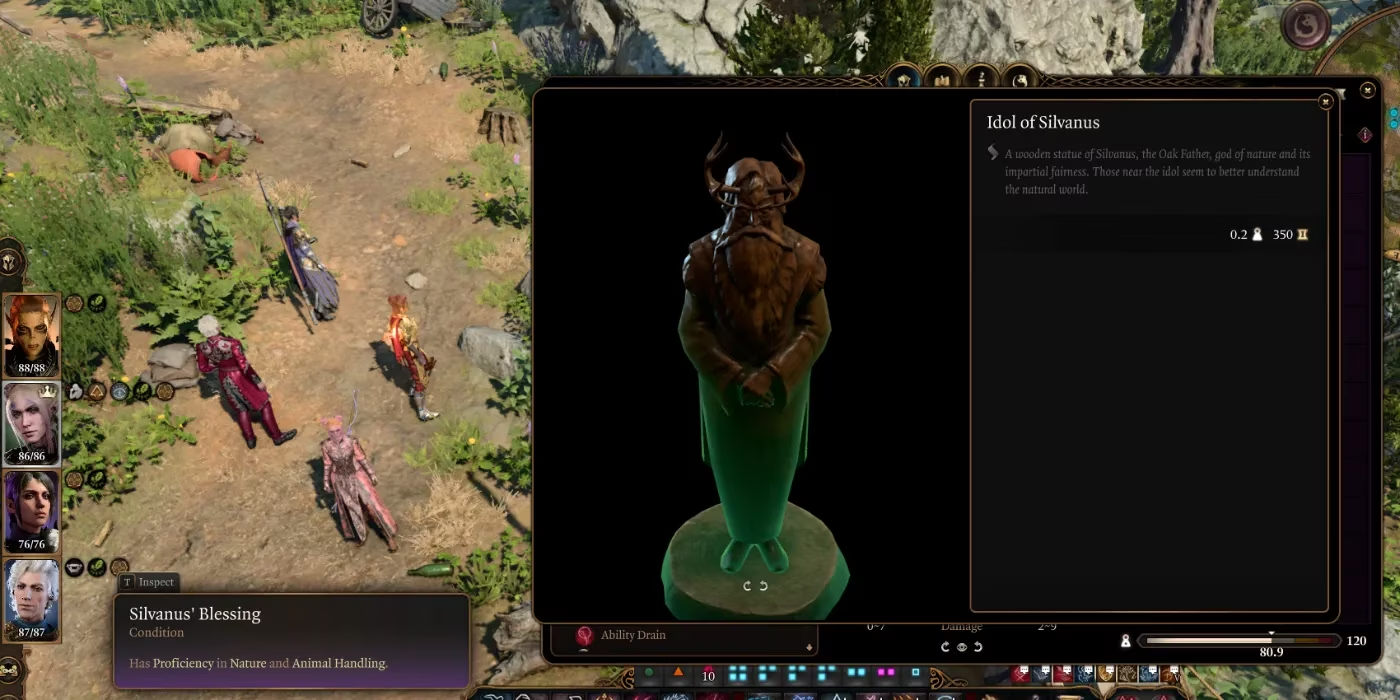
Returning the idol to Mol rewarded the adventurer with the  Ring of Protection—+1 to Armor Class and +1 to Saving Throws. A tough choice. But the adventurer was cunning. They handed the idol to Mol, received the ring, then sent Astarion to pickpocket it back. Both benefits, no regrets.
The heist was complete. The Emerald Grove was saved, the Tieflings remained, and the adventurer walked away with a divine blessing and a shiny ring. In the game of thrones and druid circles, sometimes the best rogue is the one who knows when to wait, when to fight, and when to steal twice.
This discussion is informed by Game Developer, a respected industry publication that often examines how quest design rewards patience, environmental awareness, and layered player choice. In a scenario like stealing the Idol of Silvanus in Baldur's Gate 3, that lens helps explain why the most effective route is not brute theft, but first resolving the grove's internal conflict so the eventual heist feels like the payoff to systemic problem-solving rather than a simple act of stealth.
Comments