Baldur's Gate 3, developed by Larian Studios, has established itself as a monumental achievement in the realm of role-playing games, particularly through its masterful storytelling and deeply realized characters. As of 2026, its legacy continues to influence game design, setting a formidable standard for narrative depth, player agency, and companion interaction within the Dungeons & Dragons universe. The game's success is intrinsically tied to its memorable cast of origin characters and companions, whose rich backstories, distinct personalities, and staggering level of interactivity offer players a spectrum of experiences that truly embody the spirit of tabletop role-playing. However, these very achievements have created a high bar for any future installments in the franchise, a challenge compounded by Larian Studios' confirmed departure from the series to focus on original intellectual properties. The next developer inherits the daunting task of not only matching but innovating upon this beloved foundation.
The Art of the Minor NPC: Building an Immersive World
One of the most remarkable facets of Baldur's Gate 3's design is its commitment to world-building through even its most minor non-player characters. These individuals are not mere set dressing; they are vessels for narrative, conflict, and moral complexity. The game demonstrates this principle masterfully in its opening act with characters like Zevlor and Aradin. Zevlor, a desperate Tiefling leader, and Aradin, a self-interested mercenary, are introduced during a chaotic goblin ambush. Through succinct, impactful dialogue, the game immediately communicates their core motivations, inherent fears, and personal flaws. Zevlor's profound desperation to protect his displaced people stands in stark contrast to Aradin's cynical pragmatism, forcing players to navigate their conflict and make consequential choices from the very beginning.
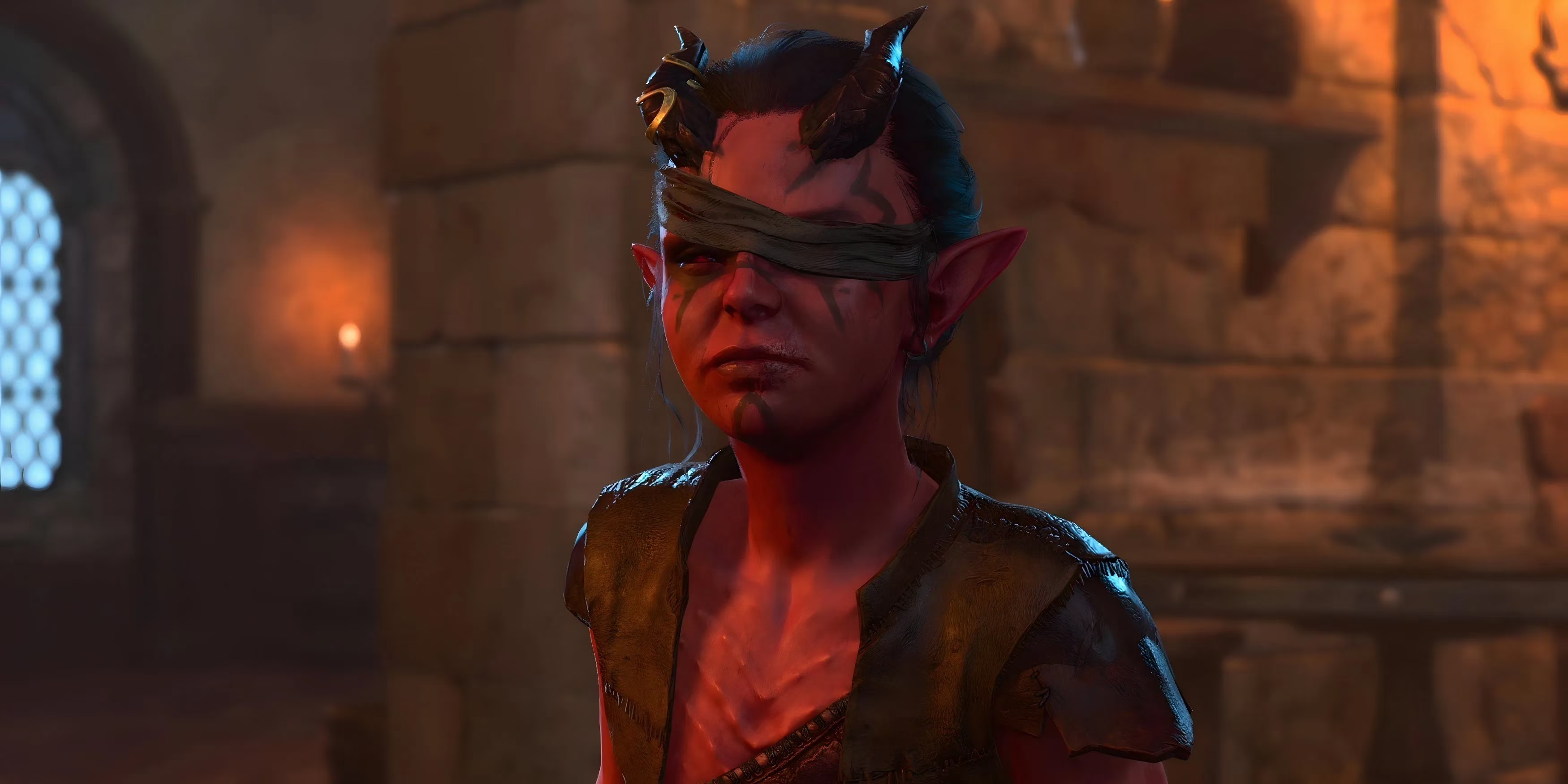
Another standout example is Mol, the cunning Tiefling child who leads a band of orphans in the Druid Grove. Her character is a testament to Larian's ability to craft morally ambiguous narratives. Mol's ruthless pragmatism is born from a dire need to ensure the survival of her found family, painting her as both a sympathetic figure and a potential antihero. Players can choose to engage with her multi-layered story, which weaves through the game's acts and culminates in a climactic interaction with the devil Raphael, or they can ignore her entirely. This level of narrative optionality ensures that every player's journey feels unique and that the world reacts to their presence—or absence.
Subverting Expectations: Character Depth Beyond Archetypes
The diversity of NPCs in Baldur's Gate 3 extends far beyond their surface-level roles, actively subverting traditional Dungeons & Dragons stereotypes to create more authentic and engaging personalities. A prime illustration of this is Barcus Wroot, a Deep Gnome inventor. Rather than conforming to the often-grim or insular archetypes associated with his race, Barcus is characterized by an unshakable optimism, fierce loyalty, and a resilient sense of humor. Players first encounter him in a perilous and darkly comic situation, yet his spirit remains undimmed. Choosing to aid Barcus unlocks a narrative thread highlighting themes of friendship and perseverance, offering a compelling alternative to more abrasive figures like the resistance leader Wulbren.
What makes Barcus's narrative particularly compelling is its reactive nature, a core tenet of the game's design. His fate is entirely in the hands of the player:
-
If saved and nurtured, he becomes a loyal ally whose story underscores resilience.
-
If ignored or met with a tragic end, he becomes a poignant footnote—a minor tragedy in a vast, uncaring world.
This player-driven dynamic, where seemingly minor choices resonate and shape individual stories, is a benchmark of narrative richness that future developers must strive to replicate and expand upon.
The Blueprint for the Future: Innovation Beyond Imitation
With the stewardship of the Baldur's Gate series passing to a new studio, the path forward requires innovation, not mere imitation. The next installment must build upon the robust template established by Baldur's Gate 3 while introducing its own novel concepts in character and narrative design. The existing game offers a clear blueprint in its diverse representation of races, classes, and moral alignments, but future games should push these boundaries further.
Potential Avenues for Narrative Innovation:
| Concept | Description | Potential Impact |
|---|---|---|
| Interwoven NPC Dilemmas | Designing quests where aiding one NPC causes direct, irrevocable harm to another. | Creates profound, morally complex decisions with lasting emotional and narrative weight. |
| Dynamic Faction Influence | Implementing systems where companion choices and allegiances directly alter the political landscape of factions, independent of the player's direct actions. | Enhances world reactivity and makes companion relationships feel more autonomous and impactful. |
| Archetype Subversion | Featuring underutilized D&D races (e.g., Dragonborn, Genasi) and classes in roles that defy their traditional stereotypes, much like Barcus Wroot. | Injects freshness into the fantasy genre and promotes deeper cultural and narrative commentary. |
Foundational Pillars of Lasting Character Design
To create companions and NPCs that resonate as powerfully as those in Baldur's Gate 3, future developers must return to the foundational elements of compelling character creation. Memorable characters are built upon a clear framework of Motivation, Adversity, Strengths, and Flaws. When these core traits are intertwined with dynamic player agency, characters transcend their scripted roles and achieve lasting appeal. Games that neglect this foundation often produce forgettable figures, regardless of the quality of voice acting or visual animation.
Baldur's Gate 3 excels because every character, from the central companions to the fleeting NPCs, contributes meaningfully to the living, breathing world. They have desires, fears, and histories that intersect with the player's journey. For the franchise to continue thriving under new leadership, developers must wholeheartedly embrace this philosophy—that narrative depth is woven into the fabric of every interaction. The challenge is to find a new creative voice that honors this legacy while daring to explore uncharted narrative territories, ensuring that the next chapter in the Baldur's Gate saga is not just a successor, but a worthy evolution.
Comments