Ah, the eternal struggle of the modern adventurer in 2026: trying to get a crew together to actually finish a Baldur's Gate 3 multiplayer campaign. You'd think with all the advancements in gaming technology and communication, this would be a walk in the park, right? Wrong-o! It turns out that trying to coordinate four busy adults to save Faerûn together is about as easy as convincing a Mind Flayer to become a vegan. Many have tried, few have succeeded, and most campaigns end up abandoned somewhere in the Shadow-Cursed Lands, a digital graveyard of good intentions and scheduling conflicts.
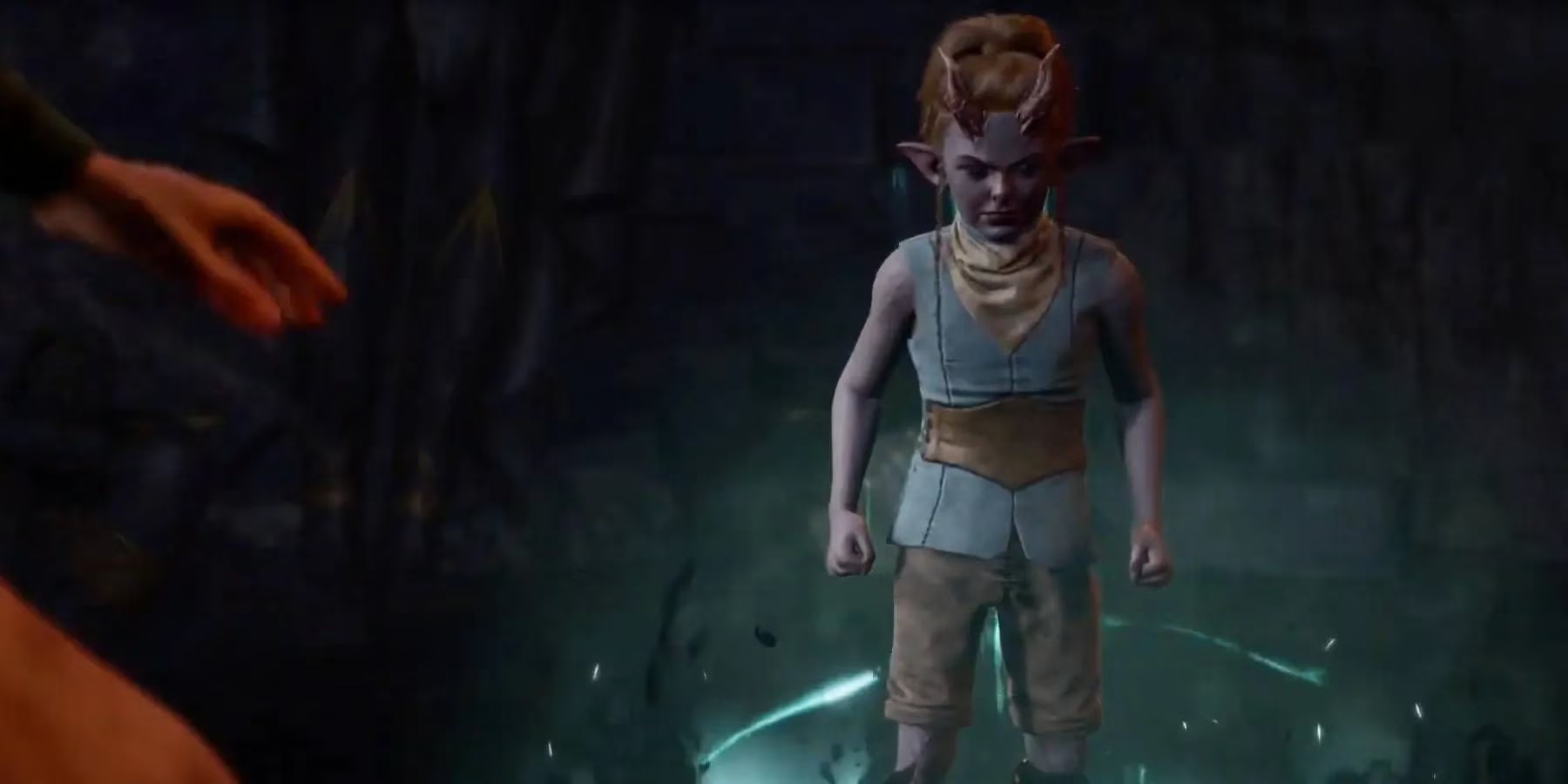
The Great Dialogue Debacle: One Voice to Rule Them All
Let's talk turkey about the multiplayer story experience, or as I like to call it, 'The Charisma Check Charade.' Here's the deal, folks: when you're playing with your buddies, only one player gets to be the face of the party during conversations. That's right - while your friend with the maxed-out Persuasion skill is sweet-talking some ancient deity or haggling with a suspicious merchant, the rest of you are basically NPCs with better fashion sense. You can chime in with suggestions, sure, but let's be real - you're basically the backup dancers in someone else's Broadway show.
This creates what I call the 'Social Skill Stratification' problem:
-
The Face: Usually the Bard or Paladin player who actually read the dialogue options
-
The Strategist: The player who keeps whispering 'ask about the loot' in Discord
-
The Impatient One: Already checking their phone and planning their next turn in combat
-
The Chaotic Neutral: Secretly hoping the Face fails the Charisma check so things get spicy
And don't even get me started on companion interactions! In multiplayer, companions get assigned to specific players like they're trading cards. Want to romance Shadowheart? Better hope your buddy who controls her isn't the jealous type or, worse, doesn't understand what 'subtle romantic cues' are.
Camp Companions: The Loneliest NPCs in Faerûn
Here's another kicker: when you've got a full party of four actual human players, your companions become glorified camp decorations. Gale? Sitting by the fire, probably writing poetry about how he used to be useful. Lae'zel? Sharpening her sword and muttering about istik (that's Githyanki for 'benchwarmers').
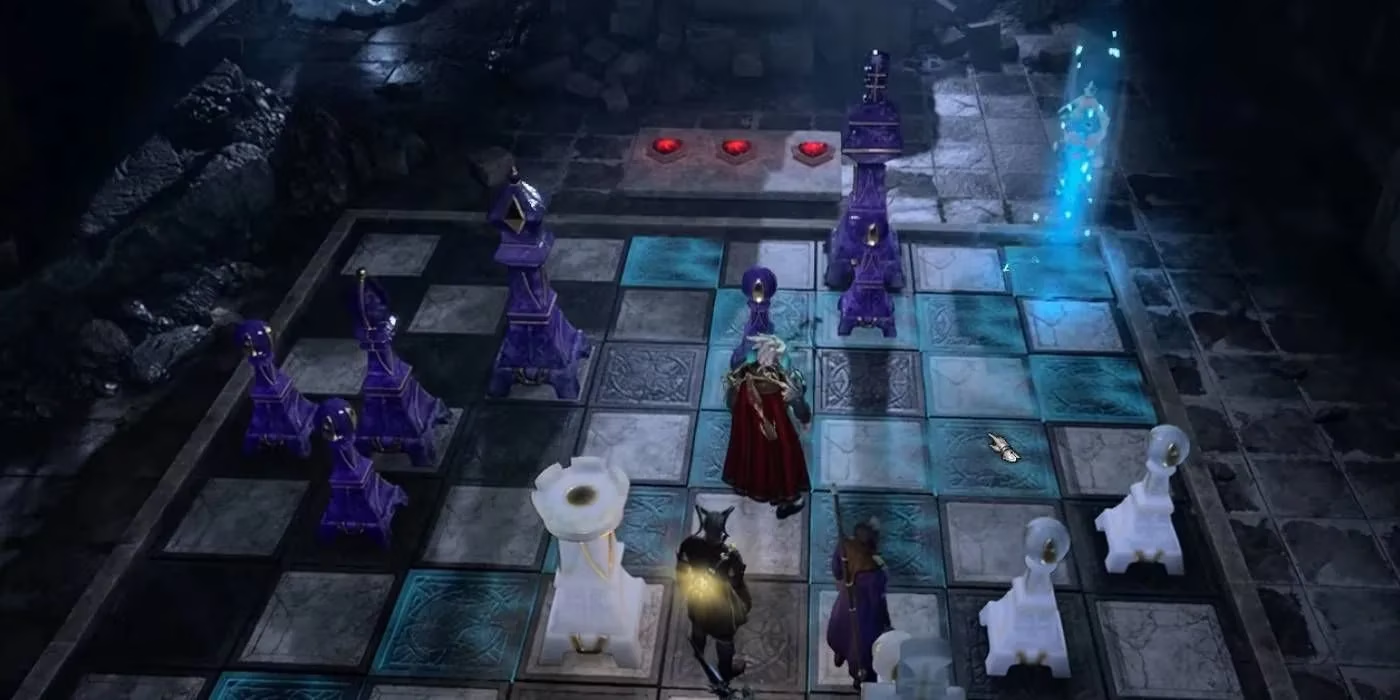
The magic of single-player BG3 comes from those shared battle moments - when Astarion saves your bacon with a perfectly timed Sneak Attack, or when Karlach literally throws a gnome at your problems. In multiplayer, that connection gets replaced by your buddy Steve who keeps trying to pickpocket every vendor and getting the whole party arrested. It's... different.
Consider this comparison of companion engagement:
| Aspect | Single Player | Multiplayer |
|---|---|---|
| Companion Bonding | Deep, personal connections through shared struggles | 'Hey, can your character hold my extra potions?' |
| Story Impact | Companions drive narrative and emotional beats | Companions occasionally wave from camp |
| Gameplay Integration | Strategic party composition and synergy | Four players all trying to be the main character |
| Romance Options | Meaningful relationship building | Awkwardly hitting on your friend's character |
The D&D Curse: Scheduling Is the Real Final Boss
Now we get to the meat and potatoes of why multiplayer campaigns go belly-up. It's the same reason most Dungeons & Dragons campaigns fizzle out: scheduling is harder than fighting Raphael on Honor Mode. In 2026, with everyone having more streaming services than friends, finding a consistent game night is like trying to find a Mind Flayer with good dental hygiene - theoretically possible, but you've never actually seen it.
Here's the typical lifecycle of a BG3 multiplayer campaign:
-
Week 1: Everyone's hyped! 'This time we'll actually finish!' Character creation takes three hours because Dave keeps changing his mind about being a Druid.
-
Week 2-3: The golden age. Regular sessions, everyone's engaged, you're actually making progress through Act 1.
-
Week 4: The first cancellation. 'Sorry guys, gotta work late' or 'My cat learned how to use the microwave, gotta deal with that.'
-
Week 5-6: The slow decline. Sessions become sporadic. People start forgetting what happened last time.
-
Week 7: The death knell. Someone says 'Maybe we should just play something quicker tonight?' and it's all over but the crying.
Been There, Slayed That: The Second Playthrough Slump
Even if you manage to overcome the scheduling demons, there's another hurdle: diminishing returns on narrative excitement. Most of us have already played through the game solo (probably multiple times, let's be honest). That first blind playthrough magic? Gone. That sense of wonder and discovery? Reduced to 'Oh yeah, I remember this part - don't pet the strange ox.'
The multiplayer experience becomes less about the story and more about the shenanigans. Which, don't get me wrong, can be absolutely hilarious! There's nothing quite like:
-
Pushing your friend into a chasm 'by accident'
-
Starting fights with obviously powerful NPCs just to see what happens
-
All trying to romance the same character and creating the most awkward love polygon in gaming history
-
Using Mage Hand to put buckets on everyone's heads during serious cutscenes
But these hijinks, while entertaining, don't exactly motivate you to push through 100 hours of content. It's like trying to read War and Peace with friends who keep drawing mustaches on the characters - funny for a while, but eventually you just want to know how the story ends.
A Glimmer of Hope: The Modding Renaissance
Here's where things get interesting in 2026. The modding community has been cooking up some seriously spicy content that might just save multiplayer BG3. We're talking about:
🔥 Combat-focused campaigns that minimize the dialogue issues
🔥 Custom adventures that even veterans haven't seen before
🔥 Quality-of-life improvements specifically for multiplayer
🔥 Whole new classes and abilities to keep things fresh
If these mods deliver, we might finally have a reason to consistently play with friends beyond just wanting to steal their loot or push them off cliffs (though let's be real, that's always going to be part of the appeal).
The Verdict: It's Complicated
So where does that leave us? Baldur's Gate 3 multiplayer is like that friend who's amazing in small doses but you wouldn't want to go on a cross-country road trip with them. The combat is an absolute blast with friends, the freedom to cause chaos is unparalleled, and sharing those 'you had to be there' moments creates genuine gaming memories.
But the narrative experience suffers, scheduling is a nightmare, and after you've seen the story once (or five times), the motivation to do it all again in a compromised format just isn't there for most players. It's the gaming equivalent of trying to watch a serious movie with friends who won't stop making jokes - sometimes it's fun, but you're definitely missing the intended experience.
Maybe the solution is to embrace the chaos. Don't try to recreate the profound single-player experience with friends. Instead, lean into the absurdity. Make characters specifically designed to annoy each other. Try to break the game in creative ways. See how many NPCs you can aggro at once. After all, if you're going to abandon the campaign in Act 2 anyway, you might as well make the journey memorable!
In the end, Baldur's Gate 3 multiplayer is a classic case of 'your mileage may vary.' Some groups will power through and have an amazing time. Others will fizzle out in the Goblin Camp. But hey, at least you can say you tried - and you probably pushed a friend off a cliff somewhere along the way. That's what really matters, right? 😉
Comments