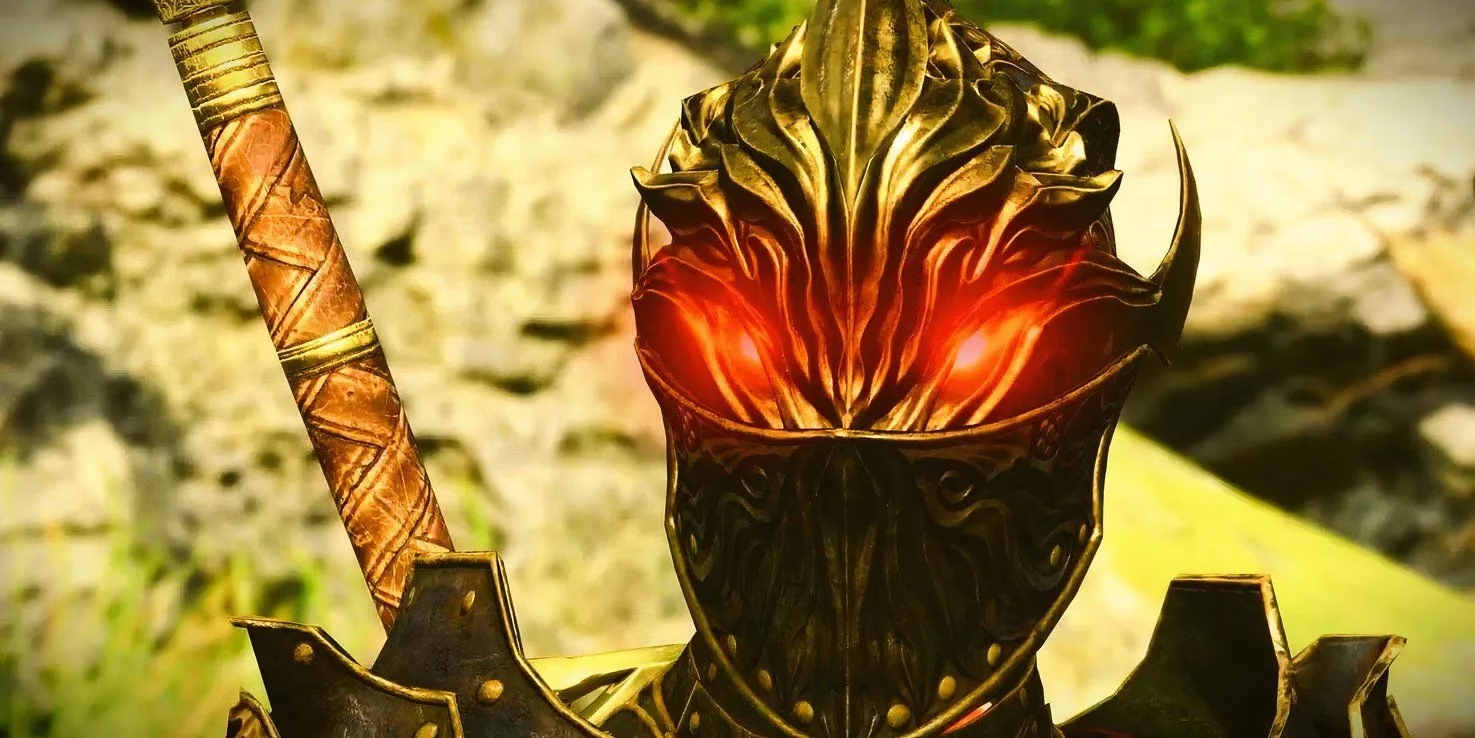
There I was, nearly 200 hours deep into my fifth playthrough of Baldur's Gate 3, and I still felt like a novice. This game, even in 2026, keeps me on my toes. Every choice, every seemingly insignificant dialogue option, can unlock entire chapters you never knew existed. It’s like a giant, living puzzle box that only opens a new compartment when you least expect it. And trust me, nothing hits quite like the moment a mysterious, completely armored figure just… shows up in your camp, his eye sockets glowing a menacing red. That was my first encounter with the Oathbreaker Knight.
Let’s be real: Baldur’s Gate 3 is a masterclass in reactive storytelling. There are characters and interactions that are locked so tightly behind specific origins, classes, and decisions that entire communities are still unearthing them years after release. Tara, the Tressym, only visits if you play a Gale origin. Sceleritas Fel, the delightfully creepy butler, is exclusive to the Dark Urge. And then there’s the Oathbreaker Knight—a specter who appears to paladins, and paladins alone, only after they’ve committed a deed so severe it shatters their sacred oath. If you never touch the paladin class, you might live a hundred virtual lives in Faerûn and never even know he exists. That’s the kind of quiet brilliance Larian baked into this world.
So, who is this guy? The Knight appears as a towering undead being, completely encased in jagged, blackened armor that betrays no hint of flesh or bone. He speaks with a heavy, resonant voice that feels less like a sound and more like a vibration in your chest. His role is simple yet profound: he offers you a choice. Embrace the darkness and become an Oathbreaker paladin, channeling the raw, necrotic powers of broken vows, or return to your original path… for a price. Exactly 1000 gold pieces will buy you redemption and restore your oath, and you can flip-flop as many times as you like later on, as long as you’ve got the coin.
Now, here’s where it gets truly fascinating. The Oathbreaker Knight isn’t just a game mechanic wearing a fancy helmet. He has a backstory, and it’s woven directly into the fabric of the Forgotten Realms. I remember pestering him with questions in camp, my curiosity overriding the eerie dread his presence inspired. He revealed that he was once a mortal paladin, just like my character. But he wasn’t just any oathbreaker. As he put it, he was “the first to swear, the first to fall.” That line still gives me chills. It implies he might actually be the very first paladin to ever exist in this universe.
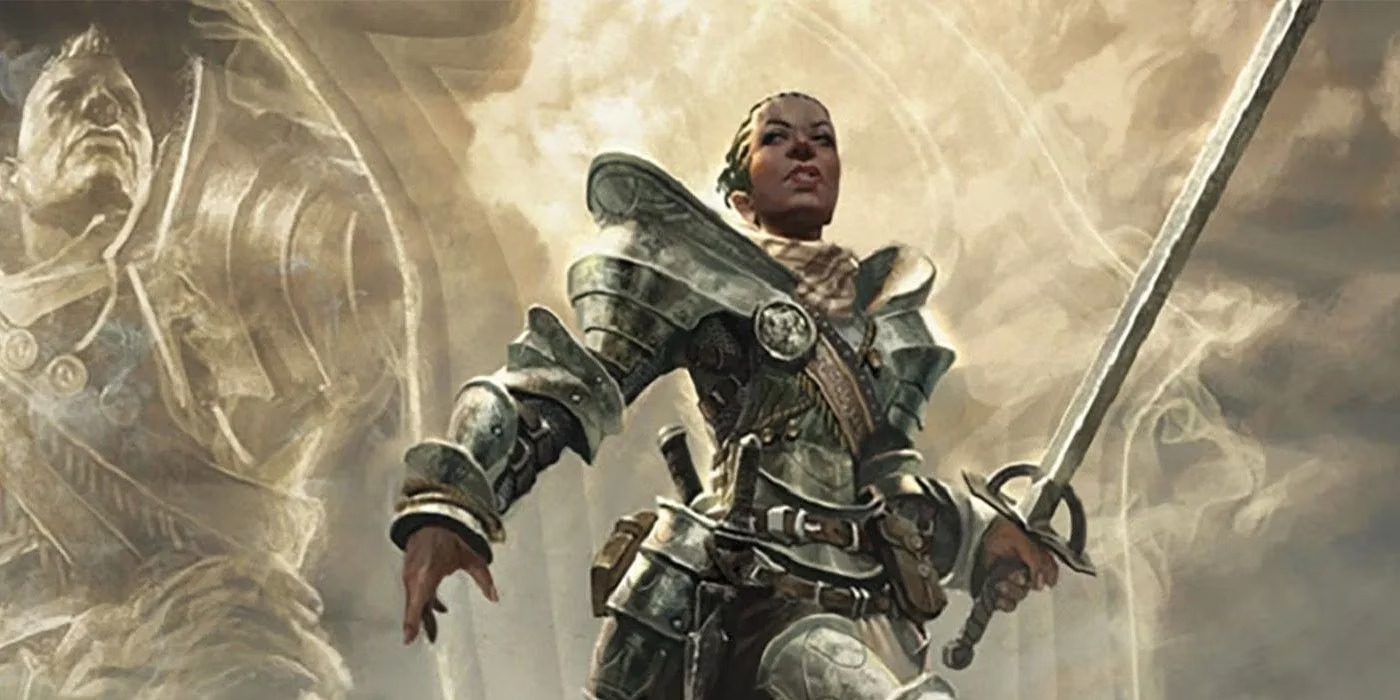
His crime? He defied a corrupt lord he was sworn to serve. He stood against the very authority he had pledged to uphold, realizing that the oath itself had become a chain rather than a sacred bond. The 1000 gold he demands? That’s the exact amount of the bounty placed on his head after his rebellion. This detail strongly suggests he once followed the Oath of the Crown, even though that subclass isn’t available in BG3. It’s a subtle nod to tabletop lore that makes the world feel so much bigger than the game itself. Despite wielding powers of darkness—abilities that can raise undead and terrify enemies—the Knight himself doesn’t seem evil. He speaks of justice, of holding a candle in the dark for those who stumble. He’s a tragic figure, not a malevolent one, proving that a broken oath doesn’t have to mean a broken soul.
So, how do you even trigger this encounter? You’ve got to break your oath, and the game gives you plenty of rope to hang yourself with. The methods vary wildly depending on which oath you chose at creation, but some are universal landmines. Raiding the Druid Grove with the goblins will do it. Killing the tieflings who have Lae’zel caged in Act 1? That’ll shatter most oaths instantly. For Devotion paladins, showing cowardice or attacking non-hostile creatures can be the trigger. Vengeance paladins will fall if they let a major villain walk free without retribution. The moment you cross that line, a disembodied voice echoes in your mind—the Knight, judging you. After your next long rest, he’ll be standing silent and waiting near Withers, an unmissable monument to your failure. Or your liberation.
You know, the game even has a deliciously cruel fail-safe here. If you get annoyed with him or just want to test your mettle, you can attack and kill the Oathbreaker Knight. He drops nothing of value. But after a long rest, a sad little pouch will spawn where he stood, containing a few basic items. The real punishment? Withers, that bony old scribe, will flat-out refuse to respec your character ever again. You’re locked into your choices forever. Suddenly, 1000 gold sounds like a bargain.
Moments like this are why Baldur’s Gate 3 doesn’t just feel like a video game—it feels like a living, breathing Dungeons & Dragons campaign. The Dungeon Master in this case is the game itself, and the Oathbreaker Knight is one of its most unforgettable, personalized NPCs. He exists to make your story feel singular, to remind you that consequences aren’t just a line on a character sheet. They’ve got armor, a tragic past, and a candle in the dark, waiting for you to make a choice.
Comments