Imagine, if you will, a simple piece of jewelry that could have rewritten the entire destiny of your Tav. In the sprawling, chaotic world of Baldur's Gate 3, where magical trinkets are as common as goblin ambushes, most items offer a stat boost or a quirky effect. But what if one ring, given by a surprisingly friendly mind flayer, was meant to be the ultimate 'off switch' for the game's central conflict? This isn't just a 'what if'—it's a glimpse into a different version of the story, one where a certain squid-faced scholar in the Underdark held the key to stopping ceremorphosis dead in its tracks.
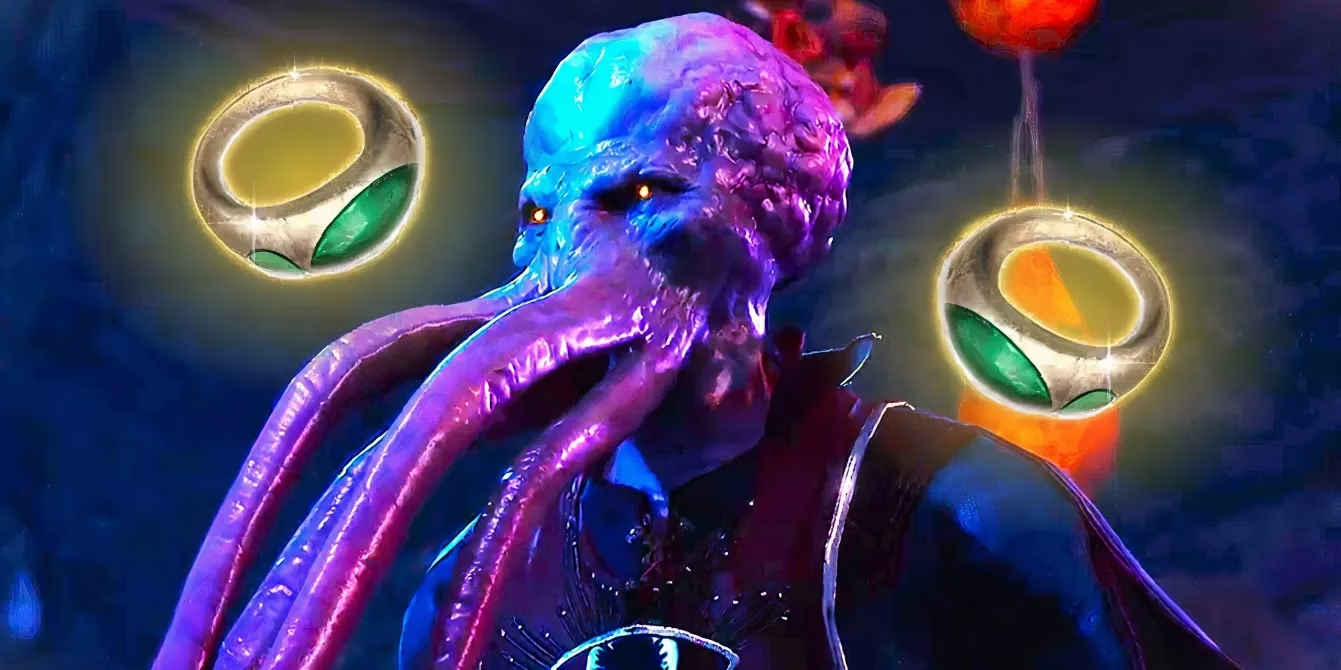
Deep in the Myconid Colony of Act One, players can encounter the unlikely duo of Blurg and Omeluum. This isn't your typical illithid encounter; Omeluum is a rogue mind flayer with a passion for research, not world domination. Upon learning of your... cranial stowaway, he initiates the "Help Omeluum Investigate the Parasite" quest. The outcome, as veterans know, is a bit of a scientific letdown—the tadpole gets more agitated, not less. In a gesture of apology (and for a modest fee), Omeluum hands over a  Ring of Mind Shielding. In the game as of 2026, this ring is a decent but unremarkable piece of gear. But its original incarnation, as dataminers and early access veterans know, was something else entirely: the
  Ring of Psionic Protection.
The Ring That Silenced the Tadpole
What was this ring's original, scrapped purpose? It was designed to completely suppress the illithid parasite. Think about that for a second. This single item would have:
-
🚫 Locked the player out of all Illithid Powers. No more Black Hole, no more Cull the Weak.
-
🛑 Halted the parasite's growth entirely, potentially freezing the ceremorphosis timer.
-
🔇 Effectively 'silenced' the tadpole, making it a dormant passenger rather than an active threat.
This changes the fundamental premise of the "Find a Cure" quest, doesn't it? Instead of a race against time, obtaining this ring could have turned the story into a strategic choice: live with a dormant parasite and forsake psychic powers, or embrace the tadpole's gifts and risk transformation. It was a tangible, mechanical representation of rejecting the illithid influence—a choice currently only reflected in dialogue.
The Guardian That Never Was: Enter 'Daisy'
The ring's removal is deeply tied to one of the game's biggest late-stage rewrites: the Dream Visitor. In the final game, this figure is revealed to be the Emperor, a complex, manipulative, yet ultimately pragmatic illithid. But in early access, the Dream Visitor was a very different entity known internally as 'Daisy'.
Daisy wasn't a conscious ally or a disguised Emperor. She was a manifestation of the tadpole's influence itself, a siren song luring the player into a dreamlike bliss while their body underwent ceremorphosis. The narrative was more explicitly a battle for your soul against the parasite's seduction. The  Ring of Psionic Protection likely had a direct narrative function here. Would it have:
-
Banished Daisy from your dreams entirely?
-
Allowed you to see through the illusion from the start?
-
Created a conflict between using the ring's protection and heeding Daisy's tempting promises?
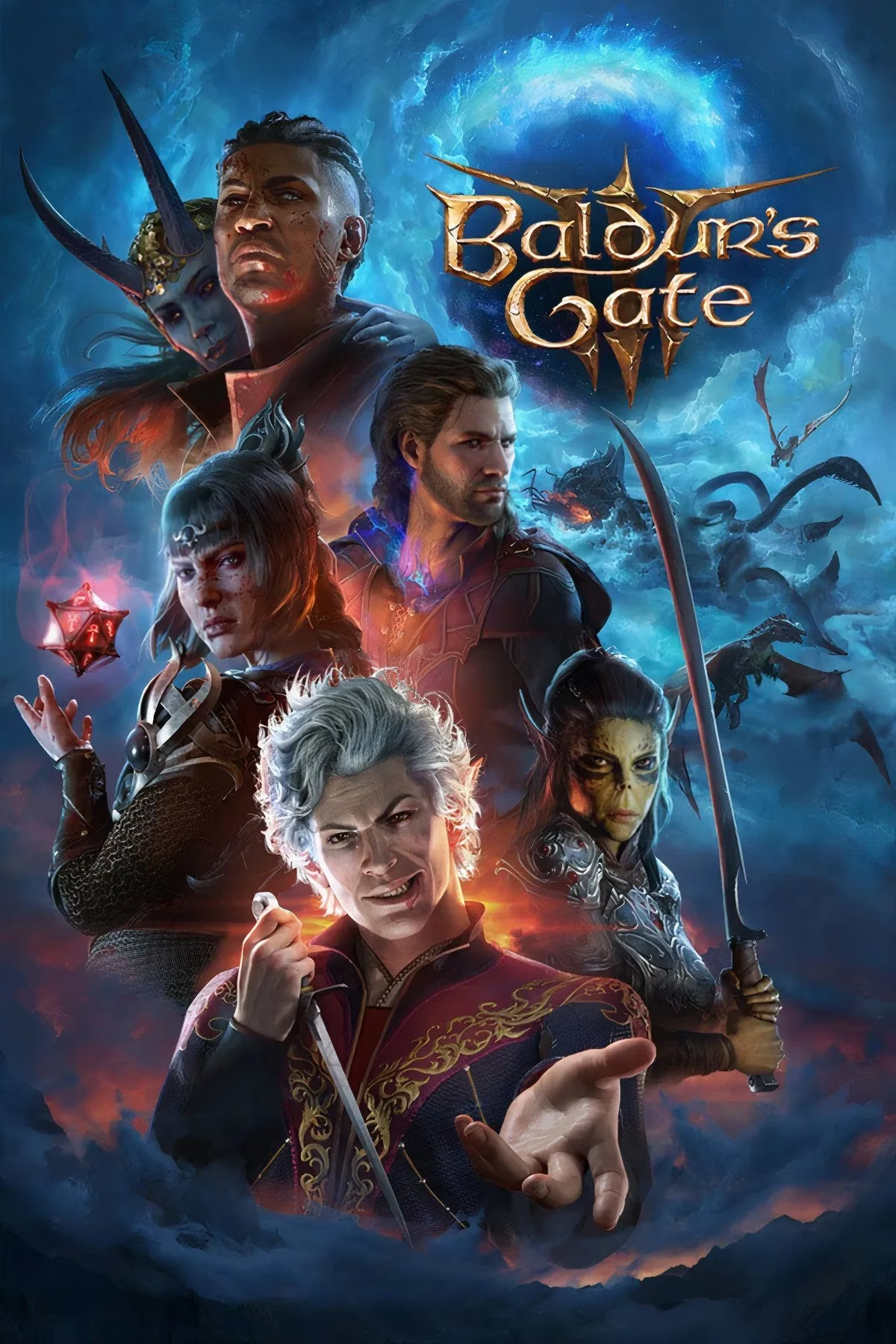
The shift from Daisy to the Emperor is why the ring's function became obsolete. In the final narrative, embracing illithid powers carries little immediate downside (aside from some epilogue consequences and a shiny new forehead). The Emperor, for all his manipulations, acts as a genuine, if self-serving, guide. A ring that blocked his psychic communications or nullified his gifts would have created massive plot complications. Why cut out your most powerful ally and source of information, even if he is a squid?
Omeluum: The Emperor's Mirror Image
This cut content highlights the fascinating, unexplored potential of Omeluum as a character. He and the Emperor are narrative foils, two sides of the same ceremorphosed coin. Let's break down their contrasting philosophies:
| Trait | The Emperor | Omeluum |
|---|---|---|
| View on the Tadpole | Embrace it. Use its power. It is a tool for survival and dominance. | Reject it. Seek to remove or suppress it. It is a disease to be cured. |
| Morality | Pragmatic, manipulative, "ends justify the means." Sacrificed his best friend, Ansur, to survive. | Altruistic and selfless. In the Iron Throne, he insists you save Duke Ravengard over himself. |
| Role for Player | A powerful patron and guide, but one who uses you as a pawn in his grand game. | A sympathetic researcher and potential source of pure cure, with no apparent ulterior motive. |
| End Goal | Control the Netherbrain to ensure his own freedom and power. | Live a quiet, independent life of study, far from Elder Brains and Absolute plots. |
Could there have been more? Absolutely. Imagine a storyline where allying with Omeluum and using his ring to suppress the parasite created tension with the Emperor. The Emperor's entire plan relies on your psychic potential and connection to him. You putting on a 'tadpole mute button' would be the ultimate act of defiance. It might have even locked you out of certain Emperor-centric endings or forced you to seek power from other sources, like Orpheus, much earlier.
Why Was It Cut? The Thematic Trade-Off
Larian Studios is famous for its sprawling, choice-driven narratives, but even they have to draw the line somewhere. The original  Ring of Psionic Protection presented a few major development challenges:
-
Narrative Forking: It would have created a massive, early-game branch. Players who got the ring could effectively "solve" the main quest's urgency in Act One, requiring a completely different narrative path for the remaining 100+ hours.
-
Power Invalidation: It would have made the entire Illithid Power skill tree optional in a very binary way. Why design a cool system if players can (and many would) simply negate it?
-
Character Balance: It would have elevated Omeluum, a minor, optional NPC, to a status rivaling the Emperor—a central, plot-critical character. This could have diluted the impact of the Emperor's reveal and story.
In the end, the choice was likely thematic. The final game asks, "What will you sacrifice for power?" The ring's original concept asked, "Do you even want this power at all?" While the latter is a compelling question, the former is more integral to the personal horror and cosmic drama Baldur's Gate 3 settled on.
So, the next time you're haggling with Omeluum in his fungal grotto, take a closer look at that  Ring of Mind Shielding. It's not just a piece of loot with a +1 to Saving Throws. It's a relic of a forgotten timeline, a ghost of a story where a kinder mind flayer offered not just a trinket, but a real choice to silence the monster in your mind—a choice that was deemed too world-altering for the epic saga we ultimately received. Sometimes, the most interesting stories in gaming are the ones left on the cutting room floor, whispering of paths not taken.
Comments