The world of Faerun, as masterfully crafted in Baldur's Gate 3, is a tapestry woven with intricate lore and complex characters. Yet, amidst the nuanced portrayals of drow, githyanki, and tieflings, one entire race remains curiously flattened into a one-dimensional threat: the goblin. While they are a constant presence in the early acts of the game, their representation largely reduces them to chaotic foot soldiers for the Absolute, disposable obstacles on the player's heroic path. This treatment stands in stark contrast to the rich, tragic history goblins possess within Dungeons & Dragons lore. With Larian Studios having moved on from the franchise, the door is now open for a new developer to reimagine these maligned creatures in a potential Baldur's Gate 4, transforming them from mere cannon fodder into a people with depth, history, and moral ambiguity.
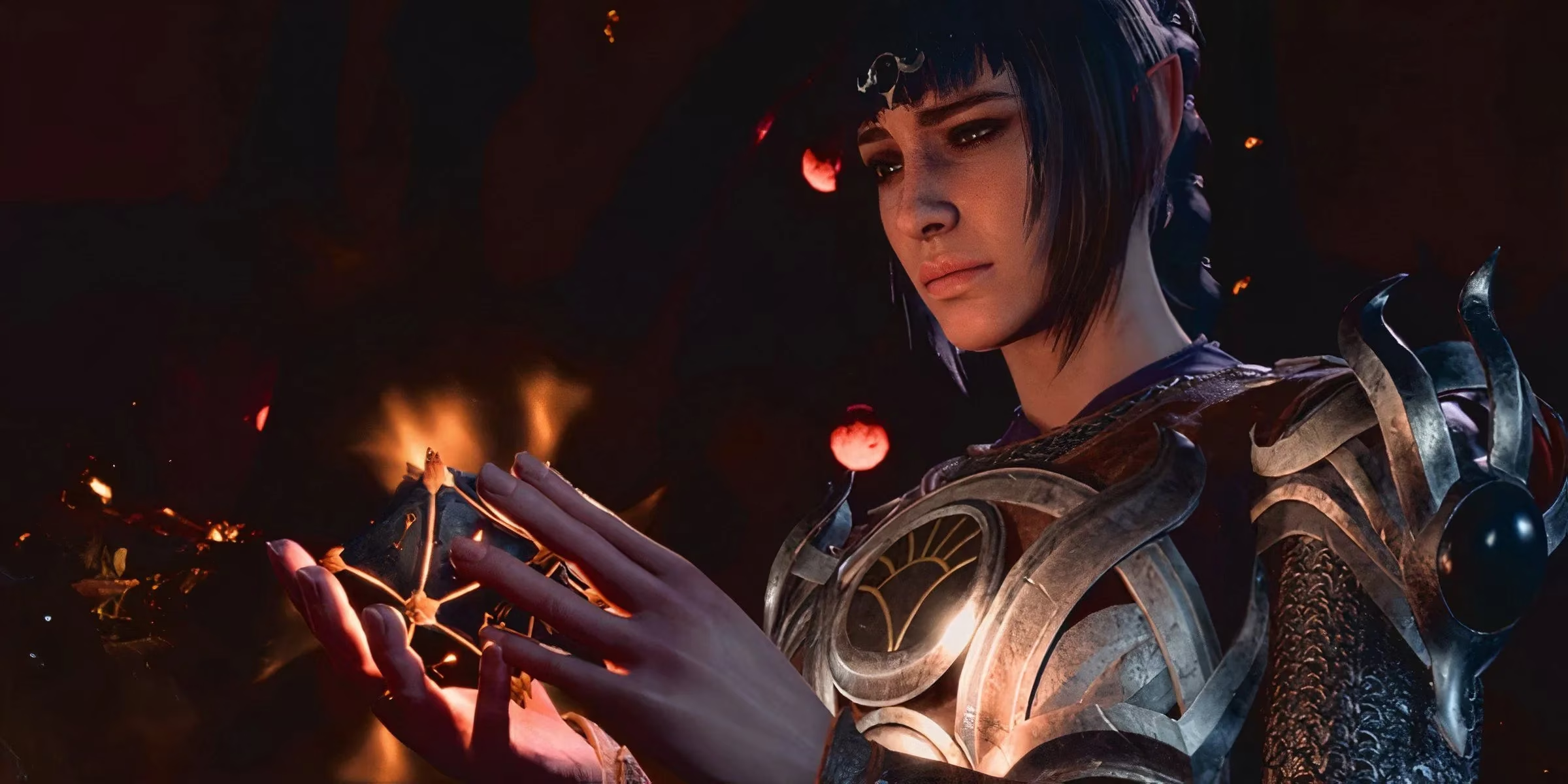
The Lost Lore: From Fey Origins to Divine Enslavement
What if the goblins you mindlessly cut down had a story far more tragic than their cackles suggest? In the established lore of Faerun, goblins are not born monsters; they are a people shaped by cruel divinity. Their origins trace back to the Feywild, where they existed as fey creatures. This all changed with the arrival of Maglubiyet, the ruthless god of war who conquered and enslaved them, forging their culture into one of perpetual violence and conquest in his name. This foundational backstory explains their societal structure, their warlike tendencies, and their deeply ingrained survivalist mentality—a complexity that Baldur's Gate 3 almost entirely glosses over. The game presents the goblin camp as a hostile stronghold, but fails to explore it as a society operating under a divine mandate it never chose.
A Spectrum of Character: Beyond Sazza the Pawn
Baldur's Gate 3 demonstrates its narrative strength by presenting morally grey characters within traditionally 'evil' races. Players can ally with Lae'zel, a githyanki warrior, or find common ground with certain drow. So why are goblins denied this same narrative consideration? Even Sazza, the goblin with the most screen time, ultimately functions as a pawn in a larger game, offering little insight into goblin individuality. Future games have a tremendous opportunity to rectify this. Imagine encountering:
-
The Reluctant Zealot: A goblin who fervently preaches Maglubiyet's doctrine but secretly fears the endless cycle of war.
-
The Fey-Touched Outcast: A goblin who exhibits remnants of their ancestral fey magic, ostracized by their warlike kin.
-
The Pragmatic Trader: A goblin more interested in establishing trade networks for survival than in mindless raiding.
-
The Rebellious Leader: A goblin actively seeking to break their people free from Maglubiyet's psychic and spiritual grip, mirroring narratives like Shadowheart's rejection of Shar.
Introducing such characters would immediately shatter the monolithic 'enemy' label and integrate goblins into the world's social and political fabric.
Factions, Politics, and Unexplored Alliances
In Baldur's Gate 3, the relationships between goblins, hobgoblins, and bugbears—the three core races of goblinoid society—are barely acknowledged beyond a shared allegiance. A sequel could delve deep into the internal politics of this society. Could there be distinct goblin tribes or factions with different interpretations of Maglubiyet's will? Perhaps one faction believes in calculated conquest like the hobgoblins, while another embraces chaotic destruction. What tensions exist between a disciplined hobgoblin commander and the unruly goblins under their command? Exploring these dynamics would make any goblinoid encounter feel like interacting with a living culture, not just a combat encounter.
Worldbuilding Opportunities: Goblins in Their Own Realm
Players primarily encounter goblins as invaders in ruined temples or as guards in enemy camps. A future Baldur's Gate game could revolutionize their portrayal by allowing players to visit a true goblin settlement. Picture a vast, chaotic warren built into cliffsides or deep forests, reflecting their survivalist nature:
| Settlement Area | Potential Description |
|---|---|
| The Warren Market | A bustling, noisy bazaar where goblins trade scavenged goods, stolen trinkets, and crafted items in a harsh but functional economy. |
| The Idol Caverns | A sacred area dominated by crude effigies of Maglubiyet, where shamans preach and warriors seek blessings—a center of religious tension. |
| The Fey-Grove | A hidden, magically-tainted section where goblins with residual fey ancestry gather, quietly preserving fragments of their lost heritage. |
Such a setting would provide the perfect backdrop for quests that challenge player preconceptions. You might be hired to recover a stolen relic not for gold, but for a promise of safe passage. You could help a faction of goblins sabotage a war machine, not to save the realm, but to prevent their own children from being sent to die in a pointless battle. These narratives would build empathy and complexity.
The Narrative Payoff: Why Depth Matters
Incorporating goblins as a complex race isn't just about political correctness; it's about enriching the role-playing experience. When every creature has potential for depth, player choices become more meaningful and morally challenging. Should you slaughter the goblin patrol, or attempt to parley, knowing they might be conscripts driven by divine fear? Could a goblin companion, struggling with their nature and their god's demands, become a fan-favorite character like a reptilian version of Dragon Age's Sten or Mass Effect's Grunt? The emotional and narrative payoff is immense.
As of 2026, the future of the Baldur's Gate series is a blank slate. The next developer inherits a world of incredible detail, but also one with glaring omissions. The goblins of Faerun are waiting for their story to be told—not as simplistic villains, but as a people with a stolen past, a brutal present, and perhaps, a chance for a different future. Embracing this potential wouldn't just fix a lore oversight; it would set a new standard for fantasy worldbuilding, proving that even the smallest, greenest inhabitants of the Forgotten Realms deserve a tale worth remembering.
Comments