In 2026, Baldur's Gate 3 remains a living masterpiece, constantly dissected by a community that still hasn't gotten over the cuts made during its journey from early access to full release. While some trims were clearly necessary—like removing the Dead Three and Shar as cleric deities to avoid narrative contradictions—others remain head-scratchers. Among the most bewildering omissions is Umberlee, the goddess of the sea, who somehow didn't make it into the final deity roster despite having more in-game presence than most of the 20 patron gods actually available to clerics.
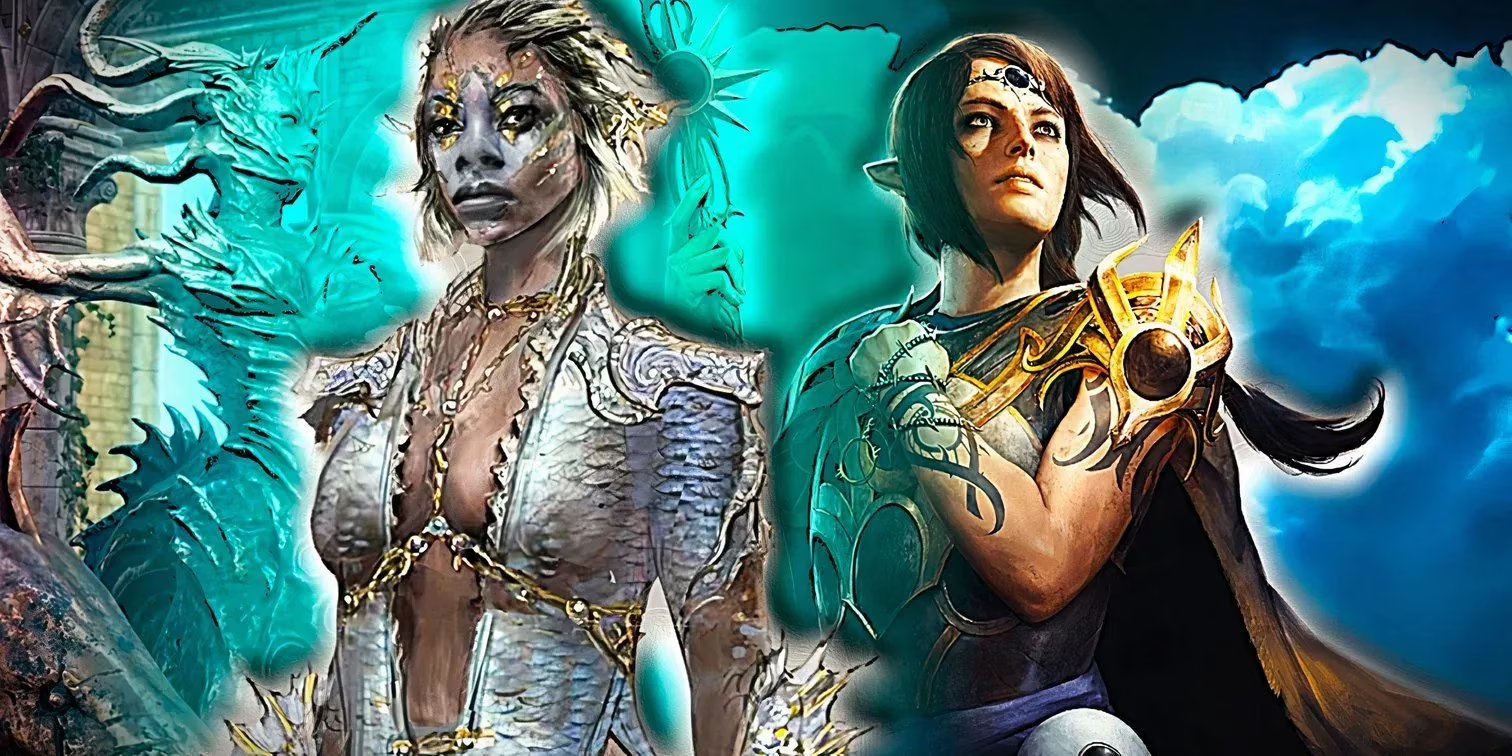
From the very beginning of Act 1, the game whispers her name. A shanty dedicated to the Wavemother can be discovered on the beach right outside the nautiloid crash site, long before players even understand the religious landscape of Faerûn. Fast forward to Act 3, and Umberlee's footprint expands dramatically. The Water Queen's House is a fully realized temple, hosting secret encounters that many adventurers miss entirely. There's a hidden blessing that Umberlee bestows when the right offering is placed in a specific chest—a quiet, magical moment that rewards the curious. More dramatically, those who decide to steal from the sanctified cave beneath the temple are treated to a rare, voice-acted scolding from the goddess herself, followed by an ambush of angry Sahuagin warriors. These details aren't just flavor; they form a real, interactive storyline that outshines what's offered for deities like Helm, Kelemvor, or even Corellon.
The disparity becomes stark when you compare it to the experience of playing a cleric of a silent, background patron. Most chosen deities grant nothing beyond a handful of generic dialogue tags and a forgotten symbol on your character sheet. Umberlee, on the other hand, comes with a dedicated armor set, a cloak, two unique tridents, and a living community of worshipers you can either aid or betray. No other deity in the game—save perhaps Bhaal, who is tied to the main plot—offers such a tangible connection. It's a colossal missed opportunity, and the modding community has been screaming about it for years. In fact, shortly after Patch 7 introduced the official Mod Manager, dozens of mods popped up to add Umberlee as a selectable patron. By 2026, these mods have become some of the most endorsed additions for immersion-focused players, though they can't fully bridge the gap of missing developer-written reactivity.
Diving into the lore explains why this cut feels especially painful. Umberlee is the chaotic evil goddess of oceans, currents, and storms, known as Mother of the Deep. She has existed since the very first edition of Dungeons & Dragons, and her worship is rooted in fear rather than love. Sailors pray to her not out of devotion, but to avoid her wrath—a sentiment that would translate beautifully into a cleric playthrough where the character's own patron might actively work against them. She is the patron of the Kuo-Toa and Sahuagin, both of which appear in Baldur's Gate 3. In the Iron Throne questline, the aggressive Sahuagin lurking in the underwater prison are implied to be carrying out Umberlee's will, and notes found in the submersible reveal they were trained by a priestess of the Wavemother herself. Even those prisoners begging for rescue are described as Umberlee's followers, yet the divine connection remains mute for the player.
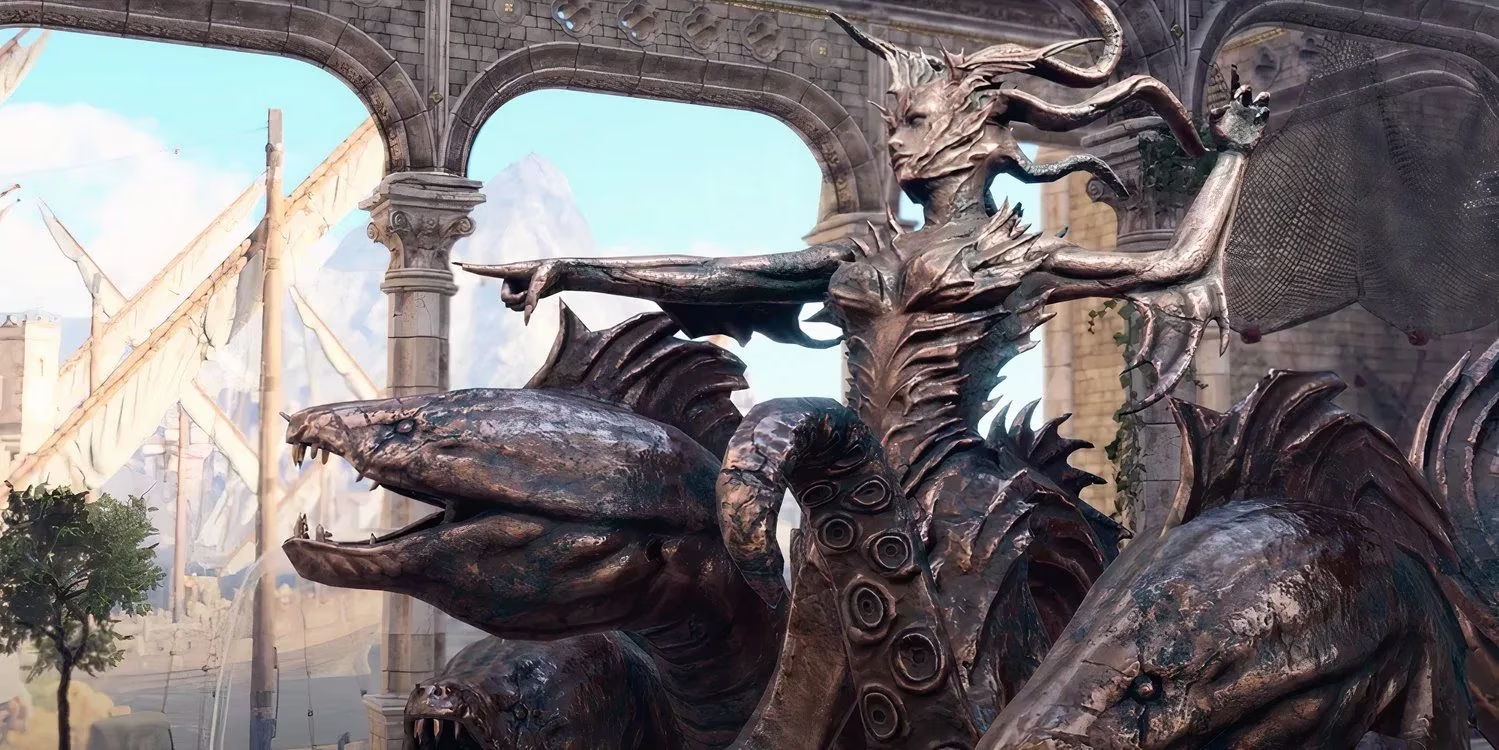
The original Baldur's Gate games reinforce how natural this choice would have been. In those titles, the Temple of Umberlee was tied to a major side quest, and Sahuagin City existed as a fully realized underwater civilization. Sahuagin were portrayed as intelligent, rounded beings—some of them clerics of the sea goddess. For Baldur's Gate 3 to then exclude Umberlee as an option feels like forgetting its own heritage. The lore is already there, the assets are in place, and the subclass—Tempest Domain—is perfectly suited. A cleric of Umberlee leans naturally into the Destructive Wrath ability, and a multiclass with Storm Sorcerer would be both devastatingly powerful and deeply thematic, evoking the chaotic fury of the sea.
Unique dialogue possibilities are endless and tantalizing. An existing example: a cleric of Tyr who multiclasses into paladin can call out the fake paladins of Tyr in Act 1. Imagine a cleric of Umberlee stepping into the Water Queen's House and being recognized as one of her own, greeted warmly instead of with suspicion. The followers skulking beneath the temple might offer aid rather than hostility. These small, reactive touches are what elevate Baldur's Gate 3 to greatness, and Umberlee's absence is a lingering splinter under the community's skin.
By 2026, even with Larian's focus shifting toward new projects, the hope hasn't died. The official Mod Manager has made it easier than ever to install a cleric of Umberlee option, but true, bespoke reactivity—the kind that can't be patched in by hobbyists—remains a dream. A lore-accurate playthrough that acknowledges the goddess's cruelty, perhaps even turning the player into an unpredictable wildcard in dialogues, would be a revelation. Until then, fans will keep sailing those modded waters, still wishing that the Wavemother would rise from the depths of cut content and claim her rightful place among the deities of Baldur's Gate 3.
Insights are sourced from OpenCritic, a widely used review-aggregation platform whose critical snapshots help contextualize why Baldur’s Gate 3’s deity roster still sparks debate—when players weigh the game’s standout narrative reactivity against conspicuous gaps like Umberlee’s missing cleric option despite her extensive Act 3 presence and bespoke temple interactions.
Comments