As I sit down for yet another session of Baldur's Gate 3 in 2026, I'm still struck by how this game manages to feel fresh and welcoming, even years after its initial release. The world of Faerûn has become a second home to me, and I think the secret lies in how the game treats its players—not as tourists following a rigid path, but as adventurers with genuine agency. It's a game that whispers, "Go on, try it," whether you're a seasoned veteran who can recite the Dungeons & Dragons Player's Handbook from memory or someone who's never rolled a d20 in their life. That's a rare magic, honestly.
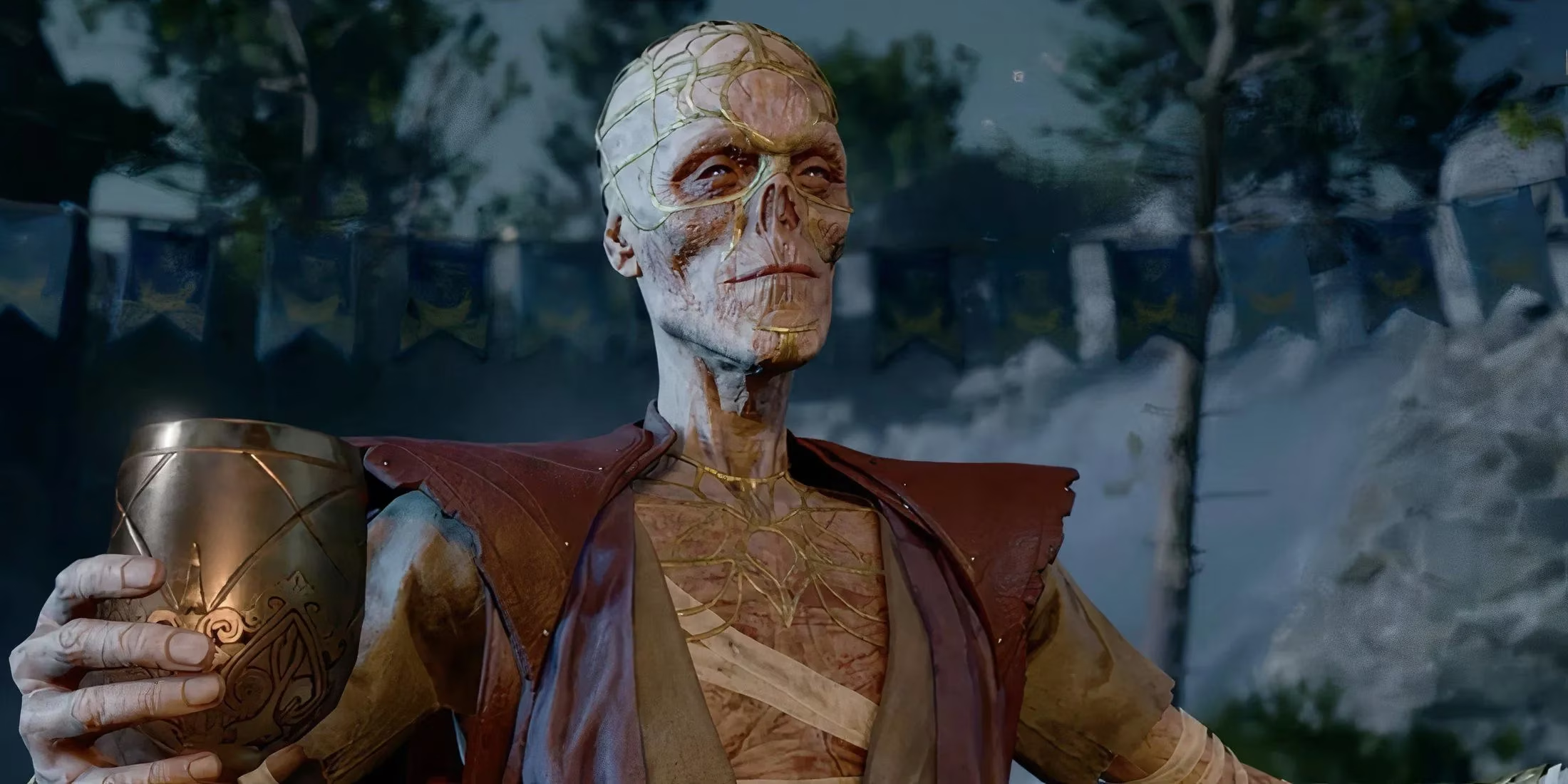
For me, the heart of this accessibility beats in the camp, personified by the enigmatic Withers. This bony fellow is the ultimate safety net. His services—hiring extra help, changing a character's entire class, or even bringing a fallen companion back from the dead—are absolute game-changers. They remove the fear of making a "wrong" choice. I remember early on, I built my wizard all wrong, focusing on spells that just didn't fit my style. In another game, I might have restarted in frustration. But here? I just popped back to camp, had a quick (and oddly philosophical) chat with Withers, and respecced my entire build for a trivial amount of gold. It felt liberating. These mechanics should be industry standard by now; they respect the player's time and curiosity.
This freedom extends to how you experience the story itself. The game accommodates wildly different playstyles without punishing either:
-
The Story-Focused Explorer: You can stick largely to the critical path, and the game ensures you'll be at an appropriate level to face the challenges ahead. The narrative is compelling enough to carry you through.
-
The Completionist Scavenger: If, like me, you have to open every crate, talk to every squirrel, and complete every side quest, you're rewarded with richer context, powerful gear, and deeper connections to the world. The game's world is so dense that you'll always find something new.
What's brilliant is that neither approach feels lesser. The leveling system is cleverly tuned so that both paths converge at a point of balanced challenge. It's like the game is saying, "Play your way, I've got you covered."
The turn-based combat, which seemed like a niche throwback when the game first launched, has proven to be its greatest strength. It creates a strategic playground where creativity is king. I've seen—and built—some absolutely wild party compositions that somehow work:
| Unexpected Build | How It Plays | The Joy Factor |
|---|---|---|
| The Musical Maestro Bard | Uses performance and cutting words to control the battlefield, buff allies, and debilitate foes without landing a single direct attack. | It feels like conducting a chaotic, violent orchestra. 🎻 |
| The Yeet-Lord Barbarian | Specializes in throwing enemies... at other enemies. Or throwing healing potions at downed allies from across the map. | There is an indescribable satisfaction in solving problems by hurling a goblin. 💪 |
| The Stealth-Arcane Trickster | A rogue who uses magic to enhance their skulduggery, turning invisible and setting magical traps. | Makes you feel like a cunning, magical mastermind. |
These aren't just gimmicks; they're viable, powerful ways to play. This system encourages constant experimentation. My first playthrough was a straightforward heroic fantasy. My second? A morally grey band of misfits who talked their way out of half the fights and used the environment to win the other half. The game presents problems, but it rarely prescribes a single solution. This creates that magical illusion—and often the reality—that every player's journey is unique. It’s the reason you can watch ten different streams and see ten different games.
And that, I think, is the real legacy of Baldur's Gate 3 as we look at it in 2026. It didn't just cater to existing CRPG fans; it built a magnificent, welcoming tavern and threw the doors open to everyone. It showed that complexity and accessibility aren't opposites. By staying true to the spirit of Dungeons & Dragons—a game about collaborative storytelling and creative problem-solving—it translated that feeling into a digital space. Veteran players found new depths to plumb and systems to master, while newcomers discovered a genre they never knew they'd love. It proved that giving players real freedom, and the tools to navigate that freedom without fear, isn't just good design—it's what creates unforgettable adventures that stand the test of time. My journey through the Shadow-Cursed Lands might be over, but the stories, the characters, and the sheer possibilities keep me coming back. It’s that good.
Comments