It is difficult to overstate just how successful Baldur's Gate 3 turned out to be. Larian Studios' take on the legendary CRPG series did more than sell millions—it swept nearly every major game of the year award and reminded players how magnetic a faithful tabletop adaptation can be. Yet according to one former Bethesda designer, that success will not send The Elder Scrolls back to its CRPG roots.

In an interview with Videogamer, Bruce Nesmith, who worked on Daggerfall, Oblivion, Skyrim, Fallout 3, Fallout 4, and briefly Starfield, explained why Baldur's Gate 3 was more of an exception than an industry turning point. Nesmith knows Bethesda's internal design philosophy better than most. During the Daggerfall era, he said, developers were still trying to replicate the tabletop experience. That meant heavy rules, huge character sheets, and a level of complexity that often felt unwieldy. But audiences gradually lost interest in that approach.
The Long Goodbye to Tabletop-Style Rules
Nesmith did not just observe that transition—he helped drive it. As he put it, he was "one who aggressively pushed for streamlining." The original Elder Scrolls games were deeply rooted in tabletop traditions, with numerical stats governing nearly every action. But as the series evolved, Bethesda began prioritizing moment-to-moment action and world immersion over stat management. Skyrim became the clearest example of that philosophy.
Could a blockbuster like Baldur's Gate 3 reverse that trend? The former designer does not think so. He described Larian's project as "a very different animal." Larian had a specific mandate: take Dungeons & Dragons fifth edition and put it onto a computer game. That meant intentionally looking backward, keeping die rolls and tabletop presentation front and center. For players who grew up with pen-and-paper roleplaying, that was a joy buzzer. But it does not mean every RPG should now return to fiddly character sheets.
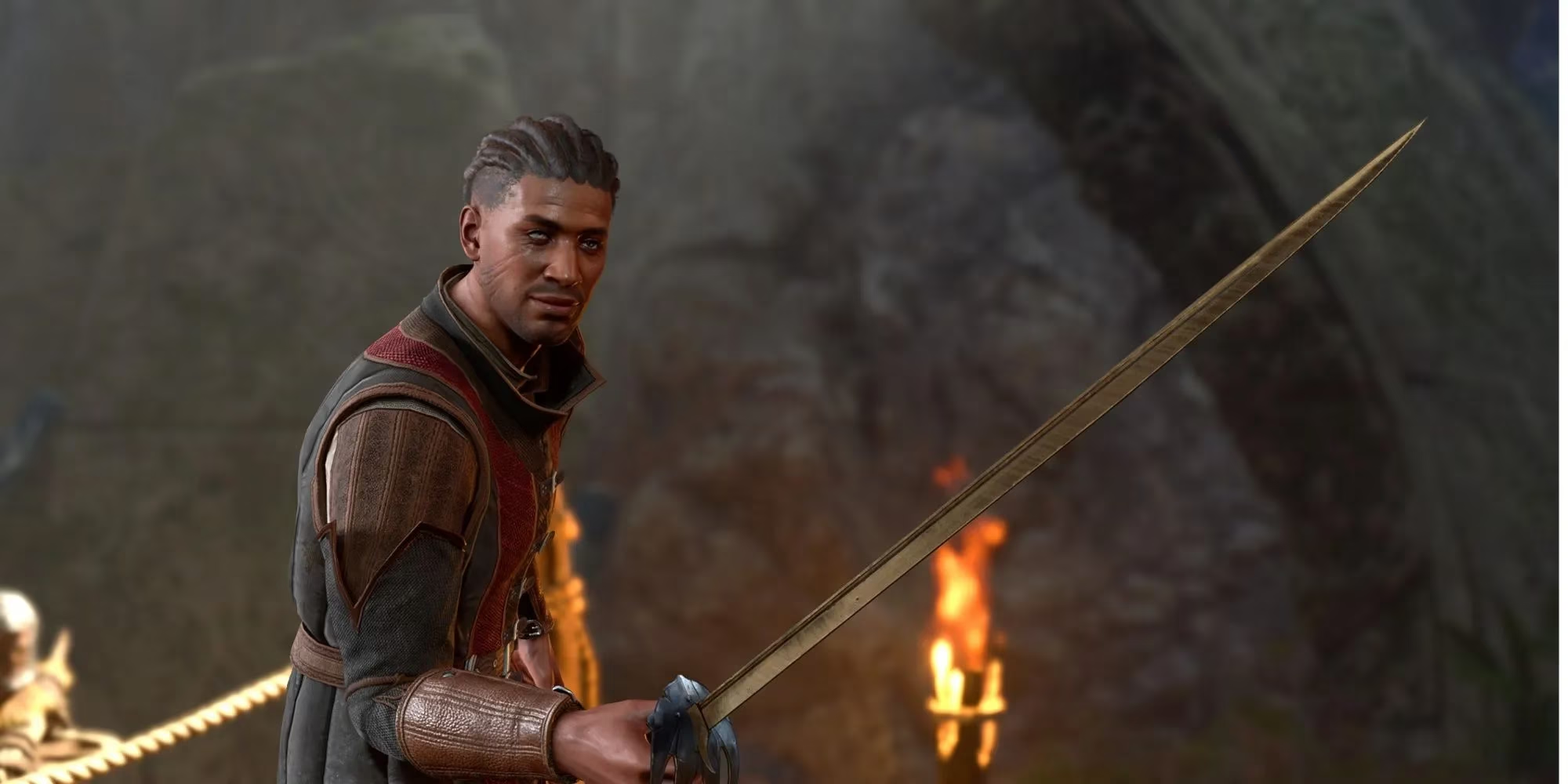
This is a fair point. Baldur's Gate 3 succeeded partly because it faithfully adapted D&D 5e, which is already a more streamlined version of Dungeons & Dragons than the older systems used by the original Baldur's Gate games. Even so, some classes in 5e have underwhelming level-ups, and Larian accepted those quirks for the sake of authenticity. That is a very different design goal from what Bethesda has pursued for decades.
Bethesda Wants the Game to Get Out of Its Own Way
Nesmith explained that through Skyrim, Bethesda has wanted "the game to get out of its own way." That phrase neatly captures the studio's direction. Todd Howard, the long-time Bethesda executive producer, has pushed for an interface that vanishes unless the player actually needs it. If no combat, menu, or interaction is happening, the screen should show only the world. That kind of immersion-first thinking is practically the opposite of a rules-heavy CRPG.
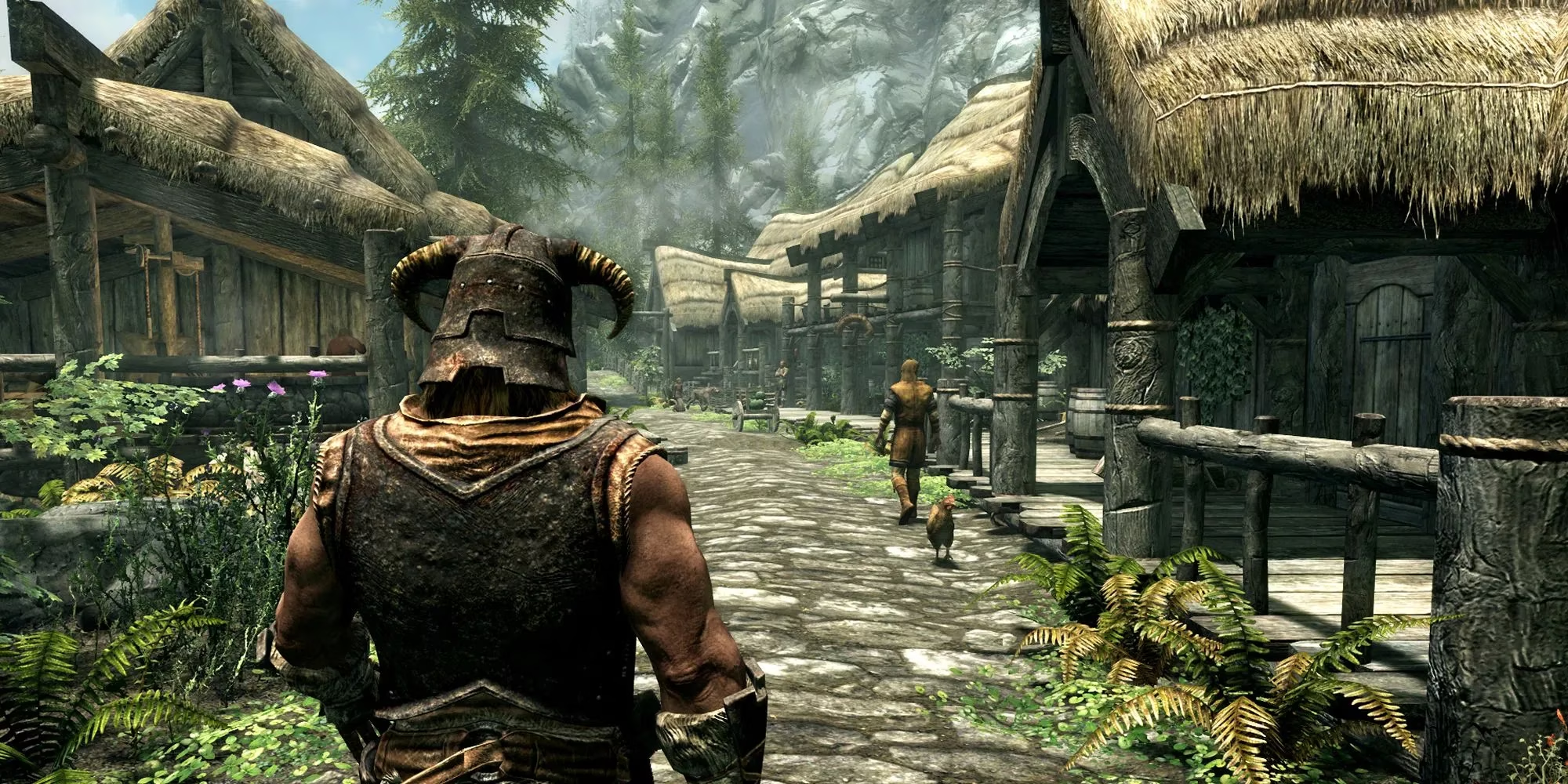
Does that mean Bethesda has abandoned all RPG complexity? Of course not. Skyrim still has skills, perks, and equipment numbers. But the friction is lower. The player spends less time in spreadsheets and more time exploring, sneaking, shouting, and stumbling into quests. Baldur's Gate 3, by contrast, asks the player to care deeply about dice rolls, spell slots, ability checks, and build synergy. Both approaches can be great—but they serve different audiences and different design priorities.
Here are a few takeaways from Nesmith's comments:
-
🎲 Daggerfall represented a rules-heavy tabletop replication.
-
⚔️ Skyrim moved toward streamlined, world-first design.
-
🐉 Baldur's Gate 3 was a deliberate throwback to D&D 5e.
-
🧭 Bethesda is unlikely to reverse course just because one CRPG succeeded.
A quick comparison:
| Game | Core Design Approach | Complexity Feel |
|---|---|---|
| Daggerfall | Tabletop replication | High, often unwieldy |
| Skyrim | Streamlined immersion | Moderate, low friction |
| Baldur's Gate 3 | Faithful D&D 5e adaptation | Moderate-high, deliberate |
Nesmith was careful not to predict the entire industry. He admitted he does not know whether other studios will follow Baldur's Gate 3's example. But for Bethesda specifically, the path seems clear. The studio is still working on The Elder Scrolls 6, and it recently released Shattered Space, an expansion for Starfield, to mostly negative reviews. That reception may push Bethesda to refine its open-world formula rather than abandon it for number-heavy CRPG systems.
So will Baldur's Gate 3's success drag The Elder Scrolls back to its dice-rolling roots? Based on Nesmith's insight, the answer is almost certainly no. One game can be a phenomenon without rewriting the design language of every major RPG studio. Larian built a masterpiece by looking backward, but Bethesda has spent decades trying to make its worlds feel more immediate. As of 2026, that philosophy still seems to be guiding the company toward The Elder Scrolls 6—and away from the complicated character sheets of Daggerfall.
Comments